-
Chinese (Simplified)
-
English
-
German
-
Korean
-
Spanish

Chinese (Simplified)
English
German
Korean
Spanish
Sign up for an account to enjoy easy online shopping and instant order tracking.
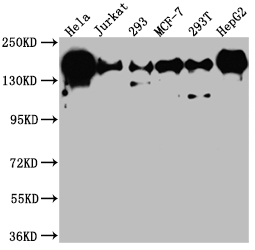
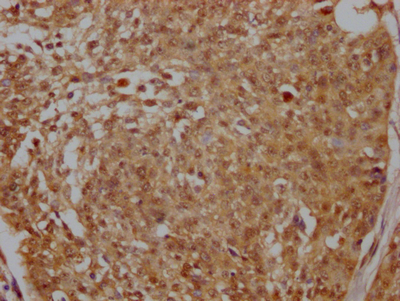
The recombinant antibody against PELP1 was produced using a synthesized peptide derived from human PELP1 as the immunogen. This antibody exists as a non-conjugated isotype Rabbit IgG, Affinity-chromatography purified. This antibody has been validated on ELISA, WB, IHC.
$350.00
| Cat.No | ADC-56894A | Clonality | Monoclonal |
|---|---|---|---|
| Target Name | PELP1 | Target Synonyms | glutamic acid- and leucine-rich protein 1 (Modulator of non-genomic activity of estrogen receptor) (Transcription factor HMX3), HMX3 MNAR, PELP1, Proline- |
| Form | Liquid | Species Reactivity | Human |
| Isotype | Rabbit IgG | Storage Buffer | PH 7.4, 0.02% sodium azide and 50% glycerol., 150mM NaCl, Rabbit IgG in phosphate buffered saline |
| Purification Method | Affinity-chromatography purified | Conjugate | Non-conjugated |
| Application | ELISA, IHC, WB | Storage | Upon receipt |
| Immunogen Description | A synthesized peptide derived from human PELP1 | Target Species | Human |
|---|---|---|---|
| Immunogen Sequence | Complete sequences for the immunogen, target protein, and peptides are available upon request. | Uniprot ID | Q8IZL8 |
Uniprot Id
Q8IZL8
Target Species
Human
Target Name
PELP1
Target Full Name
Proline-, glutamic acid- and leucine-rich protein 1
Target Function
Coactivator of estrogen receptor-mediated transcription and a corepressor of other nuclear hormone receptors and sequence-specific transcription factors. Plays a role in estrogen receptor (ER) genomic activity when present in the nuclear compartment by activating the ER target genes in a hormonal stimulation dependent manner. Can facilitate ER non-genomic signaling via SRC and PI3K interaction in the cytosol. Plays a role in E2-mediated cell cycle progression by interacting with RB1. May have important functional implications in ER/growth factor cross-talk. Interacts with several growth factor signaling components including EGFR and HRS. Functions as the key stabilizing component of the Five Friends of Methylated CHTOP (5FMC) complex; the 5FMC complex is recruited to ZNF148 by methylated CHTOP, leading to desumoylation of ZNF148 and subsequent transactivation of ZNF148 target genes. Component of the PELP1 complex involved in the nucleolar steps of 28S rRNA maturation and the subsequent nucleoplasmic transit of the pre-60S ribosomal subunit. Regulates pre-60S association of the critical remodeling factor MDN1. May promote tumorigenesis via its interaction with and modulation of several oncogenes including SRC, PI3K, STAT3 and EGFR. Plays a role in cancer cell metastasis via its ability to modulate E2-mediated cytoskeleton changes and cell migration via its interaction with SRC and PI3K.
Target Subcellular Location
Nucleus, nucleolus. Nucleus, nucleoplasm. Nucleus. Cytoplasm.
Target Protein Families
RIX1/PELP1 family
Target Tissue Specificity
Widely expressed.
Target Synonyms
glutamic acid- and leucine-rich protein 1; HMX3; MNAR; Modulator of non-genomic activity of estrogen receptor; Modulator of nongenomic activity of estrogen receptor; P160; Pelp1; PELP1 proline glutamic acid leucine rich protein 1; PELP1_HUMAN; proline and glutamic acid rich nuclear protein; Proline glutamate and leucine rich protein 1; Proline-; proline-, glutamic acid- and leucine-rich protein 1; Transcription factor HMX3
Target Background
This gene encodes a transcription factor which coactivates transcription of estrogen receptor responsive genes and corepresses genes activated by other hormone receptors or sequence-specific transcription factors. Expression of this gene is regulated by both members of the estrogen receptor family. This gene may be involved in the progression of several types of cancer. Alternative splicing results in multiple transcript variants.
Notification