-
Chinese (Simplified)
-
English
-
German
-
Korean
-
Spanish
Chinese (Simplified)
English
German
Korean
Spanish
Sign up for an account to enjoy easy online shopping and instant order tracking.
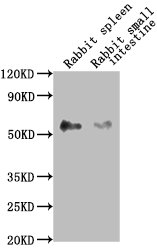
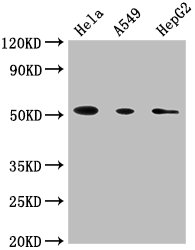
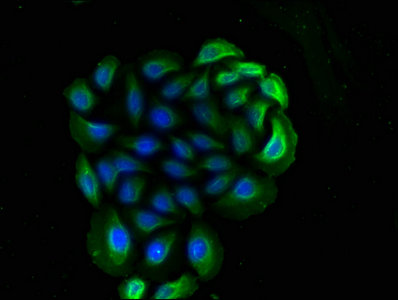
The antibody against CD14 was raised in mouse using the Recombinant Human Monocyte differentiation antigen CD14 protein (20-345AA) as the immunogen. This antibody exists as a non-conjugated isotype IgG1, purified by protein A with a purity greater than 95%. This antibody has been validated on ELISA, WB, IF, FC.
$350.00
| Cat.No | ADC-56100A | Clonality | Monoclonal |
|---|---|---|---|
| Host Species | Mouse | Target Name | CD14 |
| Form | Liquid | Species Reactivity | Human, Mouse, Rabbit |
| Isotype | IgG1 | Storage Buffer | 0.01M PBS, 0.03% Proclin 300; Constituents: 50% Glycerol, PH 7.4 |
| Purification Method | >95%, Protein A purified | Conjugate | Non-conjugated |
| Application | ELISA, IF, WB, FC | Storage | Upon receipt |
| Immunogen Description | Recombinant Human Monocyte differentiation antigen CD14 protein (20-345AA) | Target Species | Human |
|---|---|---|---|
| Immunogen Sequence | Complete sequences for the immunogen, target protein, and peptides are available upon request. | Uniprot ID | P08571 |
Uniprot Id
P08571
Target Species
Human
Target Name
CD14
Target Full Name
Monocyte differentiation antigen CD14
Target Function
Coreceptor for bacterial lipopolysaccharide. In concert with LBP, binds to monomeric lipopolysaccharide and delivers it to the LY96/TLR4 complex, thereby mediating the innate immune response to bacterial lipopolysaccharide (LPS). Acts via MyD88, TIRAP and TRAF6, leading to NF-kappa-B activation, cytokine secretion and the inflammatory response. Acts as a coreceptor for TLR2:TLR6 heterodimer in response to diacylated lipopeptides and for TLR2:TLR1 heterodimer in response to triacylated lipopeptides, these clusters trigger signaling from the cell surface and subsequently are targeted to the Golgi in a lipid-raft dependent pathway. Binds electronegative LDL (LDL(-)) and mediates the cytokine release induced by LDL(-).
Target Subcellular Location
Cell membrane; Lipid-anchor, GPI-anchor. Secreted. Membrane raft. Golgi apparatus.
Target Tissue Specificity
Detected on macrophages (at protein level). Expressed strongly on the surface of monocytes and weakly on the surface of granulocytes; also expressed by most tissue macrophages.
Target Research Area
Immunology
Target Synonyms
CD 14; CD_antigen=CD14; CD14; CD14 antigen; CD14 molecule; CD14_HUMAN; LPS-R; Mo2; Monocyte differentiation antigen CD14; Monocyte differentiation antigen CD14 urinary form; Monocyte differentiation antigen CD14; membrane-bound form; Myeloid cell specific leucine rich glycoprotein; Myeloid cell-specific leucine-rich glycoprotein
Target Background
The protein encoded by this gene is a surface antigen that is preferentially expressed on monocytes/macrophages. It cooperates with other proteins to mediate the innate immune response to bacterial lipopolysaccharide, and to viruses. This gene has been identified as a target candidate in the treatment of SARS-CoV-2-infected patients to potentially lessen or inhibit a severe inflammatory response. Alternative splicing results in multiple transcript variants encoding the same protein.
Notification