• Contact info@abtriva.com for inquiries and orders.
  • Chinese (Simplified)

  • English

  • German

  • Korean

  • Spanish

United States (English / $ USD)

mouse anti-Human PGC monoclonal antibody

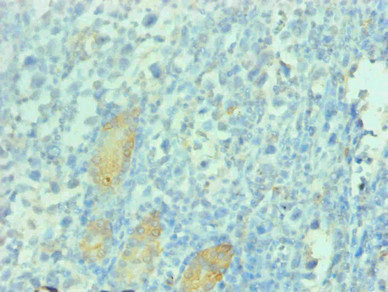
The antibody against PGC was raised in mouse using the Recombinant Human PGC as the immunogen. This antibody exists as a non-conjugated isotype IgG1, purified by protein G purifed . This antibody has been validated on ELISA, IHC.

ADC-55477A

The antibody against PGC was raised in mouse using the Recombinant Human PGC as the immunogen. This antibody exists as a non-conjugated isotype IgG1, purified by protein G purifed . This antibody has been validated on ELISA, IHC.

$350.00

Number
Order Exclusive Products Now

Request a Quote
High Purity LevelsPrecision and ReliabilityCustomization Options

Specifications


Cat.No ADC-55477A ClonalityMonoclonal
Host SpeciesMouseTarget NamePGC
FormLiquidSpecies ReactivityHuman
IsotypeIgG1Storage Buffer0.01M PBS, 0.03% Proclin 300; Constituents: 50% Glycerol, PH 7.4
Purification Method>95%, Protein G purifiedConjugateNon-conjugated
ApplicationELISA, IHCStorageUpon receipt

Immunogen Information


Immunogen DescriptionRecombinant Human PGCTarget SpeciesHuman
Immunogen SequenceComplete sequences for the immunogen, target protein, and peptides are available upon request.Uniprot IDP20142
Background Information
  • Uniprot Id

    P20142

  • Target Species

    Human

  • Target Name

    PGC

  • Target Full Name

    Gastricsin

  • Target Function

    Hydrolyzes a variety of proteins.

  • Target Subcellular Location

    Secreted.

  • Target Protein Families

    Peptidase A1 family

  • Target Synonyms

    PEPC; PGII; Pepsinogen II (PG II)

  • Target Background

    This gene encodes an aspartic proteinase that belongs to the peptidase family A1. The encoded protein is a digestive enzyme that is produced in the stomach and constitutes a major component of the gastric mucosa. This protein is also secreted into the serum. This protein is synthesized as an inactive zymogen that includes a highly basic prosegment. This enzyme is converted into its active mature form at low pH by sequential cleavage of the prosegment that is carried out by the enzyme itself. Polymorphisms in this gene are associated with susceptibility to gastric cancers. Serum levels of this enzyme are used as a biomarker for certain gastric diseases including Helicobacter pylori related gastritis. Alternate splicing results in multiple transcript variants. A pseudogene of this gene is found on chromosome 1.

Inquire mouse anti-Human PGC monoclonal antibody Now


AbTriva respects your privacy and protects your personal data in accordance with AbTriva. For more information, please see our data protection statement. *

Notification