• Contact info@abtriva.com for inquiries and orders.
  • Chinese (Simplified)

  • English

  • German

  • Korean

  • Spanish

United States (English / $ USD)

NCAM Recombinant Monoclonal Antibody

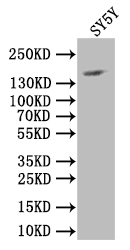
The recombinant antibody against NCAM1 was produced using a synthesized peptide derived from human NCAM as the immunogen. This antibody exists as a non-conjugated isotype Rabbit IgG, Affinity-chromatography purified. This antibody has been validated on ELISA, WB, IHC.

ADC-56126A

The recombinant antibody against NCAM1 was produced using a synthesized peptide derived from human NCAM as the immunogen. This antibody exists as a non-conjugated isotype Rabbit IgG, Affinity-chromatography purified. This antibody has been validated on ELISA, WB, IHC.

$350.00

Number
Order Exclusive Products Now

Request a Quote
High Purity LevelsPrecision and ReliabilityCustomization Options

Specifications


Cat.No ADC-56126A ClonalityMonoclonal
Target NameNCAM1Target Synonymsantigen MSK39 identified by monoclonal antibody 5.1H11 antibody; antigen recognized by monoclonal antibody 5.1H11 antibody; CD56 antibody; cell adhesion molecule, neural
FormLiquidSpecies ReactivityHuman
IsotypeRabbit IgGStorage BufferPH 7.4, 0.02% sodium azide and 50% glycerol., 150mM NaCl, Rabbit IgG in phosphate buffered saline
Purification MethodAffinity-chromatography purifiedConjugateNon-conjugated
ApplicationELISA, IHC, WBStorageUpon receipt

Immunogen Information


Immunogen DescriptionA synthesized peptide derived from human NCAMTarget SpeciesHuman
Immunogen SequenceComplete sequences for the immunogen, target protein, and peptides are available upon request.Uniprot IDP13591
Background Information
  • Uniprot Id

    P13591

  • Target Species

    Human

  • Target Name

    NCAM1

  • Target Full Name

    Neural cell adhesion molecule 1

  • Target Function

    This protein is a cell adhesion molecule involved in neuron-neuron adhesion, neurite fasciculation, outgrowth of neurites, etc.; (Microbial infection) Acts as a receptor for rabies virus.; (Microbial infection) Acts as a receptor for Zika virus.

  • Target Subcellular Location

    [Isoform 1]: Cell membrane; Single-pass type I membrane protein.; [Isoform 2]: Cell membrane; Single-pass type I membrane protein.; [Isoform 3]: Cell membrane; Lipid-anchor, GPI-anchor.; [Isoform 4]: Cell membrane; Lipid-anchor, GPI-anchor.; [Isoform 5]: Secreted.; [Isoform 6]: Secreted.

  • Target Research Area

    Neuroscience

  • Target Synonyms

    antigen MSK39 identified by monoclonal 5.1H11; antigen recognized by monoclonal 5.1H11; CD56; cell adhesion molecule, neural, 1; MSK 39; MSK39; N-CAM-1; NCAM 1; NCAM; NCAM C; NCAM-1; NCAM1; NCAM1_HUMAN; NCAMC; Neural cell adhesion molecule 1; Neural cell adhesion molecule NCAM; OTTHUMP00000235666

  • Target Background

    This gene encodes a cell adhesion protein which is a member of the immunoglobulin superfamily. The encoded protein is involved in cell-to-cell interactions as well as cell-matrix interactions during development and differentiation. The encoded protein plays a role in the development of the nervous system by regulating neurogenesis, neurite outgrowth, and cell migration. This protein is also involved in the expansion of T lymphocytes, B lymphocytes and natural killer (NK) cells which play an important role in immune surveillance. This protein plays a role in signal transduction by interacting with fibroblast growth factor receptors, N-cadherin and other components of the extracellular matrix and by triggering signalling cascades involving FYN-focal adhesion kinase (FAK), mitogen-activated protein kinase (MAPK), and phosphatidylinositol 3-kinase (PI3K). One prominent isoform of this gene, cell surface molecule CD56, plays a role in several myeloproliferative disorders such as acute myeloid leukemia and differential expression of this gene is associated with differential disease progression. For example, increased expression of CD56 is correlated with lower survival in acute myeloid leukemia patients whereas increased severity of COVID-19 is correlated with decreased abundance of CD56-expressing NK cells in peripheral blood. Alternative splicing results in multiple transcript variants encoding distinct protein isoforms.

Inquire NCAM Recombinant Monoclonal Antibody Now


AbTriva respects your privacy and protects your personal data in accordance with AbTriva. For more information, please see our data protection statement. *

Notification