• Contact info@abtriva.com for inquiries and orders.
  • Chinese (Simplified)

  • English

  • German

  • Korean

  • Spanish

United States (English / $ USD)

Rabbit anti-Human FGFR2 Polyclonal Antibody

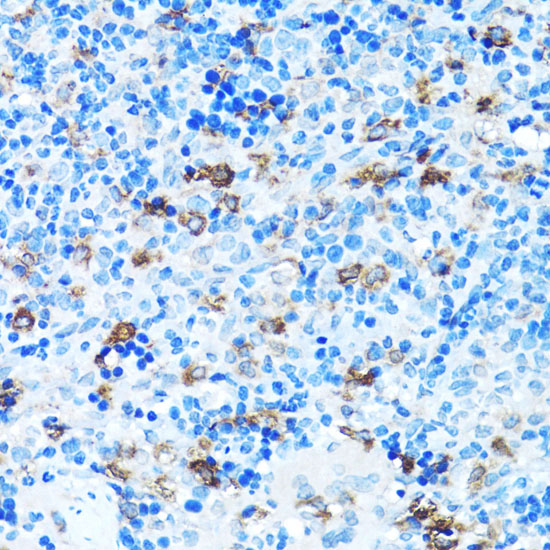
The antibody against FGFR2 was raised in Rabbit using a synthetic peptide corresponding to a sequence within amino acids 1-100 of human FGFR2 (NP_000132.3) as the immunogen. The polyclonal antibody exists as a isotype IgG, by affinity purification. This antibody has been validated on IHC-P, ELISA.

ADA-09908A

The antibody against FGFR2 was raised in Rabbit using a synthetic peptide corresponding to a sequence within amino acids 1-100 of human FGFR2 (NP_000132.3) as the immunogen. The polyclonal antibody exists as a isotype IgG, by affinity purification. This antibody has been validated on IHC-P, ELISA.

Number
Order Exclusive Products Now

Request a Quote
High Purity LevelsPrecision and ReliabilityCustomization Options

Specifications


Cat.No ADA-09908A ClonalityPolyclonal
Host SpeciesRabbitTarget NameFGFR2
Target SynonymsBEK; JWS; BBDS; CEK3; CFD1; ECT1; KGFR; TK14; TK25; BFR-1; CD332; K-SAM; FGFR2FormLiquid
Species ReactivityHuman, Mouse, RatIsotypeIgG
Storage Buffer50% Glycerol, PBS with 0.02% sodium azide, pH7.3.Purification MethodAffinity purification
Positive Samples293T, LO2ApplicationELISA, IHC-P

Immunogen Information


Immunogen DescriptionA synthetic peptide corresponding to a sequence within amino acids 1-100 of human FGFR2 (NP_000132.3).Target SpeciesHuman
Immunogen SequenceMVSWGRFICLVVVTMATLSLARPSFSLVEDTTLEPEEPPTKYQISQPEVYVAAPGESLEVRCLLKDAAVISWTKDGVHLGPNNRTVLIGEYLQIKGATPRUniprot IDP21802
Background Information
  • Uniprot Id

    P21802

  • Target Species

    Human

  • Target Name

    FGFR2

  • Target Full Name

    Fibroblast growth factor receptor 2

  • Target Function

    Tyrosine-protein kinase that acts as cell-surface receptor for fibroblast growth factors and plays an essential role in the regulation of cell proliferation, differentiation, migration and apoptosis, and in the regulation of embryonic development. Required for normal embryonic patterning, trophoblast function, limb bud development, lung morphogenesis, osteogenesis and skin development. Plays an essential role in the regulation of osteoblast differentiation, proliferation and apoptosis, and is required for normal skeleton development. Promotes cell proliferation in keratinocytes and immature osteoblasts, but promotes apoptosis in differentiated osteoblasts. Phosphorylates PLCG1, FRS2 and PAK4. Ligand binding leads to the activation of several signaling cascades. Activation of PLCG1 leads to the production of the cellular signaling molecules diacylglycerol and inositol 1,4,5-trisphosphate. Phosphorylation of FRS2 triggers recruitment of GRB2, GAB1, PIK3R1 and SOS1, and mediates activation of RAS, MAPK1/ERK2, MAPK3/ERK1 and the MAP kinase signaling pathway, as well as of the AKT1 signaling pathway. FGFR2 signaling is down-regulated by ubiquitination, internalization and degradation. Mutations that lead to constitutive kinase activation or impair normal FGFR2 maturation, internalization and degradation lead to aberrant signaling. Over-expressed FGFR2 promotes activation of STAT1.

  • Target Involvement

    Crouzon syndrome (CS); Jackson-Weiss syndrome (JWS); Apert syndrome (APRS); Pfeiffer syndrome (PS); Beare-Stevenson cutis gyrata syndrome (BSTVS); Familial scaphocephaly syndrome (FSPC); Lacrimo-auriculo-dento-digital syndrome (LADDS); Antley-Bixler syndrome, without genital anomalies or disordered steroidogenesis (ABS2); Bent bone dysplasia syndrome (BBDS); Saethre-Chotzen syndrome (SCS)

  • Target Subcellular Location

    Cell membrane; Single-pass type I membrane protein. Golgi apparatus. Cytoplasmic vesicle. Note=Detected on osteoblast plasma membrane lipid rafts. After ligand binding, the activated receptor is rapidly internalized and degraded.; [Isoform 1]: Cell membrane; Single-pass type I membrane protein. Note=After ligand binding, the activated receptor is rapidly internalized and degraded.; [Isoform 3]: Cell membrane; Single-pass type I membrane protein. Note=After ligand binding, the activated receptor is rapidly internalized and degraded.; [Isoform 8]: Secreted.; [Isoform 13]: Secreted.

  • Target Protein Families

    Protein kinase superfamily, Tyr protein kinase family, Fibroblast growth factor receptor subfamily

  • Target Synonyms

    FGFR2; BEK; KGFR; KSAM; Fibroblast growth factor receptor 2; FGFR-2; K-sam; Keratinocyte growth factor receptor; CD antigen CD332

  • Target Background

    The protein encoded by this gene is a member of the fibroblast growth factor receptor family, where amino acid sequence is highly conserved between members and throughout evolution. FGFR family members differ from one another in their ligand affinities and tissue distribution. A full-length representative protein consists of an extracellular region, composed of three immunoglobulin-like domains, a single hydrophobic membrane-spanning segment and a cytoplasmic tyrosine kinase domain. The extracellular portion of the protein interacts with fibroblast growth factors, setting in motion a cascade of downstream signals, ultimately influencing mitogenesis and differentiation. This particular family member is a high-affinity receptor for acidic, basic and/or keratinocyte growth factor, depending on the isoform. Mutations in this gene are associated with Crouzon syndrome, Pfeiffer syndrome, Craniosynostosis, Apert syndrome, Jackson-Weiss syndrome, Beare-Stevenson cutis gyrata syndrome, Saethre-Chotzen syndrome, and syndromic craniosynostosis. Multiple alternatively spliced transcript variants encoding different isoforms have been noted for this gene.

Inquire Rabbit anti-Human FGFR2 Polyclonal Antibody Now


AbTriva respects your privacy and protects your personal data in accordance with AbTriva. For more information, please see our data protection statement. *

Notification