• Contact info@abtriva.com for inquiries and orders.
  • Chinese (Simplified)

  • English

  • German

  • Korean

  • Spanish

United States (English / $ USD)

Rabbit anti-Human ATP6V1E1 Polyclonal Antibody

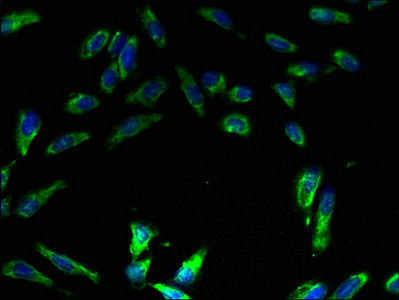
The antibody against ATP6V1E1 was raised in rabbit using the Recombinant Human V-type proton ATPase subunit E 1 protein (2-224AA) as the immunogen. This antibody exists as a non-conjugated isotype IgG, purified by protein G with a purity greater than 95%. This antibody has been validated on ELISA, WB, IF.

ADC-54507A

The antibody against ATP6V1E1 was raised in rabbit using the Recombinant Human V-type proton ATPase subunit E 1 protein (2-224AA) as the immunogen. This antibody exists as a non-conjugated isotype IgG, purified by protein G with a purity greater than 95%. This antibody has been validated on ELISA, WB, IF.

$299.00

Number
Order Exclusive Products Now

Request a Quote
High Purity LevelsPrecision and ReliabilityCustomization Options

Specifications


Cat.No ADC-54507A ClonalityPolyclonal
Host SpeciesRabbitTarget NameATP6V1E1
FormLiquidSpecies ReactivityHuman
IsotypeIgGStorage Buffer0.01M PBS, 0.03% Proclin 300; Constituents: 50% Glycerol, PH 7.4
Purification Method>95%, Protein G purifiedConjugateNon-conjugated
ApplicationELISA, IF, WBStorageUpon receipt

Immunogen Information


Immunogen DescriptionRecombinant Human V-type proton ATPase subunit E 1 protein (2-224AA)Target SpeciesHuman
Immunogen SequenceComplete sequences for the immunogen, target protein, and peptides are available upon request.Uniprot IDP36543
Background Information
  • Uniprot Id

    P36543

  • Target Species

    Human

  • Target Name

    ATP6V1E1

  • Target Full Name

    V-type proton ATPase subunit E 1

  • Target Function

    Subunit of the V1 complex of vacuolar(H+)-ATPase (V-ATPase), a multisubunit enzyme composed of a peripheral complex (V1) that hydrolyzes ATP and a membrane integral complex (V0) that translocates protons. V-ATPase is responsible for acidifying and maintaining the pH of intracellular compartments and in some cell types, is targeted to the plasma membrane, where it is responsible for acidifying the extracellular environment.

  • Target Involvement

    Cutis laxa, autosomal recessive, 2C (ARCL2C)

  • Target Subcellular Location

    Apical cell membrane.

  • Target Protein Families

    V-ATPase E subunit family

  • Target Tissue Specificity

    Kidney; localizes to early distal nephron, encompassing thick ascending limbs and distal convoluted tubules (at protein level). Ubiquitous. High expression in the skin.

  • Target Synonyms

    ATP6V1E1; ATP6E; ATP6E2; V-type proton ATPase subunit E 1; V-ATPase subunit E 1; V-ATPase 31 kDa subunit; p31; Vacuolar proton pump subunit E 1

  • Target Background

    This gene encodes a component of vacuolar ATPase (V-ATPase), a multisubunit enzyme that mediates acidification of eukaryotic intracellular organelles. V-ATPase dependent organelle acidification is necessary for such intracellular processes as protein sorting, zymogen activation, receptor-mediated endocytosis, and synaptic vesicle proton gradient generation. V-ATPase is composed of a cytosolic V1 domain and a transmembrane V0 domain. The V1 domain consists of three A, three B, and two G subunits, as well as a C, D, E, F, and H subunit. The V1 domain contains the ATP catalytic site. This gene encodes alternate transcriptional splice variants, encoding different V1 domain E subunit isoforms. Pseudogenes for this gene have been found in the genome.

Inquire Rabbit anti-Human ATP6V1E1 Polyclonal Antibody Now


AbTriva respects your privacy and protects your personal data in accordance with AbTriva. For more information, please see our data protection statement. *

Notification