-
Chinese (Simplified)
-
English
-
German
-
Korean
-
Spanish
Chinese (Simplified)
English
German
Korean
Spanish
Sign up for an account to enjoy easy online shopping and instant order tracking.
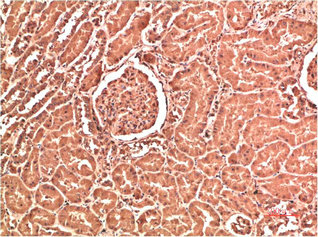
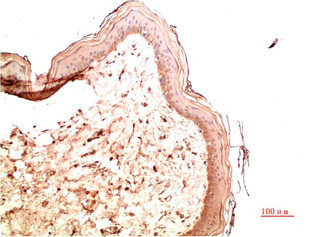
The antibody against COL4A1 was raised in mouse using the Synthetic Peptide as the immunogen. This antibody exists as a non-conjugated antibody. The antibody was affinity-purified from mouse ascites by affinity-chromatography using specific immunogen. This antibody has been validated on ELISA, IHC.
$167.00
| Cat.No | ADC-55530A | Clonality | Monoclonal |
|---|---|---|---|
| Host Species | Mouse | Target Name | COL4A1 |
| Form | Liquid | Species Reactivity | Human, Mouse, Rat |
| Storage Buffer | PH 7.4, containing 0.02% sodium azide as Preservative and 50% Glycerol., PBS | Purification Method | The antibody was affinity-purified from mouse ascites by affinity-chromatography using specific immunogen. |
| Conjugate | Non-conjugated | Application | ELISA, IHC |
| Storage | Upon receipt |
| Immunogen Description | Synthetic Peptide | Target Species | Human |
|---|---|---|---|
| Immunogen Sequence | Complete sequences for the immunogen, target protein, and peptides are available upon request. | Uniprot ID | P02462 |
Uniprot Id
P02462
Target Species
Human
Target Name
COL4A1
Target Full Name
Collagen alpha-1(IV) chain
Target Function
Type IV collagen is the major structural component of glomerular basement membranes (GBM), forming a 'chicken-wire' meshwork together with laminins, proteoglycans and entactin/nidogen.; Arresten, comprising the C-terminal NC1 domain, inhibits angiogenesis and tumor formation. The C-terminal half is found to possess the anti-angiogenic activity. Specifically inhibits endothelial cell proliferation, migration and tube formation.
Target Involvement
Brain small vessel disease with or without ocular anomalies (BSVD); Hereditary angiopathy with nephropathy aneurysms and muscle cramps (HANAC); Porencephaly 1 (POREN1); Intracerebral hemorrhage (ICH); Tortuosity of retinal arteries (RATOR); Schizencephaly (SCHZC)
Target Subcellular Location
Secreted, extracellular space, extracellular matrix, basement membrane.
Target Protein Families
Type IV collagen family
Target Tissue Specificity
Highly expressed in placenta.
Target Research Area
Cancer
Target Synonyms
Arresten; BSVD; CO4A1_HUMAN; COL4A1; COL4A1 NC1 domain; COL4A2; COL4A3; COL4A4; COL4A5; collagen alpha-1(IV) chain; Collagen IV Alpha 1 Polypeptide; Collagen IV Alpha 2 Polypeptide; Collagen Of Basement Membrane Alpha 1 Chain; Collagen Of Basement Membrane Alpha 2 Chain; Collagen Type IV Alpha 1; collagen type IV alpha 1 chain; Collagen Type IV Alpha 2; Collagen Type IV Alpha 3; Collagen Type IV Alpha 4; Collagen Type IV Alpha 5; RATOR
Target Background
This gene encodes a type IV collagen alpha protein. Type IV collagen proteins are integral components of basement membranes. This gene shares a bidirectional promoter with a paralogous gene on the opposite strand. The protein consists of an amino-terminal 7S domain, a triple-helix forming collagenous domain, and a carboxy-terminal non-collagenous domain. It functions as part of a heterotrimer and interacts with other extracellular matrix components such as perlecans, proteoglycans, and laminins. In addition, proteolytic cleavage of the non-collagenous carboxy-terminal domain results in a biologically active fragment known as arresten, which has anti-angiogenic and tumor suppressor properties. Mutations in this gene cause porencephaly, cerebrovascular disease, and renal and muscular defects. Alternative splicing results in multiple transcript variants.
Notification