-
Chinese (Simplified)
-
English
-
German
-
Korean
-
Spanish
Chinese (Simplified)
English
German
Korean
Spanish
Sign up for an account to enjoy easy online shopping and instant order tracking.
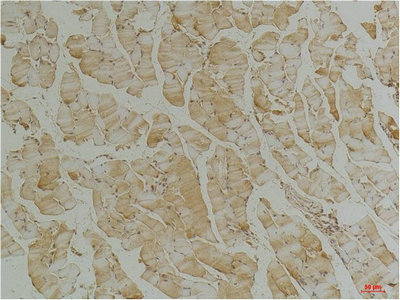
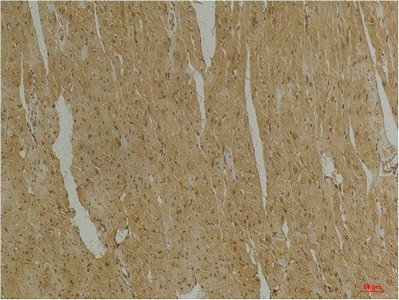
The antibody against DES was raised in mouse using the Recombinant Protein as the immunogen. This antibody exists as a non-conjugated antibody. The antibody was affinity-purified from mouse ascites by affinity-chromatography using specific immunogen. This antibody has been validated on ELISA, IHC.
$167.00
| Cat.No | ADC-55603A | Clonality | Monoclonal |
|---|---|---|---|
| Host Species | Mouse | Target Name | DES |
| Form | Liquid | Species Reactivity | Human, Mouse, Rat |
| Storage Buffer | 0.5% BSA and 0.02% sodium azide., Liquid in PBS containing 50% glycerol | Purification Method | The antibody was affinity-purified from mouse ascites by affinity-chromatography using specific immunogen. |
| Conjugate | Non-conjugated | Application | ELISA, IHC |
| Storage | Upon receipt |
| Immunogen Description | Recombinant Protein | Target Species | Human |
|---|---|---|---|
| Immunogen Sequence | Complete sequences for the immunogen, target protein, and peptides are available upon request. | Uniprot ID | P17661 |
Uniprot Id
P17661
Target Species
Human
Target Name
DES
Target Full Name
Desmin
Target Function
Muscle-specific type III intermediate filament essential for proper muscular structure and function. Plays a crucial role in maintaining the structure of sarcomeres, inter-connecting the Z-disks and forming the myofibrils, linking them not only to the sarcolemmal cytoskeleton, but also to the nucleus and mitochondria, thus providing strength for the muscle fiber during activity. In adult striated muscle they form a fibrous network connecting myofibrils to each other and to the plasma membrane from the periphery of the Z-line structures. May act as a sarcomeric microtubule-anchoring protein: specifically associates with detyrosinated tubulin-alpha chains, leading to buckled microtubules and mechanical resistance to contraction. Contributes to the transcriptional regulation of the NKX2-5 gene in cardiac progenitor cells during a short period of cardiomyogenesis and in cardiac side population stem cells in the adult. Plays a role in maintaining an optimal conformation of nebulette (NEB) on heart muscle sarcomeres to bind and recruit cardiac alpha-actin.
Target Involvement
Myopathy, myofibrillar, 1 (MFM1); Cardiomyopathy, dilated 1I (CMD1I); Neurogenic scapuloperoneal syndrome Kaeser type (Kaeser syndrome); Limb-girdle muscular dystrophy 2R (LGMD2R)
Target Subcellular Location
Cytoplasm, myofibril, sarcomere, Z line. Cytoplasm. Cell membrane, sarcolemma. Nucleus.
Target Protein Families
Intermediate filament family
Target Research Area
Cancer
Target Synonyms
CMD1I; CSM1; CSM2; DES; DESM_HUMAN; Desmin; FLJ12025; FLJ39719; FLJ41013; FLJ41793; Intermediate filament protein; OTTHUMP00000064865
Target Background
This gene encodes a muscle-specific class III intermediate filament. Homopolymers of this protein form a stable intracytoplasmic filamentous network connecting myofibrils to each other and to the plasma membrane. Mutations in this gene are associated with desmin-related myopathy, a familial cardiac and skeletal myopathy (CSM), and with distal myopathies.
Notification