• Contact info@abtriva.com for inquiries and orders.
  • Chinese (Simplified)

  • English

  • German

  • Korean

  • Spanish

United States (English / $ USD)

Rabbit anti-Human Ki67 Polyclonal Antibody

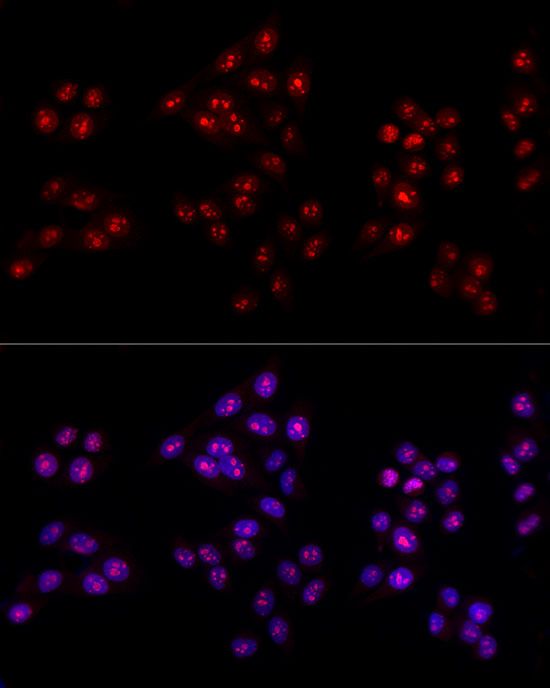
The antibody against Ki67 was raised in Rabbit using a synthetic peptide corresponding to a sequence within amino acids 700-800 of human Ki67 (NP_002408.3) as the immunogen. The polyclonal antibody exists as a isotype IgG, by affinity purification. This antibody has been validated on IF/ICC, ELISA.

ADA-13102A

The antibody against Ki67 was raised in Rabbit using a synthetic peptide corresponding to a sequence within amino acids 700-800 of human Ki67 (NP_002408.3) as the immunogen. The polyclonal antibody exists as a isotype IgG, by affinity purification. This antibody has been validated on IF/ICC, ELISA.

Number
Order Exclusive Products Now

Request a Quote
High Purity LevelsPrecision and ReliabilityCustomization Options

Specifications


Cat.No ADA-13102A ClonalityPolyclonal
Host SpeciesRabbitTarget NameKi67
Target SynonymsKIA; MIB-; MIB-1; PPP1R105; Ki67FormLiquid
Species ReactivityHumanIsotypeIgG
Storage Buffer50% Glycerol, PBS with 0.05% proclin300, pH7.3.Purification MethodAffinity purification
Positive Samples22Rv1, RajiApplicationELISA, IF/ICC

Immunogen Information


Immunogen DescriptionA synthetic peptide corresponding to a sequence within amino acids 700-800 of human Ki67 (NP_002408.3).Target SpeciesHuman
Immunogen SequenceGEVHSQFSTGHANSPCTIIIGKAHTEKVHVPARPYRVLNNFISNQKMDFKEDLSGIAEMFKTPVKEQPQLTSTCHIAISNSENLLGKQFQGTDSGEEPLLPUniprot IDP46013
Background Information
  • Uniprot Id

    P46013

  • Target Species

    Human

  • Target Name

    MKI67

  • Target Full Name

    Proliferation marker protein Ki-67

  • Target Function

    Required to maintain individual mitotic chromosomes dispersed in the cytoplasm following nuclear envelope disassembly. Associates with the surface of the mitotic chromosome, the perichromosomal layer, and covers a substantial fraction of the chromosome surface. Prevents chromosomes from collapsing into a single chromatin mass by forming a steric and electrostatic charge barrier: the protein has a high net electrical charge and acts as a surfactant, dispersing chromosomes and enabling independent chromosome motility. Binds DNA, with a preference for supercoiled DNA and AT-rich DNA. Does not contribute to the internal structure of mitotic chromosomes. May play a role in chromatin organization. It is however unclear whether it plays a direct role in chromatin organization or whether it is an indirect consequence of its function in maintaining mitotic chromosomes dispersed (Probable).

  • Target Subcellular Location

    Chromosome. Nucleus. Nucleus, nucleolus.

  • Target Research Area

    Cancer, Cell Cycle

  • Target Synonyms

    Antigen identified by monoclonal Ki 67 ; Antigen identified by monoclonal Ki-67; Antigen KI-67; Antigen KI67 ; Antigen Ki67; KI67_HUMAN; KIA; Marker of proliferation Ki-67; MIB 1; MIB; MKI67; PPP1R105; Proliferation marker protein Ki-67; Proliferation related Ki 67 antigen ; Protein phosphatase 1 regulatory subunit 105; RP11-380J17.2

  • Target Background

    Enables protein C-terminus binding activity. Involved in regulation of chromosome segregation and regulation of mitotic nuclear division. Located in chromosome; nuclear body; and nucleolus. Colocalizes with condensed chromosome. Implicated in Crohn's disease; breast cancer; human immunodeficiency virus infectious disease; and pancreatic cancer. Biomarker of several diseases, including Barrett's esophagus; autoimmune disease of musculoskeletal system (multiple); endocrine gland cancer (multiple); gastrointestinal system cancer (multiple); and interstitial cystitis.

Inquire Rabbit anti-Human Ki67 Polyclonal Antibody Now


AbTriva respects your privacy and protects your personal data in accordance with AbTriva. For more information, please see our data protection statement. *

Notification