• Contact info@abtriva.com for inquiries and orders.
  • Chinese (Simplified)

  • English

  • German

  • Korean

  • Spanish

United States (English / $ USD)

Mouse anti-Human KRT17 Monoclonal Antibody

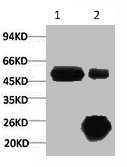
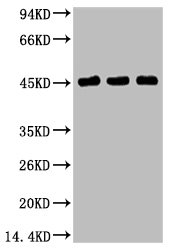
The antibody against KRT17 was raised in mouse using the Synthetic Peptide as the immunogen. This antibody exists as a non-conjugated isotype IgG. This antibody has been validated on ELISA, WB, IP.

ADC-55694A

The antibody against KRT17 was raised in mouse using the Synthetic Peptide as the immunogen. This antibody exists as a non-conjugated isotype IgG. This antibody has been validated on ELISA, WB, IP.

$167.00

Number
Order Exclusive Products Now

Request a Quote
High Purity LevelsPrecision and ReliabilityCustomization Options

Specifications


Cat.No ADC-55694A ClonalityMonoclonal
Host SpeciesMouseTarget NameKRT17
Target Synonymstype I antibody; Keratin antibody; Keratin type I cytoskeletal 17 antibody; keratin, type i cytoskeletal 17 [version 1] antibody; Keratin-17 antibody; KRT17 antibody; PC antibody; PC2 antibody; PCHC1 antibody; type I cytoskeletal 17 antibodyFormLiquid
Species ReactivityHumanIsotypeIgG
Storage BufferPH 7.4, containing 0.02% sodium azide as Preservative and 50% Glycerol., PBSConjugateNon-conjugated
ApplicationELISA, WB, IPStorageUpon receipt

Immunogen Information


Immunogen DescriptionSynthetic PeptideTarget SpeciesHuman
Immunogen SequenceComplete sequences for the immunogen, target protein, and peptides are available upon request.Uniprot IDQ04695
Background Information
  • Uniprot Id

    Q04695

  • Target Species

    Human

  • Target Name

    KRT17

  • Target Full Name

    Keratin, type I cytoskeletal 17

  • Target Function

    Type I keratin involved in the formation and maintenance of various skin appendages, specifically in determining shape and orientation of hair. Required for the correct growth of hair follicles, in particular for the persistence of the anagen (growth) state. Modulates the function of TNF-alpha in the specific context of hair cycling. Regulates protein synthesis and epithelial cell growth through binding to the adapter protein SFN and by stimulating Akt/mTOR pathway. Involved in tissue repair. May be a marker of basal cell differentiation in complex epithelia and therefore indicative of a certain type of epithelial 'stem cells'. Acts as a promoter of epithelial proliferation by acting a regulator of immune response in skin: promotes Th1/Th17-dominated immune environment contributing to the development of basaloid skin tumors. May act as an autoantigen in the immunopathogenesis of psoriasis, with certain peptide regions being a major target for autoreactive T-cells and hence causing their proliferation.

  • Target Involvement

    Pachyonychia congenita 2 (PC2); Steatocystoma multiplex (SM)

  • Target Subcellular Location

    Cytoplasm.

  • Target Protein Families

    Intermediate filament family

  • Target Tissue Specificity

    Expressed in the outer root sheath and medulla region of hair follicle specifically from eyebrow and beard, digital pulp, nail matrix and nail bed epithelium, mucosal stratified squamous epithelia and in basal cells of oral epithelium, palmoplantar epider

  • Target Synonyms

    PC; K17; PC2; 39.1; CK-17; PCHC1; Cytokeratin 17 (KRT17)

  • Target Background

    This gene encodes the type I intermediate filament chain keratin 17, expressed in nail bed, hair follicle, sebaceous glands, and other epidermal appendages. Mutations in this gene lead to Jackson-Lawler type pachyonychia congenita and steatocystoma multiplex.

Inquire Mouse anti-Human KRT17 Monoclonal Antibody Now


AbTriva respects your privacy and protects your personal data in accordance with AbTriva. For more information, please see our data protection statement. *

Notification