-
Chinese (Simplified)
-
English
-
German
-
Korean
-
Spanish

Chinese (Simplified)
English
German
Korean
Spanish
Sign up for an account to enjoy easy online shopping and instant order tracking.
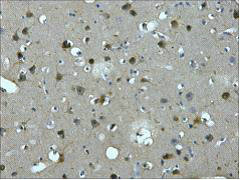
The antibody against MAP2 was raised in mouse using the Synthetic Peptide as the immunogen. This antibody exists as a non-conjugated isotype IgG. This antibody has been validated on ELISA, IHC.
$167.00
| Cat.No | ADC-55703A | Clonality | Monoclonal |
|---|---|---|---|
| Host Species | Mouse | Target Name | Map2 |
| Form | Liquid | Species Reactivity | Human, Mouse, Rat |
| Isotype | IgG | Storage Buffer | PH 7.4, containing 0.02% sodium azide as Preservative and 50% Glycerol., PBS |
| Conjugate | Non-conjugated | Application | ELISA, IHC |
| Storage | Upon receipt |
| Immunogen Description | Synthetic Peptide | Target Species | Human |
|---|---|---|---|
| Immunogen Sequence | Complete sequences for the immunogen, target protein, and peptides are available upon request. | Uniprot ID | P11137 |
Uniprot Id
P11137
Target Species
Human
Target Name
MAP2
Target Full Name
Microtubule-associated protein 2
Target Function
The exact function of MAP2 is unknown but MAPs may stabilize the microtubules against depolymerization. They also seem to have a stiffening effect on microtubules.
Target Subcellular Location
Cytoplasm, cytoskeleton. Cell projection, dendrite.
Target Synonyms
DKFZp686I2148; MAP 2; MAP dendrite specific; MAP-2; MAP2; MAP2A; MAP2B; MAP2C; Microtubule associated protein 2; Microtubule-associated protein 2; MTAP2_HUMAN
Target Background
This gene encodes a protein that belongs to the microtubule-associated protein family. The proteins of this family are thought to be involved in microtubule assembly, which is an essential step in neurogenesis. The products of similar genes in rat and mouse are neuron-specific cytoskeletal proteins that are enriched in dentrites, implicating a role in determining and stabilizing dentritic shape during neuron development. A number of alternatively spliced variants encoding distinct isoforms have been described.
Notification