-
Chinese (Simplified)
-
English
-
German
-
Korean
-
Spanish
Chinese (Simplified)
English
German
Korean
Spanish
Sign up for an account to enjoy easy online shopping and instant order tracking.
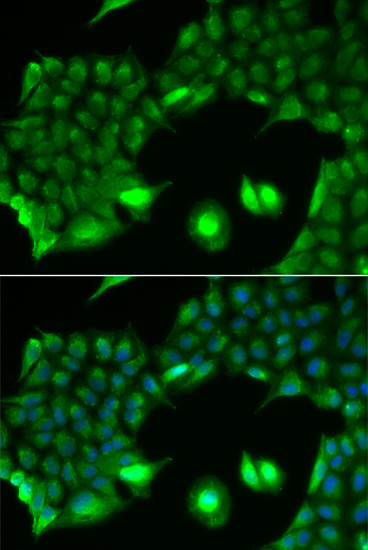
The antibody against SSX2 was raised in Rabbit using the recombinant fusion protein containing a sequence corresponding to amino acids 1-188 of human SSX2 (NP_783629.1) as the immunogen. The polyclonal antibody exists as a isotype IgG, by affinity purification. This antibody has been validated on WB, IF/ICC, ELISA.
| Cat.No | ADA-06184A | Clonality | Polyclonal |
|---|---|---|---|
| Host Species | Rabbit | Target Name | SSX2 |
| Target Synonyms | SSX; HD21; CT5.2; CT5.2A; HOM-MEL-40; SSX2 | Form | Liquid |
| Species Reactivity | Human, Mouse, Rat | Isotype | IgG |
| Storage Buffer | 50% Glycerol, PBS with 0.02% sodium azide, pH7.3. | Purification Method | Affinity purification |
| Application | ELISA, WB, IF/ICC |
| Immunogen Description | Recombinant fusion protein containing a sequence corresponding to amino acids 1-188 of human SSX2 (NP_783629.1). | Target Species | Human |
|---|---|---|---|
| Immunogen Sequence | MNGDDAFARRPTVGAQIPEKIQKAFDDIAKYFSKEEWEKMKASEKIFYVYMKRKYEAMTKLGFKATLPPFMCNKRAEDFQGNDLDNDPNRGNQVERPQMTFGRLQGISPKIMPKKPAEEGNDSEEVPEASGPQNDGKELCPPGKPTTSEKIHERSGPKRGEHAWTHRLRERKQLVIYEEISDPEEDDE | Uniprot ID | Q16385 |
Uniprot Id
Q16385
Target Species
Human
Target Name
SSX2
Target Full Name
Protein SSX2
Target Function
Could act as a modulator of transcription.
Target Involvement
A chromosomal aberration involving SSX2 may be a cause of synovial sarcoma. Translocation t(X;18)(p11.2;q11.2). The translocation is specifically found in more than 80% of synovial sarcoma. The fusion products SSXT-SSX1 or SSXT-SSX2 are probably responsible for transforming activity. Heterogeneity in the position of the breakpoint can occur (low frequency).
Target Subcellular Location
Nucleus.
Target Protein Families
SSX family
Target Tissue Specificity
Expressed at high level in the testis. Expressed at low level in thyroid. Not detected in tonsil, colon, lung, spleen, prostate, kidney, striated and smooth muscles. Detected in rhabdomyosarcoma and fibrosarcoma cell lines. Not detected in mesenchymal and
Target Research Area
Epigenetics and Nuclear Signaling
Target Synonyms
Cancer/testis antigen 5.2; Cancer/testis antigen family 5, member 2a; Cancer/testis antigen family 5, member 2b; CT5.2; CT5.2A; CT5.2b; HD21; hom mel 40; HOM-MEL-40; MGC119055; MGC15364; MGC3884; Protein SSX2; RP11-552J9.2; sarcoma, synovial, X-chromosome related 2; SSx; SSX2; SSX2-SYT fusion gene, included; SSX2_HUMAN; SSX2B; Synovial sarcoma; synovial sarcoma X breakpoint 2; Synovial sarcoma, X breakpoint 2B; Tumor antigen HOM-MEL-40; X breakpoint 2
Target Background
The product of this gene belongs to the family of highly homologous synovial sarcoma X (SSX) breakpoint proteins. These proteins may function as transcriptional repressors. They are also capable of eliciting spontaneous humoral and cellular immune responses in cancer patients, and are potentially useful targets in cancer vaccine-based immunotherapy. This gene, and also the SSX1 and SSX4 family members, have been involved in t(X;18)(p11.2;q11.2) translocations that are characteristically found in all synovial sarcomas. This translocation results in the fusion of the synovial sarcoma translocation gene on chromosome 18 to one of the SSX genes on chromosome X. The encoded hybrid proteins are likely responsible for transforming activity. Alternative splicing of this gene results in multiple transcript variants. This gene also has an identical duplicate, GeneID: 727837, located about 45 kb downstream in the opposite orientation on chromosome X.
Notification