• Contact info@abtriva.com for inquiries and orders.
  • Chinese (Simplified)

  • English

  • German

  • Korean

  • Spanish

United States (English / $ USD)

Rabbit anti-Human TNFSF9 Polyclonal Antibody

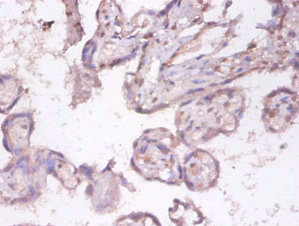
The antibody against TNFSF9 was raised in rabbit using the Recombinant Human Tumor necrosis factor ligand superfamily member 9 protein (52-254AA) as the immunogen. This antibody exists as a non-conjugated isotype IgG, purified by protein G with a purity greater than 95%. This antibody has been validated on ELISA, IHC, IF.

ADC-54266A

The antibody against TNFSF9 was raised in rabbit using the Recombinant Human Tumor necrosis factor ligand superfamily member 9 protein (52-254AA) as the immunogen. This antibody exists as a non-conjugated isotype IgG, purified by protein G with a purity greater than 95%. This antibody has been validated on ELISA, IHC, IF.

$299.00

Number
Order Exclusive Products Now

Request a Quote
High Purity LevelsPrecision and ReliabilityCustomization Options

Specifications


Cat.No ADC-54266A ClonalityPolyclonal
Host SpeciesRabbitTarget NameTNFSF9
FormLiquidSpecies ReactivityHuman
IsotypeIgGStorage Buffer0.01M PBS, 0.03% Proclin 300; Constituents: 50% Glycerol, PH 7.4
Purification Method>95%, Protein G purifiedConjugateNon-conjugated
ApplicationELISA, IF, IHCStorageUpon receipt

Immunogen Information


Immunogen DescriptionRecombinant Human Tumor necrosis factor ligand superfamily member 9 protein (52-254AA)Target SpeciesHuman
Immunogen SequenceComplete sequences for the immunogen, target protein, and peptides are available upon request.Uniprot IDP41273
Background Information
  • Uniprot Id

    P41273

  • Target Species

    Human

  • Target Name

    TNFSF9

  • Target Full Name

    Tumor necrosis factor ligand superfamily member 9

  • Target Function

    Cytokine that binds to TNFRSF9. Induces the proliferation of activated peripheral blood T-cells. May have a role in activation-induced cell death (AICD). May play a role in cognate interactions between T-cells and B-cells/macrophages.

  • Target Subcellular Location

    Membrane; Single-pass type II membrane protein.

  • Target Protein Families

    Tumor necrosis factor family

  • Target Tissue Specificity

    Expressed in brain, placenta, lung, skeletal muscle and kidney.

  • Target Research Area

    Immunology

  • Target Synonyms

    4 1BB L; 4 1BB ligand; 4 1BBL; 4-1BB ligand; 4-1BBL; Cd137l; Cd157l; Homolog of mouse 4 1BB L; Homolog of mouse 4 1BBL; ILA ligand (TNF related); Ly63l; Receptor 4 1BB ligand; TNF superfamily member 9; TNFL9_HUMAN; Tnfsf9; TNLG5A; Tumor necrosis factor (ligand) superfamily member 9; Tumor necrosis factor ligand 5A; Tumor necrosis factor ligand superfamily member 9; Tumor necrosis factor superfamily member 9

  • Target Background

    The protein encoded by this gene is a cytokine that belongs to the tumor necrosis factor (TNF) ligand family. This transmembrane cytokine is a bidirectional signal transducer that acts as a ligand for TNFRSF9/4-1BB, which is a costimulatory receptor molecule in T lymphocytes. This cytokine and its receptor are involved in the antigen presentation process and in the generation of cytotoxic T cells. The receptor TNFRSF9/4-1BB is absent from resting T lymphocytes but rapidly expressed upon antigenic stimulation. The ligand encoded by this gene, TNFSF9/4-1BBL, has been shown to reactivate anergic T lymphocytes in addition to promoting T lymphocyte proliferation. This cytokine has also been shown to be required for the optimal CD8 responses in CD8 T cells. This cytokine is expressed in carcinoma cell lines, and is thought to be involved in T cell-tumor cell interaction.

Inquire Rabbit anti-Human TNFSF9 Polyclonal Antibody Now


AbTriva respects your privacy and protects your personal data in accordance with AbTriva. For more information, please see our data protection statement. *

Notification