BCA vs Bradford Assay: Which Protein Assay Should You Use?
Choosing the right protein assay helps you measure protein concentration accurately and prepare reliable laboratory experiments. Both BCA and Bradford assays measure total protein, but they use different chemical reactions and respond differently to sample ingredients. The BCA vs Bradford assay comparison is especially important when working with detergents, reducing agents, or complex protein mixtures. BCA generally tolerates detergents better, while Bradford provides faster results and often works with reducing agents. However, neither method suits every sample. This guide explains their principles, sensitivity, buffer compatibility, experimental procedures, and troubleshooting methods to help you select the most appropriate protein quantification method for your research.
What Is the Difference Between BCA and Bradford Assays?
BCA and Bradford are colorimetric protein assays that estimate total protein concentration by measuring changes in absorbance.
The main difference is their chemistry. BCA relies on copper reduction, while Bradford measures protein-dye binding. This affects buffer compatibility, processing time, and accuracy.
What Is the BCA Protein Assay?
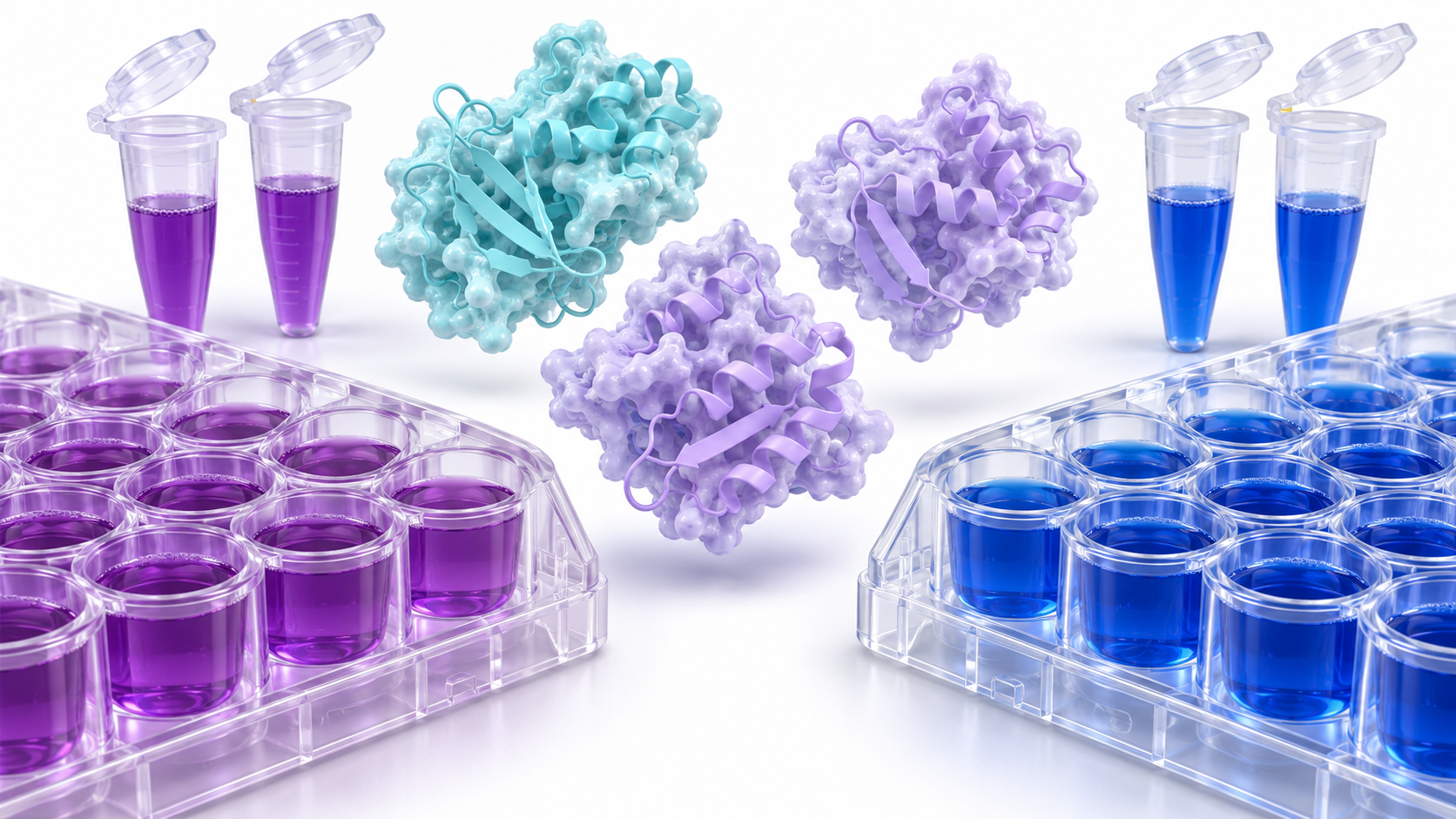
The BCA protein assay uses bicinchoninic acid to detect proteins through copper reduction. Its purple reaction product is measured at 562 nm, making it useful for total protein quantification in many detergent-containing samples.
What Is the Bradford Protein Assay?
The Bradford protein assay uses Coomassie Brilliant Blue G-250 dye, which changes color when interacting with proteins. Absorbance is measured at 595 nm, allowing researchers to estimate concentration using known protein standards.
How Do BCA and Bradford Protein Assays Work?
Both assays convert protein-dependent chemical interactions into measurable color changes. A spectrophotometer or microplate reader measures the resulting absorbance.
Understanding their reaction mechanisms helps explain why detergents, reducing agents, and differences between protein samples can affect results.
BCA Assay Principle: Copper Reduction and Color Formation
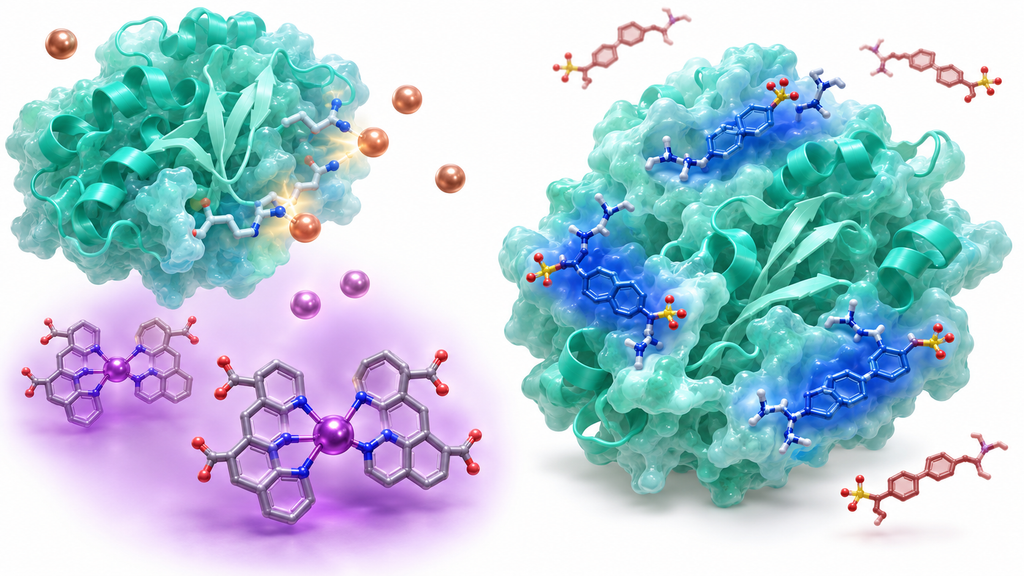
The BCA assay principle involves proteins reducing Cu²⁺ to Cu⁺ under alkaline conditions. Bicinchoninic acid then forms a purple complex with Cu⁺, producing absorbance at 562 nm.
The reaction also depends partly on protein amino acid composition.
Bradford Assay Principle: Coomassie Dye Binding
The Bradford assay principle involves Coomassie dye binding to proteins, especially arginine-rich regions and certain other amino acid residues. Binding stabilizes the blue dye form, which is measured at 595 nm.
Different proteins can produce different responses.
Why Do Different Proteins Give Different Results?
BCA and Bradford generally use BSA as a calibration standard, but other proteins may respond differently. Amino acid composition affects both reactions.
This matters when measuring purified recombinant proteins or comparing proteins with different biochemical properties.
BCA vs Bradford Assay: Key Differences
The BCA vs Bradford assay comparison involves working range, sensitivity, speed, and compatibility with sample ingredients.
BCA generally has lower protein-to-protein variation, while Bradford requires shorter incubation. Actual performance depends on the specific kit formulation.
Protein Assay Sensitivity and Working Range
The standard Pierce BCA assay measures approximately 20–2,000 µg/mL, while the standard Pierce Bradford assay covers approximately 100–1,500 µg/mL.
These are manufacturer-specific ranges. Specialized microassays can measure lower concentrations.
Accuracy and Protein-to-Protein Variation
Protein assay accuracy depends on calibration, sample composition, and chemical interference.
BCA generally produces lower protein-to-protein variation than Bradford. However, neither method measures every protein identically, particularly when amino acid composition differs from the standard.
BCA vs Bradford Assay Comparison Table
Feature
BCA Assay
Bradford Assay
Detection principle
Copper reduction
Protein-dye binding
Main reagent
Bicinchoninic acid
Coomassie G-250
Reaction color
Purple
Blue
Measurement wavelength
562 nm
595 nm
Standard Pierce working range
20–2,000 µg/mL
100–1,500 µg/mL
Example incubation
30 minutes at 37°C
10 minutes at room temperature
Detergent compatibility
Generally better
Often limited
Reducing-agent compatibility
Generally limited
Often better
Protein-to-protein variation
Usually lower
Often higher
Advantages and Disadvantages of BCA and Bradford Assays
Both methods can provide reliable protein concentration measurements when samples are compatible with the reagents.
Their advantages and limitations depend on processing time, protein composition, working range, and sample buffer. Choose based on these factors rather than convenience alone.
Advantages of the BCA Protein Assay
BCA offers good compatibility with many detergents, a broad working range, and relatively consistent responses across different proteins.
It is useful for routine cell lysates and purified protein preparations when interfering reducing agents are absent.
Limitations of the BCA Protein Assay
BCA assay limitations include interference from reducing agents and copper-binding compounds. Standard formulations also require controlled incubation.
DTT, beta-mercaptoethanol, and some chelators can affect readings unless compatible modified reagents are used.
Advantages of the Bradford Protein Assay
Bradford is fast, simple, and convenient for routine protein measurements. It tolerates many salts, reducing agents, and buffer components within recommended limits.
Its short incubation makes it practical for processing multiple samples.
Limitations of the Bradford Protein Assay
Bradford assay limitations include detergent sensitivity and greater variation between proteins. Standard curves may also become nonlinear.
Researchers measuring purified native proteins should consider whether their proteins respond similarly to the selected calibration standard.
BCA vs Bradford Assay: Sample and Buffer Compatibility
Protein assay buffer compatibility often determines which method is suitable. Detergents, reducing agents, and chelating compounds can change absorbance independently of protein concentration.
Always review the sample buffer composition before selecting an assay, particularly for cell lysates prepared with RIPA or other detergent-containing solutions.
Effects of Detergents, SDS, and Triton X-100
Detergent interference is a common problem with standard Bradford reagents. SDS, Triton X-100, and Tween 20 can affect dye binding.
Standard BCA generally tolerates these detergents better, provided concentrations remain within manufacturer limits.
Effects of DTT, Beta-Mercaptoethanol, and EDTA
DTT and beta-mercaptoethanol can reduce copper independently of proteins, causing interference in standard BCA assays.
EDTA may also interfere by binding copper. Bradford often tolerates these compounds better within validated concentrations.
BCA vs Bradford Buffer Compatibility Table
Sample Component
Standard BCA
Standard Bradford
SDS
Often tolerated within limits
May interfere
Triton X-100
Generally compatible within limits
May interfere
Tween 20
Generally compatible within limits
May interfere
DTT
Can interfere
Often better tolerated
Beta-mercaptoethanol
Can interfere
Often better tolerated
EDTA
May interfere
Generally better tolerated
RIPA buffer
Depends on formulation
Often affected by detergents
Example: Measuring Protein in RIPA Lysate
Suppose you're preparing cell lysates for Western blotting using RIPA buffer. BCA may be suitable if the detergent concentrations meet the kit's specifications.
However, adding DTT before quantification may require a reducing-agent-compatible assay.
How to Reduce Buffer Interference
Sample dilution may reduce interfering substances, provided protein concentration remains measurable.
Other options include protein cleanup, compatible modified assay formulations, or buffer-matched standards. Always confirm that dilution doesn't introduce additional measurement errors.
How to Perform BCA and Bradford Protein Assays
Both assays require prepared protein standards, unknown samples, compatible reagents, and absorbance measurements.
The procedures differ in sample volume, incubation conditions, and working reagent preparation. Follow the instructions supplied with your specific assay kit.
BCA Assay: Step-by-Step Protocol
Prepare working reagent according to the kit instructions. Add protein standards and samples, then mix thoroughly.
A standard Pierce microplate procedure uses 25 µL sample and 200 µL working reagent, followed by 30 minutes at 37°C. Measure at 562 nm after cooling.
Bradford Assay: Step-by-Step Protocol
Add standards and samples to the appropriate wells, then mix with Bradford reagent.
A standard Pierce Bradford Plus microplate protocol uses 10 µL sample and 300 µL reagent. Incubate for approximately 10 minutes at room temperature before measuring at 595 nm.
How to Prepare a BSA Standard Curve
A BSA standard curve uses known bovine serum albumin concentrations to relate absorbance to protein concentration.
Prepare standards within the kit's working range, include a reagent blank, and measure samples consistently. Use the recommended calibration model.
How to Calculate Protein Concentration
For an appropriate linear standard curve, use:
Protein concentration = (A − b) ÷ m
Here, A is absorbance, b is the intercept, and m is the slope. Apply any sample dilution factor after calculating the measured concentration.
For example, an absorbance of 0.45, intercept of zero, and slope of 0.30 absorbance units per mg/mL gives 1.5 mg/mL.
If the sample was diluted twofold, its original concentration is 3.0 mg/mL. This calculation is illustrative; actual standard curves may require nonlinear fitting.
Common BCA and Bradford Assay Problems and Troubleshooting
Protein assay problems often come from incompatible buffers, inaccurate standard preparation, or inconsistent incubation conditions.
Poor calibration curves, unexpected absorbance readings, and variable replicates can produce inaccurate concentrations. Check sample chemistry and handling before repeating an assay.
Poor Standard Curves and Inconsistent Results
Poor curves may result from pipetting errors, incorrect dilutions, inadequate mixing, or inconsistent reaction times.
Prepare fresh standards when needed, measure replicates, and confirm that the readings fall within the validated assay range.
Unexpectedly High Protein Concentration
An unusually high BCA reading may indicate interference from reducing agents or other reactive substances.
Compare sample blanks and consider dilution or cleanup. A stronger color doesn't always mean the sample contains more protein.
Unexpectedly Low Protein Concentration
Low readings may reflect protein concentrations below the working range, detergent interference, or calibration problems.
Check the standard curve, sample dilution, and reagent compatibility before interpreting low values as poor extraction yield.
Why Consistent Reagents Matter
Long-term laboratory measurements benefit from consistent standards and reagent handling.
Changes between assay reagent lots can affect calibration. Related quality-control principles are discussed in AbTriva's lot-to-lot variability guide.
BCA or Bradford Assay: Which Should You Choose?
The BCA vs Bradford assay decision should begin with your sample's chemical composition and expected protein concentration.
BCA often suits detergent-containing samples, while Bradford provides rapid measurements when reducing agents are present and detergent interference is limited.
When Should You Use the BCA Protein Assay?
Choose BCA when your sample contains compatible detergents or when lower protein-to-protein variation matters.
This makes it useful for many cell lysates and purified protein preparations, provided the buffer doesn't contain interfering concentrations of reducing agents.
When Should You Use the Bradford Protein Assay?
Choose Bradford when you need fast results and your sample contains no interfering detergent concentrations.
It is particularly useful when reducing agents make standard BCA unsuitable, provided the selected Bradford formulation supports the sample buffer.
Which Protein Assay Is Better for Western Blotting?
For Western blot sample preparation, choose an assay compatible with the lysis buffer.
Protein quantification helps standardize sample loading. However, it doesn't replace validated loading controls or total-protein normalization, as explained in AbTriva's Western blot loading controls guide.
Both methods are useful for laboratory protein analysis, but neither is automatically more accurate for every sample.
Understanding their compatibility limits, calibration standards, and detection ranges helps you avoid errors before downstream experiments.
Is the BCA Assay More Accurate Than the Bradford Assay?
BCA generally shows lower protein-to-protein variation, but neither assay is universally more accurate. Results depend on protein composition, calibration standards, sample buffers, and chemical interference.
Why Is BSA Used as a Standard in Both Protein Assays?
BSA is widely available, stable, and well characterized. It provides a convenient reference for calibration curves. However, other proteins may respond differently, so BSA-based measurements are estimates of protein concentration relative to that standard.
Can You Use the Bradford Assay with RIPA Buffer?
Standard Bradford assays may be affected by the detergents present in RIPA buffer. Some detergent-compatible formulations can tolerate these ingredients. Check the manufacturer's compatibility table before measuring your lysate.
Which Protein Assay Is Better for Low Protein Concentrations?
Micro BCA and specialized micro-Bradford methods can measure lower concentrations than standard formulations. Choose according to the expected protein range, available sample volume, and buffer compatibility.
Can Poor Protein Quantification Affect Downstream Experiments?
Yes. Incorrect protein concentrations can cause unequal Western blot loading or inconsistent protein inputs in other assays.
For ELISA-specific calibration problems, AbTriva's ELISA troubleshooting guide explains additional sources of measurement error.
Conclusion
The BCA vs Bradford assay comparison shows that both methods provide useful protein measurements when matched to the right sample conditions. BCA generally tolerates detergents better and produces lower protein-to-protein variation, while Bradford offers faster results and often works better with reducing agents.
Before choosing, consider your sample buffer, expected concentration, processing time, and assay working range. Use appropriate standards, check for interference, and follow validated procedures to obtain reliable protein quantification results.
Fast & Free Shipping
Free shipping on orders $999+
Quality Guarantee
Advenit post multos Scudilo Scutariorum tribunus velament
Secure Payment
We accept credit cards, PayPal, and bank wires
Lifetime Customer Support
Responsive and knowledgable customer service via email, text or phone