• Contact info@abtriva.com for inquiries and orders.
  • Chinese (Simplified)

  • English

  • German

  • Korean

  • Spanish

United States (English / $ USD)

Rabbit anti-Rat IFN gamma Monoclonal Antibody

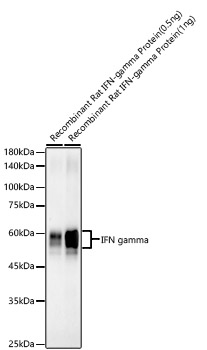
The antibody against IFN gamma was raised in Rabbit using the recombinant fusion protein containing a sequence corresponding to amino acids 20-153 of rat IFN gamma (NP_620235.1) as the immunogen. The monoclonal antibody exists as a isotype IgG, by affinity purification. This antibody has been validated on WB, ELISA.

ADA-16396A

The antibody against IFN gamma was raised in Rabbit using the recombinant fusion protein containing a sequence corresponding to amino acids 20-153 of rat IFN gamma (NP_620235.1) as the immunogen. The monoclonal antibody exists as a isotype IgG, by affinity purification. This antibody has been validated on WB, ELISA.

Number
Order Exclusive Products Now

Request a Quote
High Purity LevelsPrecision and ReliabilityCustomization Options

Specifications


Cat.No ADA-16396A ClonalityMonoclonal
Host SpeciesRabbitTarget NameIFN gamma
Target SynonymsIf2f; IFNG2; IFN gammaFormLiquid
Species ReactivityMouse, RatIsotypeIgG
Storage Buffer50% Glycerol, 0.05% BSA, PBS with 0.05% proclin300, pH7.3.Purification MethodAffinity purification
Positive SamplesRecombinant Mouse/Rat IFN-gamma ProteinApplicationELISA, WB

Immunogen Information


Immunogen DescriptionRecombinant fusion protein containing a sequence corresponding to amino acids 20-153 of rat IFN gamma (NP_620235.1).Target SpeciesRat
Immunogen SequenceCYCQGTLIESLESLKNYFNSSSMDAMEGKSLLLDIWRNWQKDGNTKILESQIISFYLRLFEVLKDNQAISNNISVIESHLITNFFSNSKAKKDAFMSIAKFEVNNPQIQHKAVNELIRVIHQLSPESSLRKRKRUniprot IDP01581
Background Information
  • Uniprot Id

    P01581

  • Target Species

    Rat

  • Target Name

    IFNG

  • Target Full Name

    Interferon gamma

  • Target Function

    Type II interferon produced by immune cells such as T-cells and NK cells that plays crucial roles in antimicrobial, antiviral, and antitumor responses by activating effector immune cells and enhancing antigen presentation. Primarily signals through the JAK-STAT pathway after interaction with its receptor IFNGR1 to affect gene regulation. Upon IFNG binding, IFNGR1 intracellular domain opens out to allow association of downstream signaling components JAK2, JAK1 and STAT1, leading to STAT1 activation, nuclear translocation and transcription of IFNG-regulated genes. Many of the induced genes are transcription factors such as IRF1 that are able to further drive regulation of a next wave of transcription. Plays a role in class I antigen presentation pathway by inducing a replacement of catalytic proteasome subunits with immunoproteasome subunits. In turn, increases the quantity, quality, and repertoire of peptides for class I MHC loading. Increases the efficiency of peptide generation also by inducing the expression of activator PA28 that associates with the proteasome and alters its proteolytic cleavage preference. Up-regulates as well MHC II complexes on the cell surface by promoting expression of several key molecules such as cathepsins B/CTSB, H/CTSH, and L/CTSL. Participates in the regulation of hematopoietic stem cells during development and under homeostatic conditions by affecting their development, quiescence, and differentiation.

  • Target Subcellular Location

    Secreted.

  • Target Protein Families

    Type II (or gamma) interferon family

  • Target Tissue Specificity

    Released primarily from activated T lymphocytes.

  • Target Synonyms

    If2f; IFNG2; IFN gamma

  • Target Background

    Predicted to enable cytokine activity. Involved in several processes, including negative regulation of cell population proliferation; positive regulation of NMDA glutamate receptor activity; and positive regulation of macromolecule metabolic process. Located in several cellular components, including extracellular space; neuron projection; and perikaryon. Used to study several diseases, including Chagas disease; allergic conjunctivitis; allergic rhinitis; renal fibrosis; and ureteral obstruction. Biomarker of several diseases, including abdominal aortic aneurysm; autoimmune thyroiditis; pulpitis; tongue squamous cell carcinoma; and visual epilepsy. Human ortholog(s) of this gene implicated in several diseases, including ataxia telangiectasia; autoimmune disease (multiple); eczema herpeticum; factor VIII deficiency; and leukemia (multiple). Orthologous to human IFNG (interferon gamma).

Inquire Rabbit anti-Rat IFN gamma Monoclonal Antibody Now


AbTriva respects your privacy and protects your personal data in accordance with AbTriva. For more information, please see our data protection statement. *

Notification