Polyclonal Antibody Production: Steps, Timeline and What Affects Quality
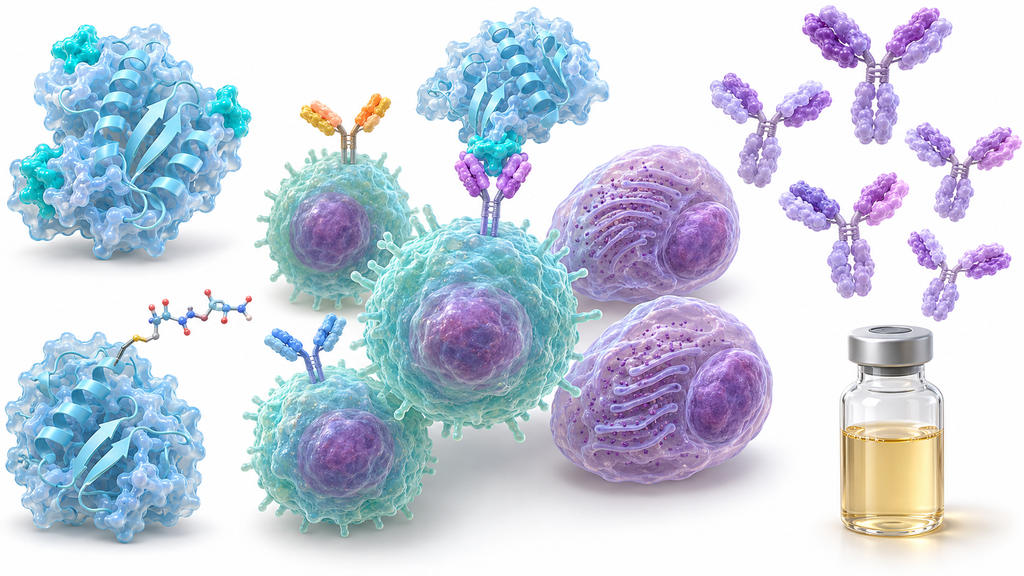
Polyclonal antibody production creates antibodies that recognize multiple regions of an antigen, making them useful for ELISA, Western blot, and tissue staining. The process begins with antigen preparation for immunization, followed by animal immunization, antibody titer monitoring, serum collection, and purification. A typical polyclonal antibody production timeline is around 8–12 weeks, although difficult antigens or additional testing may take longer. Final quality depends on antigen purity, the host's immune response, and antibody specificity testing. This guide explains each production step, expected timelines, and essential polyclonal antibody quality control practices to help you achieve reliable research results.
What Are Polyclonal Antibodies and How Are They Produced?
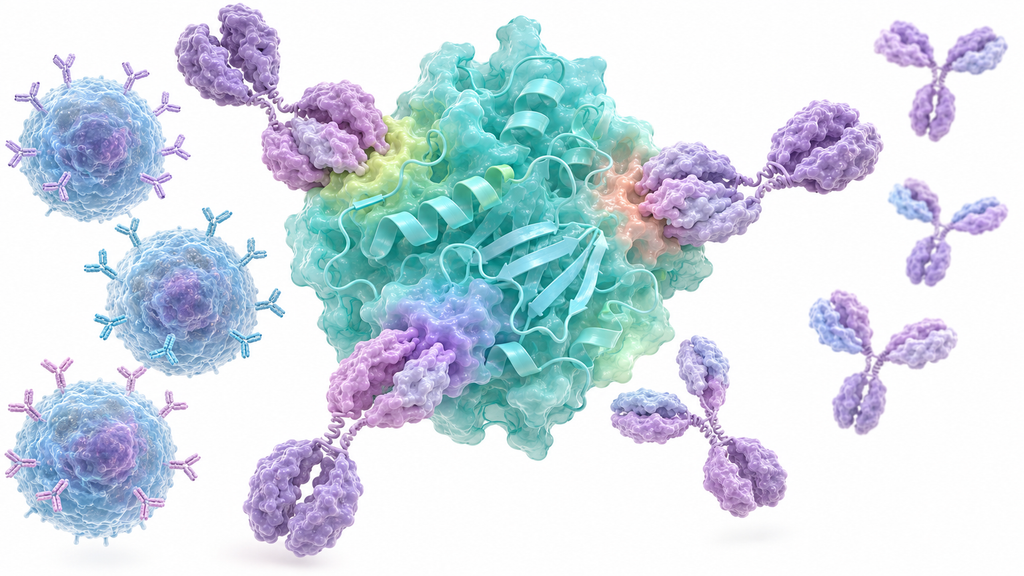
Polyclonal antibodies are a heterogeneous antibody mixture produced by multiple B-cell clones responding to the same antigen. They recognize several epitopes, which can improve detection when individual binding sites are difficult to access.
The polyclonal antibody production process begins with immunization and ends with purified, tested antibodies. You can explore AbTriva's polyclonal antibody collection for examples of research reagents.
How Do Polyclonal Antibodies Work?
An antigen activates different antibody-producing B lymphocytes, creating antibodies against multiple regions. This multiple epitope recognition can improve detection sensitivity, although it may also increase unwanted binding to related proteins.
Polyclonal vs. Monoclonal Antibodies
Polyclonal antibodies recognize several epitopes, while monoclonal antibodies come from one B-cell clone and generally recognize a defined epitope. Both approaches have advantages depending on the target and experiment.
Polyclonal antibody applications include Western blotting, ELISA, immunohistochemistry, immunofluorescence, and immunoprecipitation. Their ability to recognize multiple epitopes can be useful for detecting low-abundance proteins or targets with partly hidden binding sites.
Step 1: Antigen Preparation and Host Species Selection
Successful antigen preparation for immunization starts with selecting a suitable target region. Researchers may use purified proteins, synthetic peptides, or other antigen formats, depending on the desired antibody specificity.
Host species selection for antibodies also affects antibody yield, available serum volume, and immune response. Rabbits are common research hosts, while goats and sheep may support larger-scale production.
Choosing Between Protein and Peptide Antigens
A purified protein antigen may preserve multiple epitopes, while a synthetic peptide antigen targets a selected sequence. Protein quality, folding, and sequence uniqueness influence the resulting immune response.
AbTriva's recombinant protein collection provides examples of protein reagents researchers can evaluate for antigen-related applications.
Why Carrier Proteins Matter
Short peptides may have weak antigen immunogenicity. Researchers often use hapten-carrier conjugation with keyhole limpet hemocyanin (KLH) to strengthen immune recognition. Carrier choice also matters during later specificity testing.
Choosing Rabbit, Goat, or Sheep Hosts
Rabbit polyclonal antibody production is widely used for research antibodies. Goats and sheep can provide larger serum volumes, while host selection should consider target similarity, antigen availability, and downstream assay requirements.
Example: Peptide-Based Antibody Development
AbTriva's rabbit anti-human FCF1 polyclonal antibody uses a synthetic peptide immunogen. Its product information describes rabbit origin, affinity purification, and validation for several laboratory applications.
Step 2: Adjuvant Selection and Animal Immunization
Animal immunization for antibody production introduces an antigen to stimulate a humoral immune response. Adjuvants may strengthen this response, particularly when the antigen produces weak immune activation.
The immunization schedule depends on antigen properties, host species, antibody response, and institutional requirements. Immunization procedures must follow approved animal-care protocols and veterinary oversight.
Selecting the Right Adjuvant
Common options include Freund's complete adjuvant, Freund's incomplete adjuvant, and aluminum-based adjuvants. Their immune effects and animal-welfare considerations differ, so selection should follow an approved study protocol.
Primary Immunization and Booster Injections
The primary immunization introduces the antigen, while later booster injections may increase antibody levels and improve response maturation. Timing varies between programs and depends on measured antibody responses.
Why Immunization Timing Matters
An effective antigen-specific immune response develops over time. Collecting samples too early may produce low antibody titers, while additional boosters aren't always necessary once the required response has been achieved.
Animal Welfare and Immunization Monitoring
Animal welfare considerations include appropriate adjuvant selection, veterinary care, observation for injection-site reactions, and approved blood collection limits. Procedures must follow relevant Institutional Animal Care and Use Committee requirements.
Step 3: Antibody Titer Monitoring and Serum Collection
Antibody titer measurement helps determine how strongly collected antiserum reacts with the target antigen. Researchers typically evaluate samples during immunization before deciding whether additional boosting is needed.
Serum antibody collection follows approved blood sampling procedures. After clotting and separation, the resulting antiserum contains both antigen-specific antibodies and other serum proteins.
How Is Antibody Titer Measured?
The enzyme-linked immunosorbent assay (ELISA) is commonly used for antibody titer determination. Serial serum dilutions are tested against the target antigen to estimate the strength of the antibody response.
What Does a High Antibody Titer Mean?
High-titer antiserum contains antibodies that remain detectable at substantial dilution. However, a high titer doesn't automatically guarantee strong specificity, high affinity, or good performance in every application.
How Is Antiserum Collected and Prepared?
Following approved collection procedures, blood is allowed to clot before serum separation by centrifugation. The resulting antiserum is transferred into suitable containers and stored under validated conditions.
Why Antigen-Specific Screening Matters
An antibody may recognize the immunizing peptide but fail to detect the full-length protein. Test binding against the intended target and, where appropriate, use an alternative carrier to assess carrier-related responses.
Step 4: Polyclonal Antibody Purification and Quality Control
Polyclonal antibody purification separates useful immunoglobulins from other serum components. The chosen method affects antibody purity, recovery, specificity, and suitability for downstream experiments.
Polyclonal antibody quality control should include concentration, purity, and antigen-binding measurements. Application-specific testing provides stronger evidence than measuring antibody titer alone.
Protein A/G Affinity Chromatography
Protein A/G affinity chromatography captures compatible immunoglobulins through interactions with their Fc regions. It is commonly used for IgG purification, although binding efficiency varies with host species and immunoglobulin subclass.
Antigen-Specific Affinity Purification
Antigen-specific affinity chromatography selectively captures antibodies recognizing the immobilized target. It can reduce unrelated serum antibodies and improve specificity, although some desired antibodies may be lost during purification.
How Is Antibody Purity Evaluated?
Sodium dodecyl sulfate–polyacrylamide gel electrophoresis (SDS-PAGE) helps assess antibody purity and identify unexpected protein bands. Concentration measurements provide additional information about the recovered preparation.
Why Functional Validation Matters
Antibody validation should reflect the intended application. Western blotting evaluates protein-band recognition, while immunohistochemistry tests staining patterns in tissue samples.
How Long Does Polyclonal Antibody Production Take?
The polyclonal antibody production timeline commonly ranges from 8–12 weeks for standard research programs. Some optimized services may finish sooner, while difficult antigens require additional development.
Polyclonal antibody production timing depends on immunization response, serum collection, purification, and validation. Antigen synthesis or custom protein preparation may also extend the schedule.
Typical Polyclonal Antibody Production Timeline
Production Stage
Example Duration
Main Activity
Antigen preparation
1–2 weeks
Protein or peptide preparation
Immunization
4–8 weeks
Primary immunization and boosters
Titer monitoring
During immunization
ELISA testing and response evaluation
Serum collection
1–2 weeks
Approved sampling and serum processing
Purification and QC
1–2 weeks
Antibody purification and validation
These stages may overlap, so their durations shouldn't be added together automatically. AbTriva describes a typical total timeline of approximately 6–10 weeks for its custom service.
What Can Delay Antibody Production?
Low immunogenicity, weak antibody responses, incomplete antigen preparation, or failed specificity testing can extend development. Additional purification and application-specific validation may also require more time.
Does Faster Production Mean Lower Quality?
Not necessarily. A well-designed program may produce suitable antibodies quickly. However, shortening immunization or validation without supporting evidence can increase the risk of poor specificity or inconsistent results.
What Factors Affect Polyclonal Antibody Quality?
Polyclonal antibody production quality depends on antigen design, host response, immunization conditions, and purification methods. Even a strong immune response may produce antibodies with unwanted cross-reactivity.
Reliable polyclonal antibody characterization requires evaluating specificity, sensitivity, purity, and reproducibility in the intended assay. These measurements help determine whether the final preparation meets research requirements.
Antigen Purity and Conformation
Antigen purity and conformation influence the epitopes recognized during immunization. Contaminated or incorrectly folded antigens may generate antibodies against unwanted proteins or irrelevant structures.
Antibody Affinity and Specificity
Antibody affinity and avidity influence binding strength, but high affinity doesn't guarantee target specificity. Test recognition of related proteins and appropriate negative controls before interpreting experimental signals.
Batch-to-batch variability occurs because different animals and immunization cycles can generate different antibody mixtures. Consistent purification helps, but it cannot make every polyclonal preparation identical.
An antibody that works in Western blot analysis may not perform equally well in immunohistochemistry (IHC). Fixation, antigen accessibility, and tissue background can affect recognition.
Frequently Asked Questions About Polyclonal Antibody Production
1. What Are the Applications of Polyclonal Antibodies?
Polyclonal antibodies are commonly used in Western blotting, ELISA, immunohistochemistry, immunofluorescence, and diagnostic immunoassays. Their ability to recognize multiple epitopes can improve target detection, particularly when some antigen-binding regions are inaccessible.
2. How Are Monoclonal Antibodies Produced?
Traditional monoclonal antibody production involves immunizing an animal, isolating antibody-producing B cells, and fusing them with myeloma cells. The resulting hybridomas are screened, cloned, and expanded to produce antibodies with defined antigen recognition.
3. What Is the Mechanism of Action of Polyclonal Antibodies?
Polyclonal antibodies bind multiple epitopes on the same antigen through different antibody populations. Depending on their isotypes and targets, they may support antigen neutralization, complement activation, or immune-cell recognition. Laboratory applications primarily use their antigen-binding properties.
4. What Are Monoclonal Antibodies?
Monoclonal antibodies are uniform antibody populations derived from a single B-cell clone or defined recombinant sequence. They recognize a specific antigen epitope and are widely used in research, diagnostic testing, and therapeutic development.
5. Why Are Rabbits Commonly Used for Polyclonal Antibody Production?
Rabbits are commonly selected for polyclonal antibody production because they can generate strong immune responses against many antigens and provide useful serum volumes. Their antibodies are widely used in laboratory assays, including Western blotting and immunohistochemistry.
Conclusion
Polyclonal antibody production involves several connected stages, from antigen preparation and immunization to serum collection, purification, and quality control. Each stage influences antibody specificity, sensitivity, yield, and reproducibility.
A typical program may take 8–12 weeks, although actual timing varies. Choosing a suitable antigen, following approved immunization procedures, monitoring antibody titers, and validating the final product are essential for dependable research results.
Fast & Free Shipping
Free shipping on orders $999+
Quality Guarantee
Advenit post multos Scudilo Scutariorum tribunus velament
Secure Payment
We accept credit cards, PayPal, and bank wires
Lifetime Customer Support
Responsive and knowledgable customer service via email, text or phone