-
Chinese (Simplified)
-
English
-
German
-
Korean
-
Spanish

Chinese (Simplified)
English
German
Korean
Spanish
Sign up for an account to enjoy easy online shopping and instant order tracking.
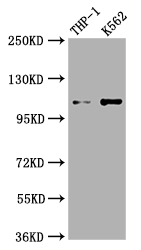
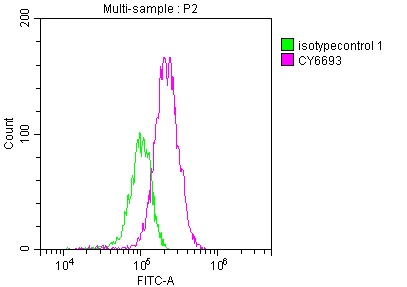
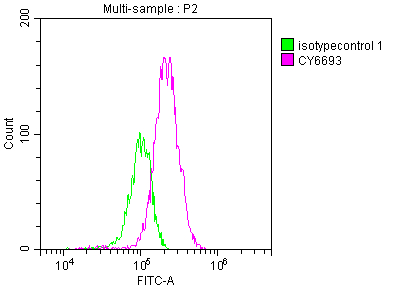
The recombinant antibody against C3 was produced using a synthesized peptide derived from human C3 as the immunogen. This antibody exists as a non-conjugated isotype Rabbit IgG, Affinity-chromatography purified. This antibody has been validated on ELISA, WB, IHC, FC.
$350.00
| Cat.No | ADC-56994A | Clonality | Monoclonal |
|---|---|---|---|
| Target Name | C3 | Target Synonyms | Acylation stimulating protein (ASP) (C3adesArg), C3, C3-beta-c (C3bc), C3a anaphylatoxin, Complement C3 (C3 and PZP-like alpha-2-macroglobulin domain-containing protein 1) [Cleaved into: Complement C3 beta chain, Complement C3 alpha chain, Complement C3b alpha' chain, Complement C3c alpha' chain fragment 1, Complement C3c alpha' chain fragment 2], Complement C3d fragment, Complement C3dg fragment, Complement C3f fragment, Complement C3g fragment, CPAMD1 |
| Form | Liquid | Species Reactivity | Human |
| Isotype | Rabbit IgG | Storage Buffer | PH 7.4, 0.02% sodium azide and 50% glycerol., 150mM NaCl, Rabbit IgG in phosphate buffered saline |
| Purification Method | Affinity-chromatography purified | Conjugate | Non-conjugated |
| Application | ELISA, IHC, WB, FC | Storage | Upon receipt |
| Immunogen Description | A synthesized peptide derived from human C3 | Target Species | Human |
|---|---|---|---|
| Immunogen Sequence | Complete sequences for the immunogen, target protein, and peptides are available upon request. | Uniprot ID | P01024 |
Uniprot Id
P01024
Target Species
Human
Target Name
C3
Target Full Name
Complement C3
Target Function
C3 plays a central role in the activation of the complement system. Its processing by C3 convertase is the central reaction in both classical and alternative complement pathways. After activation C3b can bind covalently, via its reactive thioester, to cell surface carbohydrates or immune aggregates.; Derived from proteolytic degradation of complement C3, C3a anaphylatoxin is a mediator of local inflammatory process. In chronic inflammation, acts as a chemoattractant for neutrophils. It induces the contraction of smooth muscle, increases vascular permeability and causes histamine release from mast cells and basophilic leukocytes.; Acts as a chemoattractant for neutrophils in chronic inflammation.; adipogenic hormone that stimulates triglyceride (TG) synthesis and glucose transport in adipocytes, regulating fat storage and playing a role in postprandial TG clearance. Appears to stimulate TG synthesis via activation of the PLC, MAPK and AKT signaling pathways. Ligand for C5AR2. Promotes the phosphorylation, ARRB2-mediated internalization and recycling of C5AR2.
Target Involvement
Complement component 3 deficiency (C3D); Macular degeneration, age-related, 9 (ARMD9); Hemolytic uremic syndrome atypical 5 (AHUS5)
Target Subcellular Location
Secreted.
Target Tissue Specificity
Plasma. The acylation stimulating protein (ASP) is expressed in adipocytes and released into the plasma during both the fasting and postprandial periods.
Target Research Area
Immunology
Target Synonyms
ASP; C3 and PZP-like alpha-2-macroglobulin domain-containing protein 1; C3; C3adesArg; C3bc; CO3_HUMAN; Complement C3c alpha'' chain fragment 2
Target Background
Complement component C3 plays a central role in the activation of complement system. Its activation is required for both classical and alternative complement activation pathways. The encoded preproprotein is proteolytically processed to generate alpha and beta subunits that form the mature protein, which is then further processed to generate numerous peptide products. The C3a peptide, also known as the C3a anaphylatoxin, modulates inflammation and possesses antimicrobial activity. Mutations in this gene are associated with atypical hemolytic uremic syndrome and age-related macular degeneration in human patients.
Notification