-
Chinese (Simplified)
-
English
-
German
-
Korean
-
Spanish
Chinese (Simplified)
English
German
Korean
Spanish
Sign up for an account to enjoy easy online shopping and instant order tracking.
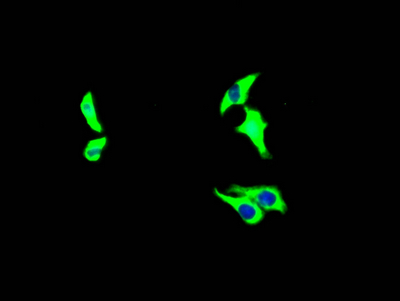
The recombinant antibody against GHR was produced using a synthesized peptide derived from human Growth hormone receptor as the immunogen. This antibody exists as a non-conjugated isotype Rabbit IgG, Affinity-chromatography purified. This antibody has been validated on ELISA, IHC, IF.
$350.00
| Cat.No | ADC-56947A | Clonality | Monoclonal |
|---|---|---|---|
| Target Name | GHR | Target Synonyms | GHR, Growth hormone receptor (GH receptor) (Somatotropin receptor) [Cleaved into: Growth hormone-binding protein (GH-binding protein) (GHBP) (Serum-binding protein)] |
| Form | Liquid | Species Reactivity | Human |
| Isotype | Rabbit IgG | Storage Buffer | PH 7.4, 0.02% sodium azide and 50% glycerol., 150mM NaCl, Rabbit IgG in phosphate buffered saline |
| Purification Method | Affinity-chromatography purified | Conjugate | Non-conjugated |
| Application | ELISA, IF, IHC | Storage | Upon receipt |
| Immunogen Description | A synthesized peptide derived from human Growth hormone receptor | Target Species | Human |
|---|---|---|---|
| Immunogen Sequence | Complete sequences for the immunogen, target protein, and peptides are available upon request. | Uniprot ID | P10912 |
Uniprot Id
P10912
Target Species
Human
Target Name
GHR
Target Full Name
Growth hormone receptor
Target Function
Receptor for pituitary gland growth hormone involved in regulating postnatal body growth. On ligand binding, couples to the JAK2/STAT5 pathway.; The soluble form (GHBP) acts as a reservoir of growth hormone in plasma and may be a modulator/inhibitor of GH signaling.; Isoform 2 up-regulates the production of GHBP and acts as a negative inhibitor of GH signaling.
Target Involvement
Laron syndrome (LARS); Growth hormone insensitivity, partial (GHIP)
Target Subcellular Location
Cell membrane; Single-pass type I membrane protein.; [Isoform 2]: Cell membrane; Single-pass type I membrane protein.
Target Protein Families
Type I cytokine receptor family, Type 1 subfamily
Target Tissue Specificity
Expressed in various tissues with high expression in liver and skeletal muscle. Isoform 4 is predominantly expressed in kidney, bladder, adrenal gland and brain stem. Isoform 1 expression in placenta is predominant in chorion and decidua. Isoform 4 is hig
Target Research Area
Neuroscience
Target Synonyms
GH receptor; GH-binding protein; GHBP; GHBP, included; GHR; GHR_HUMAN; Growth hormone binding protein; Growth hormone receptor; Growth hormone receptor precursor; Growth hormone-binding protein; Growth hormone-binding protein, included; Increased responsiveness to growth hormone, included; Serum binding protein; Serum-binding protein; Somatotropin receptor
Target Background
This gene encodes a member of the type I cytokine receptor family, which is a transmembrane receptor for growth hormone. Binding of growth hormone to the receptor leads to receptor dimerization and the activation of an intra- and intercellular signal transduction pathway leading to growth. Mutations in this gene have been associated with Laron syndrome, also known as the growth hormone insensitivity syndrome (GHIS), a disorder characterized by short stature. In humans and rabbits, but not rodents, growth hormone binding protein (GHBP) is generated by proteolytic cleavage of the extracellular ligand-binding domain from the mature growth hormone receptor protein. Multiple alternatively spliced transcript variants have been found for this gene.
Notification