• Contact info@abtriva.com for inquiries and orders.
  • Chinese (Simplified)

  • English

  • German

  • Korean

  • Spanish

United States (English / $ USD)

GSTP1 Recombinant Monoclonal Antibody

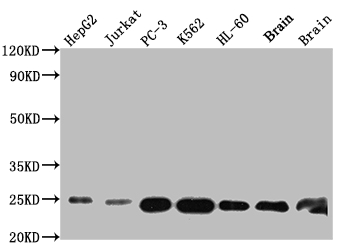
The recombinant antibody against GSTP1 was produced using a synthesized peptide derived from human GST3 / GST pi as the immunogen. This antibody exists as a non-conjugated isotype Rabbit IgG, Affinity-chromatography purified. This antibody has been validated on ELISA, WB, IHC.

ADC-56880A

The recombinant antibody against GSTP1 was produced using a synthesized peptide derived from human GST3 / GST pi as the immunogen. This antibody exists as a non-conjugated isotype Rabbit IgG, Affinity-chromatography purified. This antibody has been validated on ELISA, WB, IHC.

$350.00

Number
Order Exclusive Products Now

Request a Quote
High Purity LevelsPrecision and ReliabilityCustomization Options

Specifications


Cat.No ADC-56880A ClonalityMonoclonal
Target NameGSTP1Target SynonymsFAEES3 GST3, Glutathione S-transferase P (EC 2.5.1.18) (GST class-pi) (GSTP1-1), GSTP1
FormLiquidSpecies ReactivityHuman, Mouse, Rat
IsotypeRabbit IgGStorage BufferPH 7.4, 0.02% sodium azide and 50% glycerol., 150mM NaCl, Rabbit IgG in phosphate buffered saline
Purification MethodAffinity-chromatography purifiedConjugateNon-conjugated
ApplicationELISA, IHC, WBStorageUpon receipt

Immunogen Information


Immunogen DescriptionA synthesized peptide derived from human GST3 / GST piTarget SpeciesHuman
Immunogen SequenceComplete sequences for the immunogen, target protein, and peptides are available upon request.Uniprot IDP09211
Background Information
  • Uniprot Id

    P09211

  • Target Species

    Human

  • Target Name

    GSTP1

  • Target Full Name

    Glutathione S-transferase P

  • Target Function

    Conjugation of reduced glutathione to a wide number of exogenous and endogenous hydrophobic electrophiles. Involved in the formation of glutathione conjugates of both prostaglandin A2 (PGA2) and prostaglandin J2 (PGJ2). Participates in the formation of novel hepoxilin regioisomers. Regulates negatively CDK5 activity via p25/p35 translocation to prevent neurodegeneration.

  • Target Subcellular Location

    Cytoplasm. Mitochondrion. Nucleus. Note=The 83 N-terminal amino acids function as un uncleaved transit peptide, and arginine residues within it are crucial for mitochondrial localization.

  • Target Protein Families

    GST superfamily, Pi family

  • Target Research Area

    Metabolism

  • Target Synonyms

    Deafness; Deafness X-linked 7; DFN7; FAEES3; Fatty Acid Ethyl Ester Synthase III ; Glutathione S Transferase 3; Glutathione S Transferase Pi; Glutathione S-transferase P; Glutathione S-transferase pi 1; GST class-pi; GST3; GSTP; Gstp1; GSTP1-1; GSTP1_HUMAN; PI; X linked 7

  • Target Background

    Glutathione S-transferases (GSTs) are a family of enzymes that play an important role in detoxification by catalyzing the conjugation of many hydrophobic and electrophilic compounds with reduced glutathione. Based on their biochemical, immunologic, and structural properties, the soluble GSTs are categorized into 4 main classes: alpha, mu, pi, and theta. This GST family member is a polymorphic gene encoding active, functionally different GSTP1 variant proteins that are thought to function in xenobiotic metabolism and play a role in susceptibility to cancer, and other diseases.

Inquire GSTP1 Recombinant Monoclonal Antibody Now


AbTriva respects your privacy and protects your personal data in accordance with AbTriva. For more information, please see our data protection statement. *

Notification