-
Chinese (Simplified)
-
English
-
German
-
Korean
-
Spanish

Chinese (Simplified)
English
German
Korean
Spanish
Sign up for an account to enjoy easy online shopping and instant order tracking.
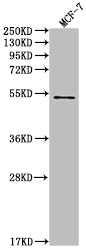
The recombinant antibody against PDCD1 was produced using a synthesized peptide derived from human PD1 as the immunogen. This antibody exists as a non-conjugated isotype Rabbit IgG, Affinity-chromatography purified. This antibody has been validated on ELISA, WB, IHC.
$350.00
| Cat.No | ADC-56961A | Clonality | Monoclonal |
|---|---|---|---|
| Target Name | PDCD1 | Target Synonyms | PD1, PDCD1, Programmed cell death protein 1 (Protein PD-1) (hPD-1) (CD antigen CD279) |
| Form | Liquid | Species Reactivity | Human |
| Isotype | Rabbit IgG | Storage Buffer | PH 7.4, 0.02% sodium azide and 50% glycerol., 150mM NaCl, Rabbit IgG in phosphate buffered saline |
| Purification Method | Affinity-chromatography purified | Conjugate | Non-conjugated |
| Application | ELISA, IHC, WB | Storage | Upon receipt |
| Immunogen Description | A synthesized peptide derived from human PD1 | Target Species | Human |
|---|---|---|---|
| Immunogen Sequence | Complete sequences for the immunogen, target protein, and peptides are available upon request. | Uniprot ID | Q15116 |
Uniprot Id
Q15116
Target Species
Human
Target Name
PDCD1
Target Full Name
Programmed cell death protein 1
Target Function
Inhibitory receptor on antigen activated T-cells that plays a critical role in induction and maintenance of immune tolerance to self. Delivers inhibitory signals upon binding to ligands CD274/PDCD1L1 and CD273/PDCD1LG2. Following T-cell receptor (TCR) engagement, PDCD1 associates with CD3-TCR in the immunological synapse and directly inhibits T-cell activation. Suppresses T-cell activation through the recruitment of PTPN11/SHP-2: following ligand-binding, PDCD1 is phosphorylated within the ITSM motif, leading to the recruitment of the protein tyrosine phosphatase PTPN11/SHP-2 that mediates dephosphorylation of key TCR proximal signaling molecules, such as ZAP70, PRKCQ/PKCtheta and CD247/CD3zeta.; The PDCD1-mediated inhibitory pathway is exploited by tumors to attenuate anti-tumor immunity and escape destruction by the immune system, thereby facilitating tumor survival. The interaction with CD274/PDCD1L1 inhibits cytotoxic T lymphocytes (CTLs) effector function. The blockage of the PDCD1-mediated pathway results in the reversal of the exhausted T-cell phenotype and the normalization of the anti-tumor response, providing a rationale for cancer immunotherapy.
Target Involvement
Systemic lupus erythematosus 2 (SLEB2)
Target Subcellular Location
Cell membrane; Single-pass type I membrane protein.
Target Research Area
Cell Biology
Target Synonyms
CD279; CD279 antigen; hPD 1; hPD l; hPD-1; hSLE1; PD 1; PD-1; PD1; PDCD 1; PDCD1; PDCD1_HUMAN; Programmed cell death 1 ; Programmed cell death 1 protein; Programmed cell death protein 1; Protein PD 1; Protein PD-1; SLEB2 ; Systemic lupus erythematosus susceptibility 2
Target Background
Programmed cell death protein 1 (PDCD1) is an immune-inhibitory receptor expressed in activated T cells; it is involved in the regulation of T-cell functions, including those of effector CD8+ T cells. In addition, this protein can also promote the differentiation of CD4+ T cells into T regulatory cells. PDCD1 is expressed in many types of tumors including melanomas, and has demonstrated to play a role in anti-tumor immunity. Moreover, this protein has been shown to be involved in safeguarding against autoimmunity, however, it can also contribute to the inhibition of effective anti-tumor and anti-microbial immunity.
Notification