• Contact info@abtriva.com for inquiries and orders.
  • Chinese (Simplified)

  • English

  • German

  • Korean

  • Spanish

United States (English / $ USD)

Rabbit anti- S100/S100A1 Monoclonal Antibody

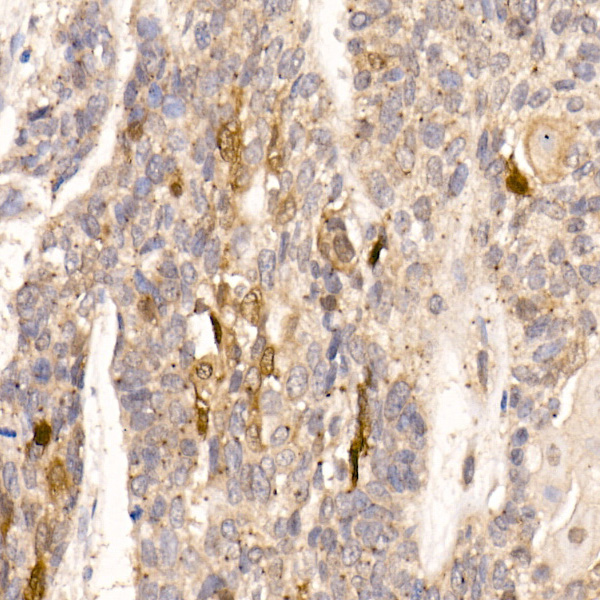
The antibody against S100/S100A1 was raised in Rabbit using the as the immunogen. The monoclonal antibody exists as a isotype IgG, by affinity purification. This antibody has been validated on IHC-P, ELISA.

ADA-13350A

The antibody against S100/S100A1 was raised in Rabbit using the as the immunogen. The monoclonal antibody exists as a isotype IgG, by affinity purification. This antibody has been validated on IHC-P, ELISA.

Number
Order Exclusive Products Now

Request a Quote
High Purity LevelsPrecision and ReliabilityCustomization Options

Specifications


Cat.No ADA-13350A ClonalityMonoclonal
Host SpeciesRabbitTarget NameS100/S100A1
Target SynonymsS100; S100A; S100-alpha; S100/S100A1FormLiquid
Species ReactivityHuman, Mouse, RatIsotypeIgG
Storage Buffer50% Glycerol, 0.05% BSA, PBS with 0.02% sodium azide, pH7.3.Purification MethodAffinity purification
ApplicationELISA, IHC-P

Immunogen Information


Immunogen SequenceComplete sequences for the immunogen, target protein, and peptides are available upon request.Uniprot IDP23297
Background Information
  • Uniprot Id

    P23297

  • Target Species

    Human

  • Target Name

    S100A1

  • Target Full Name

    Protein S100-A1

  • Target Function

    Small calcium binding protein that plays important roles in several biological processes such as Ca(2+) homeostasis, chondrocyte biology and cardiomyocyte regulation. In response to an increase in intracellular Ca(2+) levels, binds calcium which triggers conformational changes. These changes allow interactions with specific target proteins and modulate their activity. Regulates a network in cardiomyocytes controlling sarcoplasmic reticulum Ca(2+) cycling and mitochondrial function through interaction with the ryanodine receptors RYR1 and RYR2, sarcoplasmic reticulum Ca(2+)-ATPase/ATP2A2 and mitochondrial F1-ATPase. Facilitates diastolic Ca(2+) dissociation and myofilament mechanics in order to improve relaxation during diastole.

  • Target Subcellular Location

    Cytoplasm. Sarcoplasmic reticulum. Mitochondrion.

  • Target Protein Families

    S-100 family

  • Target Tissue Specificity

    Highly prevalent in heart. Also found in lesser quantities in skeletal muscle and brain.

  • Target Research Area

    Signal Transduction

  • Target Synonyms

    Bpb; NEF; Protein S100-A1; S-100 protein alpha chain; S-100 protein subunit alpha; S100 alpha; S100 beta; S100 calcium binding protein A1; S100 calcium binding protein B; S100 calcium-binding protein A1; S100 protein alpha polypeptide; S100A; s100a1; S100B; S100beta; S10A1_HUMAN

  • Target Background

    The protein encoded by this gene is a member of the S100 family of proteins containing 2 EF-hand calcium-binding motifs. S100 proteins are localized in the cytoplasm and/or nucleus of a wide range of cells, and involved in the regulation of a number of cellular processes such as cell cycle progression and differentiation. S100 genes include at least 13 members which are located as a cluster on chromosome 1q21. This protein may function in stimulation of Ca2+-induced Ca2+ release, inhibition of microtubule assembly, and inhibition of protein kinase C-mediated phosphorylation. Reduced expression of this protein has been implicated in cardiomyopathies.

Inquire Rabbit anti- S100/S100A1 Monoclonal Antibody Now


AbTriva respects your privacy and protects your personal data in accordance with AbTriva. For more information, please see our data protection statement. *

Notification