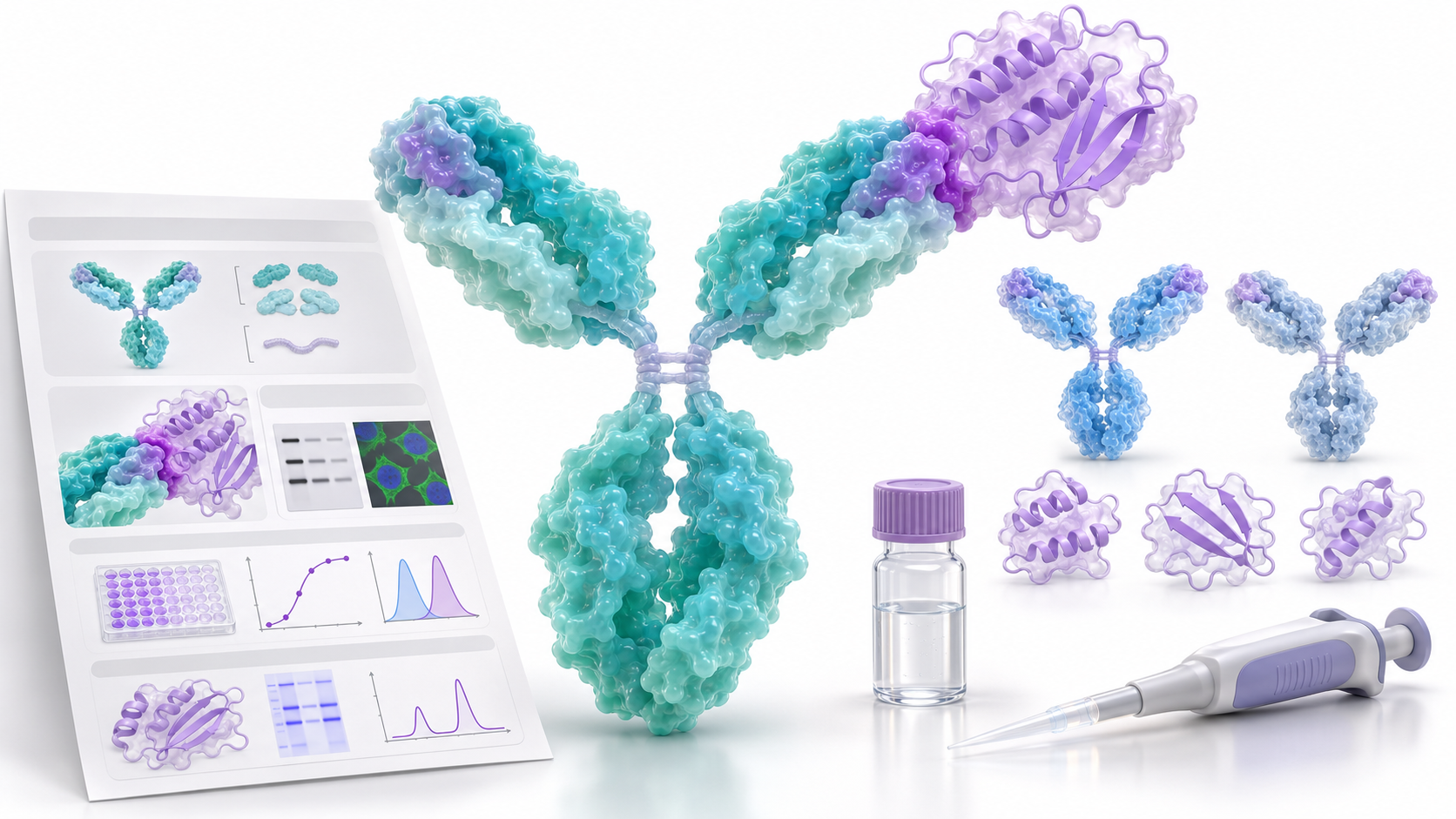
An antibody datasheet helps you decide whether an antibody is suitable for your experiment before you buy it. It provides important details about the target protein, host species, clone, tested applications, and storage requirements. However, not every antibody works equally well across different experiments. That's why checking antibody species reactivity, antibody specificity, and antibody validation data is essential. For example, an antibody validated for Western blot may not perform well in immunohistochemistry. This guide explains how to read an antibody datasheet, understand product specifications, compare available options, and choose the right antibody for reliable laboratory results.
Understand the Antibody Name, Catalog Number, and Product Details
When reviewing an antibody datasheet, start with the product name and identification details. These tell you which protein the antibody targets and help distinguish similar products.
The antibody catalog number is especially important because antibodies against the same target may have different clones, formulations, or applications. You can compare available products in AbTriva's research antibody collection.
Read the Antibody Product Name
A product name often includes the target protein, antibody type, and host species. For example, "Rabbit Anti-Human STAT3 Monoclonal Antibody" describes the host, intended target species, and antibody format.
Why the Catalog Number Matters
The catalog number identifies a specific commercial product. Record it alongside the manufacturer, clone, and lot number so you can reorder the correct reagent and report your methods accurately.
Antibody Datasheet Information at a Glance
Specification
What It Tells You
Product name
Target protein and antibody identity
Catalog number
Unique product identifier
Host species
Animal or expression origin
Clonality
Monoclonal or polyclonal
Clone ID
Identity of a monoclonal clone
Species reactivity
Species tested or predicted
Applications
Supported laboratory methods
Concentration
Antibody amount per volume
Storage
Recommended handling conditions
Check Antibody Type, Host Species, Clonality, and Isotype
Understanding monoclonal vs polyclonal antibodies helps you choose the appropriate reagent. Monoclonal antibodies recognize a defined epitope, while polyclonal preparations contain antibodies recognizing multiple epitopes.
The antibody host species and antibody isotype also affect detection methods. These details are particularly important when selecting compatible secondary antibodies or designing experiments with multiple primary antibodies.
Monoclonal vs. Polyclonal Antibodies
Monoclonal antibodies offer defined clone identity and may support consistent recognition. Polyclonal antibodies recognize multiple epitopes, which can improve detection in some applications. Compare their strengths in AbTriva's monoclonal versus polyclonal antibody guide.
What Is a Recombinant Antibody?
A recombinant monoclonal antibody is produced from defined antibody sequences. This supports repeatable manufacturing, although product performance still requires validation and quality checks.
The antibody host organism may be rabbit, mouse, goat, or another species. Isotypes and subclasses, including IgG1, IgG2a, and IgG2b, help determine which secondary detection reagents are suitable.
Examine the Target Protein, Immunogen, and Epitope
The target section of an antibody datasheet explains what the antibody should recognize. Pay attention to the protein name, gene symbol, immunogen, and any stated epitope information.
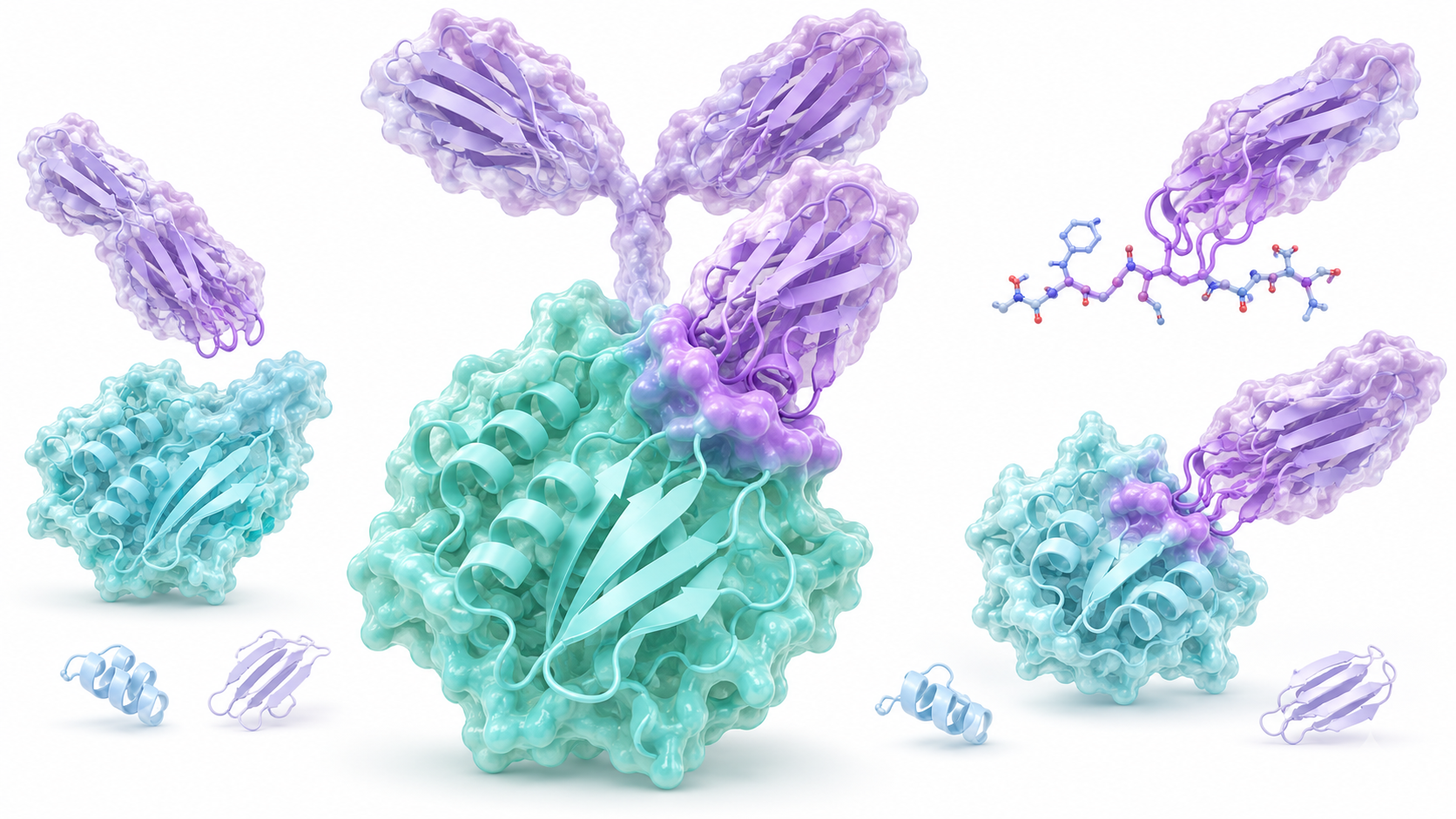
Understanding antibody immunogen and epitope details can help you avoid unwanted recognition of related proteins. However, immunogen binding alone doesn't establish specificity in complex samples.
What Is an Immunogen Sequence?
The immunogen sequence identifies the material used to generate the antibody. It may be a peptide or protein fragment. Check whether it includes the region present in your target isoform.
Why Epitope Recognition Matters
Epitope binding depends on whether the target region is accessible. Some antibodies recognize linear regions exposed during Western blotting, while others bind folded structures that may change after fixation.
How to Check Antibody Cross-Reactivity
Antibody cross-reactivity occurs when an antibody recognizes an unintended protein or related antigen. Compare sequence similarity and experimental specificity data rather than assuming that a matching immunogen guarantees selective binding.
Phosphorylation-specific antibodies should recognize a particular modified residue. Confirm the residue position and supporting evidence, including comparisons with unmodified targets.
Verify Species Reactivity Before Choosing an Antibody
Antibody species reactivity identifies which organisms' proteins an antibody has been shown to recognize. Common examples include human, mouse, and rat.
Don't confuse tested species reactivity with predictions based on sequence similarity. A product may recognize a related protein theoretically without having been tested in that species.
Tested vs. Predicted Species Reactivity
Experimentally tested reactivity provides stronger evidence than predictions. If your species isn't listed, ask the supplier whether supporting data exist before assuming the antibody will work.
Does Antibody Host Species Determine Reactivity?
No. A rabbit antibody can recognize human, mouse, or other proteins depending on its target specificity. The host identifies where the antibody originated, not necessarily which species it detects.
Example: Choosing an Antibody for Mouse Tissue
Imagine you're staining mouse brain tissue with a rabbit primary antibody. Confirm mouse reactivity and IHC validation, then select a compatible secondary antibody that minimizes unwanted background.
An antibody may work well in Western blotting but fail in immunohistochemistry. Therefore, review antibody applications before purchasing rather than relying on target recognition alone.
Look for experiments performed under conditions similar to yours. An application listed as tested provides useful evidence, although performance in your particular sample still needs confirmation.
Western Blot and ELISA Compatibility
Western blot validation usually involves detecting proteins separated by molecular weight. ELISA assay compatibility requires reliable antigen binding under the assay's capture or coating conditions.
Success in one method doesn't guarantee success in the other.
IHC and Immunofluorescence Applications
Immunohistochemistry staining and immunofluorescence microscopy depend on tissue preparation, antigen retrieval, and epitope accessibility. Review fixation conditions and control images before selecting a product.
Flow cytometry analysis often requires antibodies that recognize accessible antigens in intact or permeabilized cells. Chromatin immunoprecipitation requires suitable recognition of DNA-associated target proteins under specific experimental conditions.
Application Compatibility Table
Application
What to Verify
Western blot (WB)
Expected bands and molecular weight
ELISA
Antigen recognition and assay format
IHC
Tissue, fixation, and antigen retrieval
Immunofluorescence (IF)
Localization and staining background
Flow cytometry (FC)
Cell type, fixation, and staining conditions
Immunoprecipitation (IP)
Native target binding
ChIP
Target enrichment and negative controls
When indirect detection is required, review AbTriva's secondary antibody collection for compatible detection options.
Evaluate Antibody Validation Data and Experimental Evidence
Reliable antibody validation data should demonstrate recognition of the intended target under relevant conditions. Review the experimental evidence instead of relying only on marketing descriptions.
A strong antibody datasheet includes useful validation images, experimental conditions, and appropriate controls. Greater confidence comes from combining independent validation methods rather than relying on one experiment.
How to Evaluate Western Blot Validation Images
Compare the observed band with the expected molecular weight. Extra bands may indicate nonspecific binding, although protein isoforms or modifications can also explain unexpected migration.
Check whether relevant controls support the result.
Knockout and Knockdown Validation
Knockout validation compares target-positive cells with cells lacking the target gene. Loss of the expected signal supports specificity, although it doesn't prove that every possible off-target interaction has been excluded.
Positive and Negative Experimental Controls
Positive and negative controls help distinguish genuine target detection from background. Useful controls include knockout samples, known expressing tissues, and independent antibodies recognizing different epitopes.
Published Research and Validation Evidence
Review published research citations when available, but check whether the publication used the exact clone, product, application, and sample type.
Why Lot-to-Lot Consistency Matters
Lot-to-lot consistency is important for long-term studies. Even products with identical catalog numbers may show performance differences between manufacturing batches.
Review Antibody Concentration, Formulation, Storage, and Buying Details
Before ordering, check antibody concentration and dilution recommendations alongside the supplied amount. A larger vial isn't necessarily better value if the working concentration differs.
Also examine antibody storage conditions, buffer ingredients, shipping requirements, and product availability. These details help you estimate costs and avoid handling problems after delivery.
Understanding Concentration and Working Dilution
Antibody dilution recommendations provide starting conditions, not guaranteed optimal settings. For example, a 1:1,000 dilution uses 1 µL of stock in a final volume of 1,000 µL.
Actual performance requires optimization.
Check Buffer Formulation and Preservatives
An antibody buffer formulation may contain PBS, glycerol, carrier proteins, or a sodium azide preservative. Avoid sodium azide with HRP-conjugated antibodies because it inhibits the enzyme.
Azide is also unsuitable for many live-cell applications.
Storage and Freeze-Thaw Considerations
Check the recommended temperature and glycerol concentration before freezing. Excessive freeze-thaw cycles may reduce stability, while fluorescent antibody conjugates often require protection from light.
Follow product-specific storage instructions.
Check Secondary Antibody Compatibility
For indirect detection, confirm that the secondary antibody recognizes the primary host species and appropriate isotype. Consider cross-adsorption and conjugate compatibility.
1. What is an example of a primary and secondary antibody?
A rabbit anti-GAPDH antibody is an example of a primary antibody that binds GAPDH protein. A goat anti-rabbit IgG antibody is a matching secondary antibody. The secondary recognizes the rabbit primary antibody and can carry an enzyme or fluorescent label for detection.
2. What is the difference between a primary and secondary antibody?
A primary antibody binds directly to the target antigen. A secondary antibody binds to the primary antibody and helps detect it. Secondary antibodies are commonly linked to fluorescent dyes or enzymes that produce measurable signals in Western blotting, immunofluorescence, and ELISA.
3. What is a secondary antibody?
A secondary antibody recognizes the immunoglobulin of a primary antibody. It is used in indirect detection methods to help visualize or measure the target antigen. The correct secondary antibody depends on the primary antibody's host species, isotype, and experimental application.
4. How do you choose primary and secondary antibodies for immunofluorescence?
Select a primary antibody validated for immunofluorescence and your sample species. Choose a secondary antibody that recognizes the primary antibody's host species and isotype. Check fluorophore compatibility, spectral overlap, and cross-reactivity, especially when detecting multiple targets.
5. What is the structure of an antibody?
A typical IgG antibody has a Y-shaped structure containing two heavy chains and two light chains. Its Fab regions contain antigen-binding sites, while the Fc region supports immune functions and can be recognized by certain secondary antibodies.
Conclusion
Understanding an antibody datasheet helps you choose research reagents with greater confidence. Start with the product identity and target, then check clonality, species reactivity, and tested applications.
Pay particular attention to validation evidence, antibody specificity, and storage requirements. Don't assume that a product suitable for one experiment will work in another. A careful review before purchasing can prevent unnecessary troubleshooting, reduce wasted reagents, and improve the reliability of your laboratory results.
Fast & Free Shipping
Free shipping on orders $999+
Quality Guarantee
Advenit post multos Scudilo Scutariorum tribunus velament
Secure Payment
We accept credit cards, PayPal, and bank wires
Lifetime Customer Support
Responsive and knowledgable customer service via email, text or phone