• Contact info@abtriva.com for inquiries and orders.
  • Chinese (Simplified)

  • English

  • German

  • Korean

  • Spanish

United States (English / $ USD)

Rabbit anti-Human GPER1 Polyclonal Antibody

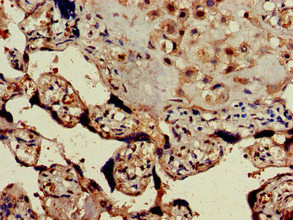
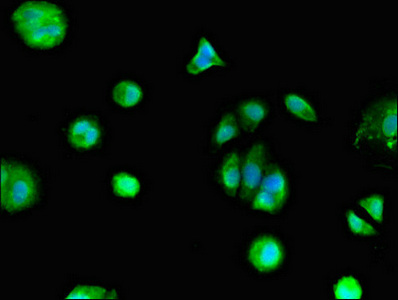
The antibody against GPER1 was raised in rabbit using the Recombinant Human G-protein coupled estrogen receptor 1 protein (1-62AA) as the immunogen. This antibody exists as a non-conjugated isotype IgG, purified by protein G with a purity greater than 95%. This antibody has been validated on ELISA, WB, IHC, IF.

ADC-10147A

The antibody against GPER1 was raised in rabbit using the Recombinant Human G-protein coupled estrogen receptor 1 protein (1-62AA) as the immunogen. This antibody exists as a non-conjugated isotype IgG, purified by protein G with a purity greater than 95%. This antibody has been validated on ELISA, WB, IHC, IF.

$299.00

Number
Order Exclusive Products Now

Request a Quote
High Purity LevelsPrecision and ReliabilityCustomization Options

Specifications


Cat.No ADC-10147A ClonalityPolyclonal
Host SpeciesRabbitTarget NameGPER1
FormLiquidSpecies ReactivityHuman, Mouse
IsotypeIgGStorage Buffer0.01M PBS, 0.03% Proclin 300; Constituents: 50% Glycerol, PH 7.4
Purification Method>95%, Protein G purifiedConjugateNon-conjugated
ApplicationELISA, IF, IHC, WBStorageUpon receipt

Immunogen Information


Immunogen DescriptionRecombinant Human G-protein coupled estrogen receptor 1 protein (1-62AA)Target SpeciesHuman
Immunogen SequenceComplete sequences for the immunogen, target protein, and peptides are available upon request.Uniprot IDQ99527
Background Information
  • Uniprot Id

    Q99527

  • Target Species

    Human

  • Target Name

    GPER1

  • Target Full Name

    G-protein coupled estrogen receptor 1

  • Target Function

    G-protein coupled estrogen receptor that binds to 17-beta-estradiol (E2) with high affinity, leading to rapid and transient activation of numerous intracellular signaling pathways. Stimulates cAMP production, calcium mobilization and tyrosine kinase Src inducing the release of heparin-bound epidermal growth factor (HB-EGF) and subsequent transactivation of the epidermal growth factor receptor (EGFR), activating downstream signaling pathways such as PI3K/Akt and ERK/MAPK. Mediates pleiotropic functions among others in the cardiovascular, endocrine, reproductive, immune and central nervous systems. Has a role in cardioprotection by reducing cardiac hypertrophy and perivascular fibrosis in a RAMP3-dependent manner. Regulates arterial blood pressure by stimulating vasodilation and reducing vascular smooth muscle and microvascular endothelial cell proliferation. Plays a role in blood glucose homeostasis contributing to the insulin secretion response by pancreatic beta cells. Triggers mitochondrial apoptosis during pachytene spermatocyte differentiation. Stimulates uterine epithelial cell proliferation. Enhances uterine contractility in response to oxytocin. Contributes to thymic atrophy by inducing apoptosis. Attenuates TNF-mediated endothelial expression of leukocyte adhesion molecules. Promotes neuritogenesis in developing hippocampal neurons. Plays a role in acute neuroprotection against NMDA-induced excitotoxic neuronal death. Increases firing activity and intracellular calcium oscillations in luteinizing hormone-releasing hormone (LHRH) neurons. Inhibits early osteoblast proliferation at growth plate during skeletal development. Inhibits mature adipocyte differentiation and lipid accumulation. Involved in the recruitment of beta-arrestin 2 ARRB2 at the plasma membrane in epithelial cells. Functions also as a receptor for aldosterone mediating rapid regulation of vascular contractibility through the PI3K/ERK signaling pathway. Involved in cancer progression regulation. Stimulates cancer-associated fibroblast (CAF) proliferation by a rapid genomic response through the EGFR/ERK transduction pathway. Associated with EGFR, may act as a transcription factor activating growth regulatory genes (c-fos, cyclin D1). Promotes integrin alpha-5/beta-1 and fibronectin (FN) matrix assembly in breast cancer cells.

  • Target Subcellular Location

    Nucleus. Cytoplasm. Cytoplasm, perinuclear region. Cytoplasm, cytoskeleton. Cell membrane; Multi-pass membrane protein. Basolateral cell membrane; Multi-pass membrane protein. Cytoplasmic vesicle membrane; Multi-pass membrane protein. Early endosome. Recycling endosome. Golgi apparatus membrane; Multi-pass membrane protein. Golgi apparatus, trans-Golgi network. Endoplasmic reticulum membrane; Multi-pass membrane protein. Cell projection, dendrite. Cell projection, dendritic spine membrane; Multi-pass membrane protein. Cell projection, axon. Cell junction, synapse, postsynaptic density. Mitochondrion membrane; Multi-pass membrane protein.

  • Target Protein Families

    G-protein coupled receptor 1 family

  • Target Tissue Specificity

    Expressed in placenta, endothelial and epithelial cells, non laboring and laboring term myometrium, fibroblasts and cancer-associated fibroblasts (CAF), prostate cancer cells and invasive adenocarcinoma (at protein level). Ubiquitously expressed, but is m

  • Target Synonyms

    GPER1; CEPR; CMKRL2; DRY12; GPER; GPR30; G-protein coupled estrogen receptor 1; Chemoattractant receptor-like 2; Flow-induced endothelial G-protein coupled receptor 1; FEG-1; G protein-coupled estrogen receptor 1; G-protein coupled receptor 30; GPCR-Br; IL8-related receptor DRY12; Lymphocyte-derived G-protein coupled receptor; LYGPR; Membrane estrogen receptor; mER

  • Target Background

    This gene encodes a multi-pass membrane protein that localizes to the endoplasmic reticulum and a member of the G-protein coupled receptor 1 family. This receptor binds estrogen and activates multiple downstream signaling pathways, leading to stimulation of adenylate cyclase and an increase in cyclic AMP levels, while also promoting intracellular calcium mobilization and synthesis of phosphatidylinositol 3, 4, 5-trisphosphate in the nucleus. This protein therefore plays a role in the rapid nongenomic signaling events widely observed following stimulation of cells and tissues with estrogen. This receptor has been shown to play a role in diverse biological processes, including bone and nervous system development, metabolism, cognition, male fertility and uterine function.

Inquire Rabbit anti-Human GPER1 Polyclonal Antibody Now


AbTriva respects your privacy and protects your personal data in accordance with AbTriva. For more information, please see our data protection statement. *

Notification