-
Chinese (Simplified)
-
English
-
German
-
Korean
-
Spanish
Chinese (Simplified)
English
German
Korean
Spanish
Sign up for an account to enjoy easy online shopping and instant order tracking.
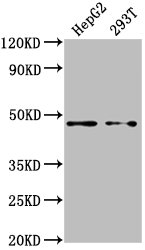
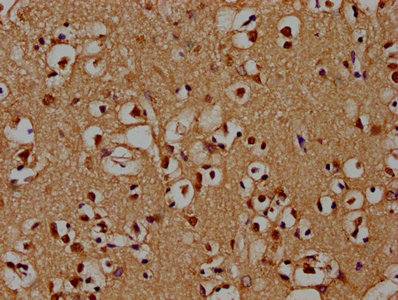
The antibody against PSMD4 was raised in rabbit using the Recombinant Human 26S proteasome non-ATPase regulatory subunit 4 protein (161-377AA) as the immunogen. This antibody exists as a non-conjugated isotype IgG, Antigen affinity purified. This antibody has been validated on ELISA, WB, IHC.
$299.00
| Cat.No | ADC-02480A | Clonality | Polyclonal |
|---|---|---|---|
| Host Species | Rabbit | Target Name | PSMD4 |
| Form | Liquid | Species Reactivity | Human |
| Isotype | IgG | Storage Buffer | 0.01M PBS, 0.03% Proclin 300; Constituents: 50% Glycerol, PH 7.4 |
| Purification Method | Antigen affinity purified | Conjugate | Non-conjugated |
| Application | ELISA, IHC, WB | Storage | Upon receipt |
| Immunogen Description | Recombinant Human 26S proteasome non-ATPase regulatory subunit 4 protein (161-377AA) | Target Species | Human |
|---|---|---|---|
| Immunogen Sequence | Complete sequences for the immunogen, target protein, and peptides are available upon request. | Uniprot ID | P55036 |
Uniprot Id
P55036
Target Species
Human
Target Name
PSMD4
Target Full Name
26S proteasome non-ATPase regulatory subunit 4
Target Function
Component of the 26S proteasome, a multiprotein complex involved in the ATP-dependent degradation of ubiquitinated proteins. This complex plays a key role in the maintenance of protein homeostasis by removing misfolded or damaged proteins, which could impair cellular functions, and by removing proteins whose functions are no longer required. Therefore, the proteasome participates in numerous cellular processes, including cell cycle progression, apoptosis, or DNA damage repair. PSMD4 acts as an ubiquitin receptor subunit through ubiquitin-interacting motifs and selects ubiquitin-conjugates for destruction. Displays a preferred selectivity for longer polyubiquitin chains.
Target Protein Families
Proteasome subunit S5A family
Target Synonyms
26S protease subunit S5a; 26S proteasome non ATPase regulatory subunit 4; 26S proteasome non-ATPase regulatory subunit 4; 26S proteasome regulatory subunit rpn10; 26S proteasome regulatory subunit S5A; AF 1; AF; AF1; Angiocidin; Antisecretory factor 1; ASF; DS5a; MCB 1; MCB1; Multiubiquitin chain binding protein; Multiubiquitin chain-binding protein; OTTHUMP00000059963; Prosome macropain; Proteasome (prosome macropain) 26S subunit non ATPase 4; Proteasome 19S S5A; Proteasome 26S non ATPase subunit 4; Proteasome 26S subunit non ATPase 4; PSMD 4; Psmd4; PSMD4_HUMAN; pUB R5; pUBR5; Rpn 10; Rpn10; RPN10 homolog; S5A; S5a/antisecretory factor protein
Target Background
The 26S proteasome is a multicatalytic proteinase complex with a highly ordered structure composed of 2 complexes, a 20S core and a 19S regulator. The 20S core is composed of 4 rings of 28 non-identical subunits; 2 rings are composed of 7 alpha subunits and 2 rings are composed of 7 beta subunits. The 19S regulator is composed of a base, which contains 6 ATPase subunits and 2 non-ATPase subunits, and a lid, which contains up to 10 non-ATPase subunits. Proteasomes are distributed throughout eukaryotic cells at a high concentration and cleave peptides in an ATP/ubiquitin-dependent process in a non-lysosomal pathway. An essential function of a modified proteasome, the immunoproteasome, is the processing of class I MHC peptides. This gene encodes one of the non-ATPase subunits of the 19S regulator lid. Pseudogenes have been identified on chromosomes 10 and 21.
Notification