• Contact info@abtriva.com for inquiries and orders.
  • Chinese (Simplified)

  • English

  • German

  • Korean

  • Spanish

United States (English / $ USD)

Rabbit anti-Human HMGB3 Polyclonal Antibody

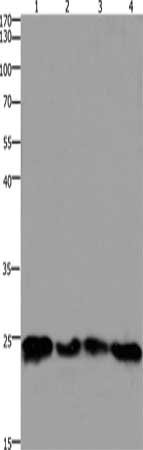
The antibody against HMGB3 was raised in rabbit using the Synthetic peptide of Human HMGB3 as the immunogen. This antibody exists as a non-conjugated isotype IgG, Antigen affinity purified. This antibody has been validated on ELISA, WB, IHC.

ADC-28307A

The antibody against HMGB3 was raised in rabbit using the Synthetic peptide of Human HMGB3 as the immunogen. This antibody exists as a non-conjugated isotype IgG, Antigen affinity purified. This antibody has been validated on ELISA, WB, IHC.

$299.00

Number
Order Exclusive Products Now

Request a Quote
High Purity LevelsPrecision and ReliabilityCustomization Options

Specifications


Cat.No ADC-28307A ClonalityPolyclonal
Host SpeciesRabbitTarget NameHMGB3
FormLiquidSpecies ReactivityHuman, Mouse
IsotypeIgGStorage Buffer0.05% NaN3, 40% Glycerol., pH7.4 PBS
Purification MethodAntigen affinity purifiedConjugateNon-conjugated
ApplicationELISA, IHC, WBStorageUpon receipt

Immunogen Information


Immunogen DescriptionSynthetic peptide of Human HMGB3Target SpeciesHuman
Immunogen SequenceComplete sequences for the immunogen, target protein, and peptides are available upon request.Uniprot IDO15347
Background Information
  • Uniprot Id

    O15347

  • Target Species

    Human

  • Target Name

    HMGB3

  • Target Full Name

    High mobility group protein B3

  • Target Function

    Multifunctional protein with various roles in different cellular compartments. May act in a redox sensitive manner. Associates with chromatin and binds DNA with a preference to non-canonical DNA structures such as single-stranded DNA. Can bent DNA and enhance DNA flexibility by looping thus providing a mechanism to promote activities on various gene promoters. Proposed to be involved in the innate immune response to nucleic acids by acting as a cytoplasmic promiscuous immunogenic DNA/RNA sensor. Negatively regulates B-cell and myeloid cell differentiation. In hematopoietic stem cells may regulate the balance between self-renewal and differentiation. Involved in negative regulation of canonical Wnt signaling.

  • Target Involvement

    Microphthalmia, syndromic, 13 (MCOPS13)

  • Target Subcellular Location

    Nucleus. Chromosome. Cytoplasm.

  • Target Protein Families

    HMGB family

  • Target Tissue Specificity

    Expressed predominantly in placenta.

  • Target Synonyms

    chromosomal protein; Nonhistone; HMG4; High mobility group (nonhistone chromosomal) protein 4; High mobility group box 3 ; High mobility group protein 2a; High mobility group protein 4; High mobility group protein B3; High mobility group protein HMG4 ; HMG 4 ; HMG-2a; HMG-4; HMG2A; HMGB 3 ; Hmgb3; HMGB3_HUMAN; MGC90319; Non histone chromosomal protein; Nonhistone chromosomal protein HMG4

  • Target Background

    This gene encodes a member of a family of proteins containing one or more high mobility group DNA-binding motifs. The encoded protein plays an important role in maintaining stem cell populations, and may be aberrantly expressed in tumor cells. A mutation in this gene was associated with microphthalmia, syndromic 13. There are numerous pseudogenes of this gene on multiple chromosomes. Alternative splicing results in multiple transcript variants.

Inquire Rabbit anti-Human HMGB3 Polyclonal Antibody Now


AbTriva respects your privacy and protects your personal data in accordance with AbTriva. For more information, please see our data protection statement. *

Notification