• Contact info@abtriva.com for inquiries and orders.
  • Chinese (Simplified)

  • English

  • German

  • Korean

  • Spanish

United States (English / $ USD)

Rabbit anti-Human TLR6 Polyclonal Antibody

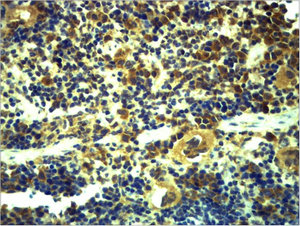
The antibody against TLR6 was raised in rabbit using the Recombinant Protein as the immunogen. This antibody exists as a non-conjugated isotype IgG. This antibody has been validated on IHC, ELISA.

ADC-33130A

The antibody against TLR6 was raised in rabbit using the Recombinant Protein as the immunogen. This antibody exists as a non-conjugated isotype IgG. This antibody has been validated on IHC, ELISA.

$167.00

Number
Order Exclusive Products Now

Request a Quote
High Purity LevelsPrecision and ReliabilityCustomization Options

Specifications


Cat.No ADC-33130A ClonalityPolyclonal
Host SpeciesRabbitTarget NameTLR6
Target SynonymsCD286 antibody; CD286 antigen antibody; TLR 6 antibody; Tlr6 antibody; TLR6_HUMAN antibody; Toll like receptor 6 precursor antibody; Toll-like receptor 6 antibodyFormLiquid
Species ReactivityHuman, Mouse, RatIsotypeIgG
Storage BufferPH 7.4, containing 0.02% sodium azide as Preservative and 50% Glycerol., PBSConjugateNon-conjugated
ApplicationELISA, IHCStorageUpon receipt

Immunogen Information


Immunogen DescriptionRecombinant ProteinTarget SpeciesHuman
Immunogen SequenceComplete sequences for the immunogen, target protein, and peptides are available upon request.Uniprot IDQ9Y2C9
Background Information
  • Uniprot Id

    Q9Y2C9

  • Target Species

    Human

  • Target Name

    TLR6

  • Target Full Name

    Toll-like receptor 6

  • Target Function

    Participates in the innate immune response to Gram-positive bacteria and fungi. Specifically recognizes diacylated and, to a lesser extent, triacylated lipopeptides. In response to diacylated lipopeptides, forms the activation cluster TLR2:TLR6:CD14:CD36, this cluster triggers signaling from the cell surface and subsequently is targeted to the Golgi in a lipid-raft dependent pathway. Acts via MYD88 and TRAF6, leading to NF-kappa-B activation, cytokine secretion and the inflammatory response. Recognizes mycoplasmal macrophage-activating lipopeptide-2kD (MALP-2), soluble tuberculosis factor (STF), phenol-soluble modulin (PSM) and B.burgdorferi outer surface protein A lipoprotein (OspA-L) cooperatively with TLR2. In complex with TLR4, promotes sterile inflammation in monocytes/macrophages in response to oxidized low-density lipoprotein (oxLDL) or amyloid-beta 42. In this context, the initial signal is provided by oxLDL- or amyloid-beta 42-binding to CD36. This event induces the formation of a heterodimer of TLR4 and TLR6, which is rapidly internalized and triggers inflammatory response, leading to the NF-kappa-B-dependent production of CXCL1, CXCL2 and CCL9 cytokines, via MYD88 signaling pathway, and CCL5 cytokine, via TICAM1 signaling pathway, as well as IL1B secretion.

  • Target Subcellular Location

    Cell membrane; Single-pass type I membrane protein. Cytoplasmic vesicle, phagosome membrane; Single-pass type I membrane protein. Membrane raft. Golgi apparatus.

  • Target Protein Families

    Toll-like receptor family

  • Target Tissue Specificity

    Detected in monocytes, CD11c+ immature dendritic cells, plasmacytoid pre-dendritic cells and dermal microvessel endothelial cells.

  • Target Synonyms

    CD286; CD286 antigen; TLR 6; Tlr6; TLR6_HUMAN; Toll like receptor 6 precursor; Toll-like receptor 6

  • Target Background

    The protein encoded by this gene is a member of the Toll-like receptor (TLR) family which plays a fundamental role in pathogen recognition and activation of innate immunity. TLRs are highly conserved from Drosophila to humans and share structural and functional similarities. They recognize pathogen-associated molecular patterns (PAMPs) that are expressed on infectious agents, and mediate the production of cytokines necessary for the development of effective immunity. The various TLRs exhibit different patterns of expression. This receptor functionally interacts with toll-like receptor 2 to mediate cellular response to bacterial lipoproteins. A Ser249Pro polymorphism in the extracellular domain of the encoded protein may be associated with an increased of asthma is some populations.

Inquire Rabbit anti-Human TLR6 Polyclonal Antibody Now


AbTriva respects your privacy and protects your personal data in accordance with AbTriva. For more information, please see our data protection statement. *

Notification