-
Chinese (Simplified)
-
English
-
German
-
Korean
-
Spanish
Chinese (Simplified)
English
German
Korean
Spanish
Sign up for an account to enjoy easy online shopping and instant order tracking.
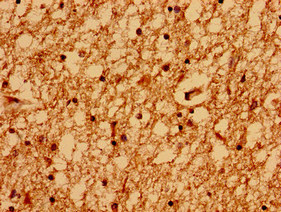
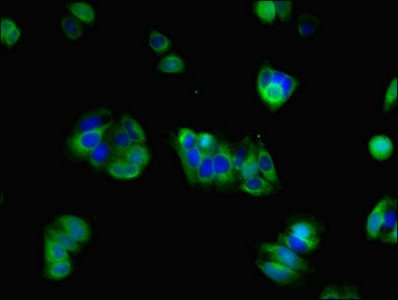
The antibody against GRIN2A was raised in rabbit using the Recombinant Human Glutamate receptor ionotropic, NMDA 2A protein (501-750AA) as the immunogen. This antibody exists as a non-conjugated isotype IgG, purified by protein G with a purity greater than 95%. This antibody has been validated on ELISA, WB, IHC, IF.
$299.00
| Cat.No | ADC-50853A | Clonality | Polyclonal |
|---|---|---|---|
| Host Species | Rabbit | Target Name | GRIN2A |
| Form | Liquid | Species Reactivity | Human, Mouse, Rat |
| Isotype | IgG | Storage Buffer | 0.01M PBS, 0.03% Proclin 300; Constituents: 50% Glycerol, PH 7.4 |
| Purification Method | >95%, Protein G purified | Conjugate | Non-conjugated |
| Application | ELISA, IF, IHC, WB | Storage | Upon receipt |
| Immunogen Description | Recombinant Human Glutamate receptor ionotropic, NMDA 2A protein (501-750AA) | Target Species | Human |
|---|---|---|---|
| Immunogen Sequence | Complete sequences for the immunogen, target protein, and peptides are available upon request. | Uniprot ID | Q12879 |
Uniprot Id
Q12879
Target Species
Human
Target Name
GRIN2A
Target Full Name
Glutamate receptor ionotropic, NMDA 2A
Target Function
Component of NMDA receptor complexes that function as heterotetrameric, ligand-gated ion channels with high calcium permeability and voltage-dependent sensitivity to magnesium. Channel activation requires binding of the neurotransmitter glutamate to the epsilon subunit, glycine binding to the zeta subunit, plus membrane depolarization to eliminate channel inhibition by Mg(2+). Sensitivity to glutamate and channel kinetics depend on the subunit composition; channels containing GRIN1 and GRIN2A have lower sensitivity to glutamate and faster deactivation kinetics than channels formed by GRIN1 and GRIN2B. Contributes to the slow phase of excitatory postsynaptic current, long-term synaptic potentiation, and learning.
Target Involvement
Epilepsy, focal, with speech disorder and with or without mental retardation (FESD)
Target Subcellular Location
Cell projection, dendritic spine. Cell membrane; Multi-pass membrane protein. Cell junction, synapse. Cell junction, synapse, postsynaptic cell membrane; Multi-pass membrane protein. Cytoplasmic vesicle membrane.
Target Protein Families
Glutamate-gated ion channel (TC 1.A.10.1) family, NR2A/GRIN2A subfamily
Target Research Area
Transport
Target Synonyms
EPND; FESD; GluN2A; Glutamate [NMDA] receptor subunit epsilon-1; Glutamate receptor; Glutamate receptor ionotropic N methyl D aspartate 2A; GRIN 2A; GRIN2A; hNR2A; LKS; N methyl D aspartate receptor channel; subunit epsilon 1; N Methyl D Aspartate Receptor Subtype 2A; N methyl D aspartate receptor subunit 2A; N-methyl D-aspartate receptor subtype 2A; NMDA receptor subtype 2A; NMDAR 2A; NMDAR2A; NMDE1_HUMAN; NR2A; OTTHUMP00000160135; OTTHUMP00000174531
Target Background
This gene encodes a member of the glutamate-gated ion channel protein family. The encoded protein is an N-methyl-D-aspartate (NMDA) receptor subunit. NMDA receptors are both ligand-gated and voltage-dependent, and are involved in long-term potentiation, an activity-dependent increase in the efficiency of synaptic transmission thought to underlie certain kinds of memory and learning. These receptors are permeable to calcium ions, and activation results in a calcium influx into post-synaptic cells, which results in the activation of several signaling cascades. Disruption of this gene is associated with focal epilepsy and speech disorder with or without cognitive disability. Alternative splicing results in multiple transcript variants.
Notification