-
Chinese (Simplified)
-
English
-
German
-
Korean
-
Spanish
Chinese (Simplified)
English
German
Korean
Spanish
Sign up for an account to enjoy easy online shopping and instant order tracking.
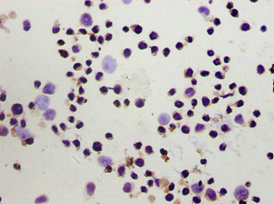
The antibody against FOXP3 was raised in rabbit using the Recombinant Human Forkhead box protein P3 protein (1-260AA) as the immunogen. This antibody exists as a non-conjugated isotype IgG, purified by protein G with a purity greater than 95%. This antibody has been validated on ELISA, WB, IHC.
$299.00
| Cat.No | ADC-50880A | Clonality | Polyclonal |
|---|---|---|---|
| Host Species | Rabbit | Target Name | FOXP3 |
| Form | Liquid | Species Reactivity | Human, Mouse |
| Isotype | IgG | Storage Buffer | 0.01M PBS, 0.03% Proclin 300; Constituents: 50% Glycerol, PH 7.4 |
| Purification Method | >95%, Protein G purified | Conjugate | Non-conjugated |
| Application | ELISA, IHC, WB | Storage | Upon receipt |
| Immunogen Description | Recombinant Human Forkhead box protein P3 protein (1-260AA) | Target Species | Human |
|---|---|---|---|
| Immunogen Sequence | Complete sequences for the immunogen, target protein, and peptides are available upon request. | Uniprot ID | Q9BZS1 |
Uniprot Id
Q9BZS1
Target Species
Human
Target Name
FOXP3
Target Full Name
Forkhead box protein P3
Target Function
Transcriptional regulator which is crucial for the development and inhibitory function of regulatory T-cells (Treg). Plays an essential role in maintaining homeostasis of the immune system by allowing the acquisition of full suppressive function and stability of the Treg lineage, and by directly modulating the expansion and function of conventional T-cells. Can act either as a transcriptional repressor or a transcriptional activator depending on its interactions with other transcription factors, histone acetylases and deacetylases. The suppressive activity of Treg involves the coordinate activation of many genes, including CTLA4 and TNFRSF18 by FOXP3 along with repression of genes encoding cytokines such as interleukin-2 (IL2) and interferon-gamma (IFNG). Inhibits cytokine production and T-cell effector function by repressing the activity of two key transcription factors, RELA and NFATC2. Mediates transcriptional repression of IL2 via its association with histone acetylase KAT5 and histone deacetylase HDAC7. Can activate the expression of TNFRSF18, IL2RA and CTLA4 and repress the expression of IL2 and IFNG via its association with transcription factor RUNX1. Inhibits the differentiation of IL17 producing helper T-cells (Th17) by antagonizing RORC function, leading to down-regulation of IL17 expression, favoring Treg development. Inhibits the transcriptional activator activity of RORA. Can repress the expression of IL2 and IFNG via its association with transcription factor IKZF4.
Target Involvement
Immunodeficiency polyendocrinopathy, enteropathy, X-linked syndrome (IPEX)
Target Subcellular Location
Nucleus. Cytoplasm.
Target Research Area
Transcription
Target Synonyms
AIID; DIETER; Forkhead box P3; Forkhead box protein P3; FOXP3; FOXP3_HUMAN; FOXP3delta7; Immune dysregulation polyendocrinopathy enteropathy X linked; Immunodeficiency polyendocrinopathy enteropathy X linked; IPEX; JM2; MGC141961; MGC141963; OTTHUMP00000025832; OTTHUMP00000025833; OTTHUMP00000226737; PIDX; Scurfin; XPID
Target Background
The protein encoded by this gene is a member of the forkhead/winged-helix family of transcriptional regulators. Defects in this gene are the cause of immunodeficiency polyendocrinopathy, enteropathy, X-linked syndrome (IPEX), also known as X-linked autoimmunity-immunodeficiency syndrome. Alternatively spliced transcript variants encoding different isoforms have been identified.
Notification