-
Chinese (Simplified)
-
English
-
German
-
Korean
-
Spanish
Chinese (Simplified)
English
German
Korean
Spanish
Sign up for an account to enjoy easy online shopping and instant order tracking.
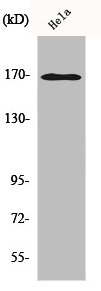
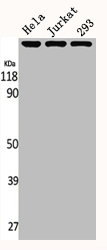
The antibody against ABCC3 was raised in rabbit using the Synthesized peptide derived from the Internal region of Human MRP3. as the immunogen. This antibody exists as a non-conjugated isotype IgG. The antibody was affinity-purified from rabbit antiserum by affinity-chromatography using epitope-specific immunogen. This antibody has been validated on WB, ELISA.
$167.00
| Cat.No | ADC-38210A | Clonality | Polyclonal |
|---|---|---|---|
| Host Species | Rabbit | Target Name | ABCC3 |
| Form | Liquid | Species Reactivity | Human |
| Isotype | IgG | Storage Buffer | 0.5% BSA and 0.02% sodium azide., Liquid in PBS containing 50% glycerol |
| Purification Method | The antibody was affinity-purified from rabbit antiserum by affinity-chromatography using epitope-specific immunogen. | Conjugate | Non-conjugated |
| Application | ELISA, WB | Storage | Upon receipt |
| Immunogen Description | Synthesized peptide derived from the Internal region of Human MRP3. | Target Species | Human |
|---|---|---|---|
| Immunogen Sequence | Complete sequences for the immunogen, target protein, and peptides are available upon request. | Uniprot ID | O15438 |
Uniprot Id
O15438
Target Species
Human
Target Name
ABCC3
Target Full Name
ATP-binding cassette sub-family C member 3
Target Function
ATP-dependent transporter of the ATP-binding cassette (ABC) family that bind and hydrolyze ATP to enable active transport of various substrates including many drugs, toxicants and endogenous compound across cell membranes. Transports glucuronide conjugates such as bilirubin diglucuronide, estradiol-17-beta-o-glucuronide and GSH conjugates such as leukotriene C4 (LTC4). Transports also various bile salts (taurocholate, glycocholate, taurochenodeoxycholate-3-sulfate, taurolithocholate- 3-sulfate). Does not contribute substantially to bile salt physiology but provides an alternative route for the export of bile acids and glucuronides from cholestatic hepatocytes. Can confers resistance to various anticancer drugs, methotrexate, tenoposide and etoposide, by decreasing accumulation of these drugs in cells.
Target Subcellular Location
Basolateral cell membrane; Multi-pass membrane protein.
Target Protein Families
ABC transporter superfamily, ABCC family, Conjugate transporter (TC 3.A.1.208) subfamily
Target Tissue Specificity
Mainly expressed in the liver. Also expressed in small intestine, colon, prostate, testis, brain and at a lower level in the kidney.
Target Synonyms
ABC 31; ABC31; ABCC 3; ABCC3; ATP binding cassette sub family C (CFTR/MRP) member 3; ATP binding cassette sub family C member 3; ATP-binding cassette sub-family C member 3; Canalicular multispecific organic anion transporter 2; Canicular multispecific organic anion transporter; CMOAT 2; CMOAT2; EST90757; MLP 2; MLP2; MOAT D; MOAT-D; MOATD; MRP 3; MRP3_HUMAN; Multi specific organic anion transporter D; Multi-specific organic anion transporter D; Multidrug resistance associated protein 3; Multidrug resistance associated protein; Multidrug resistance-associated protein 3; Multispecific organic anion tranporter D
Target Background
The protein encoded by this gene is a member of the superfamily of ATP-binding cassette (ABC) transporters. ABC proteins transport various molecules across extra- and intra-cellular membranes. ABC genes are divided into seven distinct subfamilies (ABC1, MDR/TAP, MRP, ALD, OABP, GCN20, White). This protein is a member of the MRP subfamily which is involved in multi-drug resistance. The specific function of this protein has not yet been determined; however, this protein may play a role in the transport of biliary and intestinal excretion of organic anions. Alternatively spliced variants which encode different protein isoforms have been described; however, not all variants have been fully characterized.
Notification