-
Chinese (Simplified)
-
English
-
German
-
Korean
-
Spanish
Chinese (Simplified)
English
German
Korean
Spanish
Sign up for an account to enjoy easy online shopping and instant order tracking.
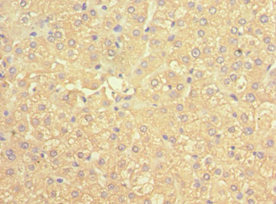
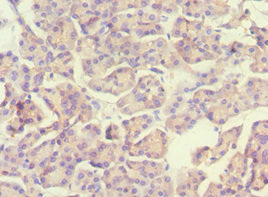
The antibody against ACADS was raised in rabbit using the Recombinant Human Short-chain specific acyl-CoA dehydrogenase, mitochondrial protein (1-260AA) as the immunogen. This antibody exists as a non-conjugated isotype IgG, Antigen affinity purified. This antibody has been validated on ELISA, WB, IHC.
$299.00
| Cat.No | ADC-45268A | Clonality | Polyclonal |
|---|---|---|---|
| Host Species | Rabbit | Target Name | ACADS |
| Form | Liquid | Species Reactivity | Human |
| Isotype | IgG | Storage Buffer | 50% Glycerol, PBS with 0.02% sodium azide, pH7.3. |
| Purification Method | Antigen affinity purified | Conjugate | Non-conjugated |
| Application | ELISA, IHC, WB | Storage | Upon receipt |
| Immunogen Description | Recombinant Human Short-chain specific acyl-CoA dehydrogenase, mitochondrial protein (1-260AA) | Target Species | Human |
|---|---|---|---|
| Immunogen Sequence | Complete sequences for the immunogen, target protein, and peptides are available upon request. | Uniprot ID | P16219 |
Uniprot Id
P16219
Target Species
Human
Target Name
ACADS
Target Full Name
Short-chain specific acyl-CoA dehydrogenase, mitochondrial
Target Function
Short-chain specific acyl-CoA dehydrogenase is one of the acyl-CoA dehydrogenases that catalyze the first step of mitochondrial fatty acid beta-oxidation, an aerobic process breaking down fatty acids into acetyl-CoA and allowing the production of energy from fats. The first step of fatty acid beta-oxidation consists in the removal of one hydrogen from C-2 and C-3 of the straight-chain fatty acyl-CoA thioester, resulting in the formation of trans-2-enoyl-CoA. Among the different mitochondrial acyl-CoA dehydrogenases, short-chain specific acyl-CoA dehydrogenase acts specifically on acyl-CoAs with saturated 4 to 6 carbons long primary chains.
Target Involvement
Acyl-CoA dehydrogenase short-chain deficiency (ACADSD)
Target Subcellular Location
Mitochondrion matrix.
Target Protein Families
Acyl-CoA dehydrogenase family
Target Synonyms
ACAD3; ACADS; ACADS_HUMAN; Acyl Coenzyme A dehydrogenase; C2 to C3 short chain; Acyl-CoA dehydrogenase; C2 to C3 short chain; Acyl-CoA dehydrogenase; short chain; Acyl-Coenzyme A dehydrogenase; short chain; AI196007; Bcd-1; Bcd1; Butyryl CoA dehydrogenase; Butyryl-CoA dehydrogenase; EC 1.3.99.2; mitochondrial; SCAD; Short chain acyl CoA dehydrogenase; Short-chain specific acyl-CoA dehydrogenase; Short-chain specific acyl-CoA dehydrogenase; mitochondrial; Unsaturated acyl CoA reductase
Target Background
This gene encodes a tetrameric mitochondrial flavoprotein, which is a member of the acyl-CoA dehydrogenase family. This enzyme catalyzes the initial step of the mitochondrial fatty acid beta-oxidation pathway. Mutations in this gene have been associated with short-chain acyl-CoA dehydrogenase (SCAD) deficiency. Alternative splicing results in two variants which encode different isoforms.
Notification