• Contact info@abtriva.com for inquiries and orders.
  • Chinese (Simplified)

  • English

  • German

  • Korean

  • Spanish

United States (English / $ USD)

Rabbit anti-Human AKR1C2 Polyclonal Antibody

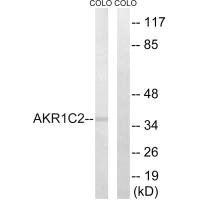
The antibody against AKR1C2 was raised in rabbit using the Synthesized peptide derived from internal of Human AKR1C2. as the immunogen. The antibody was affinity-purified from rabbit antiserum by affinity-chromatography using epitope-specific immunogen. This antibody has been validated on ELISA, WB.

ADC-41503A

The antibody against AKR1C2 was raised in rabbit using the Synthesized peptide derived from internal of Human AKR1C2. as the immunogen. The antibody was affinity-purified from rabbit antiserum by affinity-chromatography using epitope-specific immunogen. This antibody has been validated on ELISA, WB.

$297.00

Number
Order Exclusive Products Now

Request a Quote
High Purity LevelsPrecision and ReliabilityCustomization Options

Specifications


Cat.No ADC-41503A ClonalityPolyclonal
Host SpeciesRabbitTarget NameAKR1C2
FormLiquidSpecies ReactivityHuman
Storage BufferPH 7.4, 0.02% sodium azide and 50% glycerol., 150mM NaCl, Rabbit IgG in phosphate buffered saline (without Mg2+ and Ca2+)Purification MethodThe antibody was affinity-purified from rabbit antiserum by affinity-chromatography using epitope-specific immunogen.
ApplicationELISA, WBStorageUpon receipt

Immunogen Information


Immunogen DescriptionSynthesized peptide derived from internal of Human AKR1C2.Target SpeciesHuman
Immunogen SequenceComplete sequences for the immunogen, target protein, and peptides are available upon request.Uniprot IDP52895
Background Information
  • Uniprot Id

    P52895

  • Target Species

    Human

  • Target Name

    AKR1C2

  • Target Full Name

    Aldo-keto reductase family 1 member C2

  • Target Function

    Cytosolic aldo-keto reductase that catalyzes the NADH and NADPH-dependent reduction of ketosteroids to hydroxysteroids. Most probably acts as a reductase in vivo since the oxidase activity measured in vitro is inhibited by physiological concentrations of NADPH. Displays a broad positional specificity acting on positions 3, 17 and 20 of steroids and regulates the metabolism of hormones like estrogens and androgens. Works in concert with the 5-alpha/5-beta-steroid reductases to convert steroid hormones into the 3-alpha/5-alpha and 3-alpha/5-beta-tetrahydrosteroids. Catalyzes the inactivation of the most potent androgen 5-alpha-dihydrotestosterone (5-alpha-DHT) to 5-alpha-androstane-3-alpha,17-beta-diol (3-alpha-diol). Also specifically able to produce 17beta-hydroxy-5alpha-androstan-3-one/5alphaDHT. May also reduce conjugated steroids such as 5alpha-dihydrotestosterone sulfate. Displays affinity for bile acids.

  • Target Involvement

    46,XY sex reversal 8 (SRXY8)

  • Target Subcellular Location

    Cytoplasm, cytosol.

  • Target Protein Families

    Aldo/keto reductase family

  • Target Tissue Specificity

    Expressed in fetal testes. Expressed in fetal and adult adrenal glands.

  • Target Research Area

    Metabolism

  • Target Synonyms

    2-dihydrobenzene-1; 2-diol dehydrogenase; 3 alpha HSD3; 3 alpha hydroxysteroid dehydrogenase type III; 3-alpha-HSD3; AK1C2_HUMAN; AKR1C pseudo; AKR1C2; Aldo keto reductase family 1 member C2; Aldo-keto reductase family 1 member C2; BABP; Bile acid binding protein; Chlordecone reductase homolog; Chlordecone reductase homolog HAKRD; DD; DD-2; DD/BABP; DD2; DDH 2; DDH2; Dihydrodiol dehydrogenase 2; Dihydrodiol dehydrogenase/bile acid binding protein; Dihydrodiol dehydrogenase/bile acid-binding protein; FLJ53800; HAKRD; HBAB; MCDR 2; MCDR2; OTTHUMP00000044759; Pseudo chlordecone reductase; SRXY8; Trans 1 2 dihydrobenzene 1 2 diol dehydrogenase; Trans-1; Type II dihydrodiol dehydrogenase; Type III 3 alpha hydroxysteroid dehydrogenase; Type III 3-alpha-hydroxysteroid dehydrogenase

  • Target Background

    This gene encodes a member of the aldo/keto reductase superfamily, which consists of more than 40 known enzymes and proteins. These enzymes catalyze the conversion of aldehydes and ketones to their corresponding alcohols using NADH and/or NADPH as cofactors. The enzymes display overlapping but distinct substrate specificity. This enzyme binds bile acid with high affinity, and shows minimal 3-alpha-hydroxysteroid dehydrogenase activity. This gene shares high sequence identity with three other gene members and is clustered with those three genes at chromosome 10p15-p14. Three transcript variants encoding two different isoforms have been found for this gene.

Inquire Rabbit anti-Human AKR1C2 Polyclonal Antibody Now


AbTriva respects your privacy and protects your personal data in accordance with AbTriva. For more information, please see our data protection statement. *

Notification