-
Chinese (Simplified)
-
English
-
German
-
Korean
-
Spanish
Chinese (Simplified)
English
German
Korean
Spanish
Sign up for an account to enjoy easy online shopping and instant order tracking.
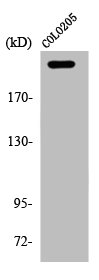
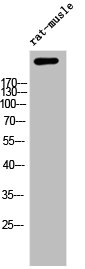
The antibody against APC was raised in rabbit using the Synthesized peptide derived from the C-terminal region of Human APC. as the immunogen. This antibody exists as a non-conjugated isotype IgG. The antibody was affinity-purified from rabbit antiserum by affinity-chromatography using epitope-specific immunogen. This antibody has been validated on WB, IHC, IF, ELISA.
$167.00
| Cat.No | ADC-39319A | Clonality | Polyclonal |
|---|---|---|---|
| Host Species | Rabbit | Target Name | APC |
| Form | Liquid | Species Reactivity | Human, Mouse, Rat |
| Isotype | IgG | Storage Buffer | 0.5% BSA and 0.02% sodium azide., Liquid in PBS containing 50% glycerol |
| Purification Method | The antibody was affinity-purified from rabbit antiserum by affinity-chromatography using epitope-specific immunogen. | Conjugate | Non-conjugated |
| Application | ELISA, IF, IHC, WB | Storage | Upon receipt |
| Immunogen Description | Synthesized peptide derived from the C-terminal region of Human APC. | Target Species | Human |
|---|---|---|---|
| Immunogen Sequence | Complete sequences for the immunogen, target protein, and peptides are available upon request. | Uniprot ID | P25054 |
Uniprot Id
P25054
Target Species
Human
Target Name
APC
Target Full Name
Adenomatous polyposis coli protein
Target Function
Tumor suppressor. Promotes rapid degradation of CTNNB1 and participates in Wnt signaling as a negative regulator. APC activity is correlated with its phosphorylation state. Activates the GEF activity of SPATA13 and ARHGEF4. Plays a role in hepatocyte growth factor (HGF)-induced cell migration. Required for MMP9 up-regulation via the JNK signaling pathway in colorectal tumor cells. Acts as a mediator of ERBB2-dependent stabilization of microtubules at the cell cortex. It is required for the localization of MACF1 to the cell membrane and this localization of MACF1 is critical for its function in microtubule stabilization.
Target Involvement
Familial adenomatous polyposis (FAP); Hereditary desmoid disease (HDD); Medulloblastoma (MDB); Gastric cancer (GASC); Hepatocellular carcinoma (HCC)
Target Subcellular Location
Cell junction, adherens junction. Cytoplasm, cytoskeleton. Cell projection, lamellipodium. Cell projection, ruffle membrane. Cytoplasm. Cell membrane.
Target Protein Families
Adenomatous polyposis coli (APC) family
Target Tissue Specificity
Expressed in a variety of tissues: brain, small intestine, colon, thymus, skeletal muscle, heart, prostate, lung, spleen, ovary, testis kidney, placenta, blood and liver. Isoform 1A: Very strongly expressed in brain but has relatively low expression level
Target Research Area
Cancer
Target Synonyms
Adenomatous Polyposis Coli; Adenomatous polyposis coli protein; Apc; APC_HUMAN; CC1; Deleted in polyposis 2.5; DP2; DP2.5; DP3; FAP; FPC; GS; Protein APC
Target Background
This gene encodes a tumor suppressor protein that acts as an antagonist of the Wnt signaling pathway. It is also involved in other processes including cell migration and adhesion, transcriptional activation, and apoptosis. Defects in this gene cause familial adenomatous polyposis (FAP), an autosomal dominant pre-malignant disease that usually progresses to malignancy. Mutations in the APC gene have been found to occur in most colorectal cancers, where disease-associated mutations tend to be clustered in a small region designated the mutation cluster region (MCR) and result in a truncated protein product.
Notification