• Contact info@abtriva.com for inquiries and orders.
  • Chinese (Simplified)

  • English

  • German

  • Korean

  • Spanish

United States (English / $ USD)

Rabbit anti-Human ATP4B Polyclonal Antibody

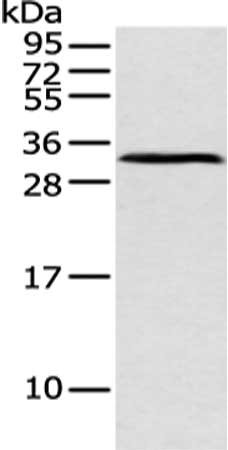
The antibody against ATP4B was raised in rabbit using the Fusion protein of Human ATP4B as the immunogen. This antibody exists as a non-conjugated isotype IgG, Antigen affinity purified. This antibody has been validated on ELISA, WB, IHC.

ADC-32249A

The antibody against ATP4B was raised in rabbit using the Fusion protein of Human ATP4B as the immunogen. This antibody exists as a non-conjugated isotype IgG, Antigen affinity purified. This antibody has been validated on ELISA, WB, IHC.

$299.00

Number
Order Exclusive Products Now

Request a Quote
High Purity LevelsPrecision and ReliabilityCustomization Options

Specifications


Cat.No ADC-32249A ClonalityPolyclonal
Host SpeciesRabbitTarget NameATP4B
FormLiquidSpecies ReactivityHuman, Mouse, Rat
IsotypeIgGStorage Buffer0.05% NaN3, 40% Glycerol., pH7.4 PBS
Purification MethodAntigen affinity purifiedConjugateNon-conjugated
ApplicationELISA, IHC, WBStorageUpon receipt

Immunogen Information


Immunogen DescriptionFusion protein of Human ATP4BTarget SpeciesHuman
Immunogen SequenceComplete sequences for the immunogen, target protein, and peptides are available upon request.Uniprot IDP51164
Background Information
  • Uniprot Id

    P51164

  • Target Species

    Human

  • Target Name

    ATP4B

  • Target Full Name

    Potassium-transporting ATPase subunit beta

  • Target Function

    The beta subunit of the gastric H(+)/K(+) ATPase pump which transports H(+) ions in exchange for K(+) ions across the apical membrane of parietal cells. Plays a structural and regulatory role in the assembly and membrane targeting of a functionally active pump. Within a transport cycle, the transfer of a H(+) ion across the membrane is coupled to ATP hydrolysis and is associated with a transient phosphorylation of the alpha subunit that shifts the pump conformation from inward-facing (E1) to outward-facing state (E2). Interacts with the phosphorylation domain of the alpha subunit and functions as a ratchet, stabilizing the lumenal-open E2 conformation and preventing the reverse reaction of the transport cycle.

  • Target Subcellular Location

    Apical cell membrane; Single-pass type II membrane protein. Cell membrane; Single-pass type II membrane protein.

  • Target Protein Families

    X(+)/potassium ATPases subunit beta family

  • Target Research Area

    Transport, Signal Transduction

  • Target Synonyms

    Gastric H(+)/K(+) ATPase subunit beta; ATP4B; ATP4B_HUMAN; ATP6B; ATPase H+/K+ exchanging beta polypeptide; ATPase H+/K+ transporting beta polypeptide; Gastric H K ATPase catalytic subunit; Gastric H(+)/K(+) ATPase subunit beta; Gastric H+/K+ ATPase beta subunit; Gastric hydrogen potassium ATPase; Gastric hydrogen potassium ATPase beta; Hydrogen/potassium exchanging ATPase 4B; OTTHUMP00000178856; Parietal cell antigen; Potassium transporting ATPase beta chain; Potassium transporting ATPase subunit beta; Potassium-transporting ATPase subunit beta; Proton pump; Proton pump beta chain

  • Target Background

    The protein encoded by this gene belongs to a family of P-type cation-transporting ATPases. The gastric H+, K+-ATPase is a heterodimer consisting of a high molecular weight catalytic alpha subunit and a smaller but heavily glycosylated beta subunit. This enzyme is a proton pump that catalyzes the hydrolysis of ATP coupled with the exchange of H(+) and K(+) ions across the plasma membrane. It is also responsible for gastric acid secretion. This gene encodes the beta subunit of the gastric H+, K+-ATPase.

Inquire Rabbit anti-Human ATP4B Polyclonal Antibody Now


AbTriva respects your privacy and protects your personal data in accordance with AbTriva. For more information, please see our data protection statement. *

Notification