• Contact info@abtriva.com for inquiries and orders.
  • Chinese (Simplified)

  • English

  • German

  • Korean

  • Spanish

United States (English / $ USD)

Rabbit anti-Human CIITA Polyclonal Antibody

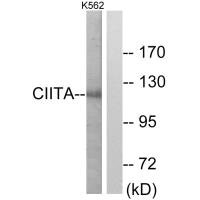
The antibody against CIITA was raised in rabbit using the Synthesized peptide derived from internal of Human CIITA. as the immunogen. The antibody was affinity-purified from rabbit antiserum by affinity-chromatography using epitope-specific immunogen. This antibody has been validated on ELISA, WB.

ADC-42080A

The antibody against CIITA was raised in rabbit using the Synthesized peptide derived from internal of Human CIITA. as the immunogen. The antibody was affinity-purified from rabbit antiserum by affinity-chromatography using epitope-specific immunogen. This antibody has been validated on ELISA, WB.

$297.00

Number
Order Exclusive Products Now

Request a Quote
High Purity LevelsPrecision and ReliabilityCustomization Options

Specifications


Cat.No ADC-42080A ClonalityPolyclonal
Host SpeciesRabbitTarget NameCIITA
FormLiquidSpecies ReactivityHuman, Mouse, Rat
Storage BufferPH 7.4, 0.02% sodium azide and 50% glycerol., 150mM NaCl, Rabbit IgG in phosphate buffered saline (without Mg2+ and Ca2+)Purification MethodThe antibody was affinity-purified from rabbit antiserum by affinity-chromatography using epitope-specific immunogen.
ApplicationELISA, WBStorageUpon receipt

Immunogen Information


Immunogen DescriptionSynthesized peptide derived from internal of Human CIITA.Target SpeciesHuman
Immunogen SequenceComplete sequences for the immunogen, target protein, and peptides are available upon request.Uniprot IDP33076
Background Information
  • Uniprot Id

    P33076

  • Target Species

    Human

  • Target Name

    CIITA

  • Target Full Name

    MHC class II transactivator

  • Target Function

    Essential for transcriptional activity of the HLA class II promoter; activation is via the proximal promoter. No DNA binding of in vitro translated CIITA was detected. May act in a coactivator-like fashion through protein-protein interactions by contacting factors binding to the proximal MHC class II promoter, to elements of the transcription machinery, or both. Alternatively it may activate HLA class II transcription by modifying proteins that bind to the MHC class II promoter. Also mediates enhanced MHC class I transcription; the promoter element requirements for CIITA-mediated transcription are distinct from those of constitutive MHC class I transcription, and CIITA can functionally replace TAF1 at these genes. Activates CD74 transcription. Exhibits intrinsic GTP-stimulated acetyltransferase activity. Exhibits serine/threonine protein kinase activity: can phosphorylate the TFIID component TAF7, the RAP74 subunit of the general transcription factor TFIIF, histone H2B at 'Ser-37' and other histones (in vitro). Has antiviral activity against Ebola virus and coronaviruses, including SARS-CoV-2. Induces resistance by up-regulation of the p41 isoform of CD74, which blocks cathepsin-mediated cleavage of viral glycoproteins, thereby preventing viral fusion.

  • Target Involvement

    Bare lymphocyte syndrome 2 (BLS2)

  • Target Subcellular Location

    Nucleus. Nucleus, PML body. Note=Recruited to PML body by PML.

  • Target Synonyms

    C2TA; C2TA_HUMAN; CIITA; CIITA IV; Class II major histocompatibility complex transactivator; Class II transactivator; MHC class II transactivator; MHC class II transactivator type III; MHC2TA; NLR family acid domain containing; NLRA; Nucleotide binding oligomerization domain leucine rich repeat and acid domain containing

  • Target Background

    This gene encodes a protein with an acidic transcriptional activation domain, 4 LRRs (leucine-rich repeats) and a GTP binding domain. The protein is located in the nucleus and acts as a positive regulator of class II major histocompatibility complex gene transcription, and is referred to as the "master control factor" for the expression of these genes. The protein also binds GTP and uses GTP binding to facilitate its own transport into the nucleus. Once in the nucleus it does not bind DNA but rather uses an intrinsic acetyltransferase (AT) activity to act in a coactivator-like fashion. Mutations in this gene have been associated with bare lymphocyte syndrome type II (also known as hereditary MHC class II deficiency or HLA class II-deficient combined immunodeficiency), increased susceptibility to rheumatoid arthritis, multiple sclerosis, and possibly myocardial infarction. Several transcript variants encoding different isoforms have been found for this gene.

Inquire Rabbit anti-Human CIITA Polyclonal Antibody Now


AbTriva respects your privacy and protects your personal data in accordance with AbTriva. For more information, please see our data protection statement. *

Notification