-
Chinese (Simplified)
-
English
-
German
-
Korean
-
Spanish
Chinese (Simplified)
English
German
Korean
Spanish
Sign up for an account to enjoy easy online shopping and instant order tracking.
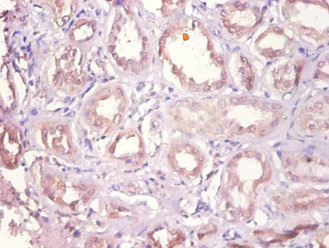
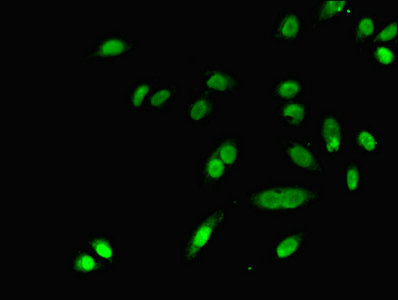
The antibody against DHRS9 was raised in rabbit using the Recombinant Human Dehydrogenase/reductase SDR family member 9 protein (23-319AA) as the immunogen. This antibody exists as a non-conjugated isotype IgG, purified by protein G with a purity greater than 95%. This antibody has been validated on ELISA, IHC, IF.
$299.00
| Cat.No | ADC-45773A | Clonality | Polyclonal |
|---|---|---|---|
| Host Species | Rabbit | Target Name | DHRS9 |
| Form | Liquid | Species Reactivity | Human |
| Isotype | IgG | Storage Buffer | 0.01M PBS, 0.03% Proclin 300; Constituents: 50% Glycerol, PH 7.4 |
| Purification Method | >95%, Protein G purified | Conjugate | Non-conjugated |
| Application | ELISA, IF, IHC | Storage | Upon receipt |
| Immunogen Description | Recombinant Human Dehydrogenase/reductase SDR family member 9 protein (23-319AA) | Target Species | Human |
|---|---|---|---|
| Immunogen Sequence | Complete sequences for the immunogen, target protein, and peptides are available upon request. | Uniprot ID | Q9BPW9 |
Uniprot Id
Q9BPW9
Target Species
Human
Target Name
DHRS9
Target Full Name
Dehydrogenase/reductase SDR family member 9
Target Function
3-alpha-hydroxysteroid dehydrogenase that converts 3-alpha-tetrahydroprogesterone (allopregnanolone) to dihydroxyprogesterone and 3-alpha-androstanediol to dihydroxyprogesterone. Plays also a role in the biosynthesis of retinoic acid from retinaldehyde. Can utilize both NADH and NADPH.
Target Subcellular Location
Microsome membrane. Endoplasmic reticulum membrane. Note=Associated with microsomal membranes.
Target Protein Families
Short-chain dehydrogenases/reductases (SDR) family
Target Tissue Specificity
Highly expressed in trachea and epidermis. Detected at lower levels in spinal cord, bone marrow, brain, tongue, esophagus, heart, colon, testis, placenta, lung, skeletal muscle and lymph node.
Target Synonyms
3 alpha hydroxysteroid dehydrogenase; 3-@alpha-HSD; 3-@alpha-hydroxysteroid dehydrogenase; 3-alpha hydroxysteroid dehydrogenase; 3-alpha-HSD; 3alpha HSD; Dehydrogenase/reductase SDR family member 9; DHRS9; DHRS9_HUMAN; NADP dependent retinol dehydrogenase/reductase; NADP-dependent retinol dehydrogenase/reductase; RDH-E2; Rdh15; RDHE2; RDHL; RDHTBE; retinol dehydrogenase homolog ; Retinol dehydrogenase; tracheobronchiol epithelail cell-specific; RETSDR8; SDR family; member 9; SDR9C4; short chain dehydrogenase/reductase family 9; short chain dehydrogenase/reductase family 9C; member 4 ; Short chain dehydrogenase/reductase retSDR8; Short-chain dehydrogenase/reductase retSDR8
Target Background
This gene encodes a member of the short-chain dehydrogenases/reductases (SDR) family. The encoded protein has been identified as a moonlighting protein based on its ability to perform mechanistically distinct functions. This protein demonstrates oxidoreductase activity toward hydroxysteroids and is able to convert 3-alpha-tetrahydroprogesterone to dihydroxyprogesterone and 3-alpha-androstanediol to dihydroxyprogesterone in the cytoplasm, and may additionally function as a transcriptional repressor in the nucleus. Alternative splicing results in multiple transcript variants.
Notification