-
Chinese (Simplified)
-
English
-
German
-
Korean
-
Spanish
Chinese (Simplified)
English
German
Korean
Spanish
Sign up for an account to enjoy easy online shopping and instant order tracking.
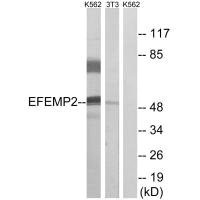
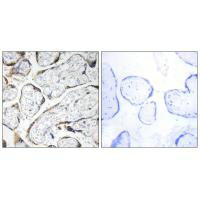
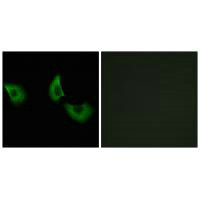
The antibody against EFEMP2 was raised in rabbit using the Synthesized peptide derived from internal of Human EFEMP2. as the immunogen. The antibody was affinity-purified from rabbit antiserum by affinity-chromatography using epitope-specific immunogen. This antibody has been validated on ELISA, WB, IHC, IF.
$297.00
| Cat.No | ADC-41253A | Clonality | Polyclonal |
|---|---|---|---|
| Host Species | Rabbit | Target Name | EFEMP2 |
| Form | Liquid | Species Reactivity | Human |
| Storage Buffer | PH 7.4, 0.02% sodium azide and 50% glycerol., 150mM NaCl, Rabbit IgG in phosphate buffered saline (without Mg2+ and Ca2+) | Purification Method | The antibody was affinity-purified from rabbit antiserum by affinity-chromatography using epitope-specific immunogen. |
| Application | ELISA, IF, IHC, WB | Storage | Upon receipt |
| Immunogen Description | Synthesized peptide derived from internal of Human EFEMP2. | Target Species | Human |
|---|---|---|---|
| Immunogen Sequence | Complete sequences for the immunogen, target protein, and peptides are available upon request. | Uniprot ID | O95967 |
Uniprot Id
O95967
Target Species
Human
Target Name
EFEMP2
Target Full Name
EGF-containing fibulin-like extracellular matrix protein 2
Target Function
Plays a crucial role in elastic fiber formation in tissue, and in the formation of ultrastructural connections between elastic laminae and smooth muscle cells in the aorta, therefore participates in terminal differentiation and maturation of smooth muscle cell (SMC) and in the mechanical properties and wall integrity maintenance of the aorta. In addition, is involved in the control of collagen fibril assembly in tissue throught proteolytic activation of LOX leading to cross- linking of collagen and elastin. Also promotes ELN coacervation and participates in the deposition of ELN coacervates on to microfibrils but also regulates ELN cross- linking through LOX interaction. Moreover adheres to the cells through heparin binding in a calcium-dependent manner and regulates vascularlar smooth muscle cells proliferation through angiotensin signaling.
Target Involvement
Cutis laxa, autosomal recessive, 1B (ARCL1B)
Target Subcellular Location
Secreted, extracellular space, extracellular matrix. Secreted, extracellular space, extracellular matrix, basement membrane.
Target Protein Families
Fibulin family
Target Synonyms
EFEMP 2; EFEMP2; EGF containing fibulin like extracellular matrix protein 2; EGF-containing fibulin-like extracellular matrix protein 2; FBLN 4; FBLN4; FBLN4_HUMAN; FIBL 4; FIBL-4; FIBL4; Fibulin 4; Fibulin-4; MBP 1; MBP1; Mutant p53 binding protein 1; Protein UPH1; UPH 1; UPH1; UPH1 protein
Target Background
A large number of extracellular matrix proteins have been found to contain variations of the epidermal growth factor (EGF) domain and have been implicated in functions as diverse as blood coagulation, activation of complement and determination of cell fate during development. The protein encoded by this gene contains four EGF2 domains and six calcium-binding EGF2 domains. This gene is necessary for elastic fiber formation and connective tissue development. Defects in this gene are cause of an autosomal recessive cutis laxa syndrome. Alternatively spliced transcript variants have been identified for this gene.
Notification