-
Chinese (Simplified)
-
English
-
German
-
Korean
-
Spanish
Chinese (Simplified)
English
German
Korean
Spanish
Sign up for an account to enjoy easy online shopping and instant order tracking.
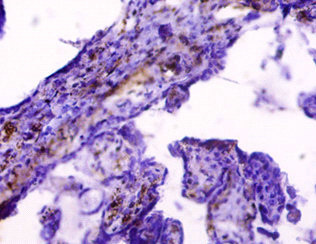
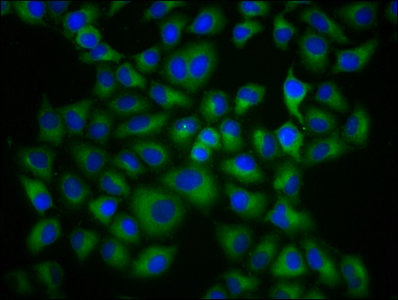
The antibody against HLA-G was raised in rabbit using the Recombinant Human HLA class I histocompatibility antigen, alpha chain G protein (25-337AA) as the immunogen. This antibody exists as a non-conjugated isotype IgG, purified by protein G with a purity greater than 95%. This antibody has been validated on ELISA, WB, IHC, IF.
$299.00
| Cat.No | ADC-45767A | Clonality | Polyclonal |
|---|---|---|---|
| Host Species | Rabbit | Target Name | HLA-G |
| Form | Liquid | Species Reactivity | Human |
| Isotype | IgG | Storage Buffer | 0.01M PBS, 0.03% Proclin 300; Constituents: 50% Glycerol, PH 7.4 |
| Purification Method | >95%, Protein G purified | Conjugate | Non-conjugated |
| Application | ELISA, IF, IHC, WB | Storage | Upon receipt |
| Immunogen Description | Recombinant Human HLA class I histocompatibility antigen, alpha chain G protein (25-337AA) | Target Species | Human |
|---|---|---|---|
| Immunogen Sequence | Complete sequences for the immunogen, target protein, and peptides are available upon request. | Uniprot ID | P17693 |
Uniprot Id
P17693
Target Species
Human
Target Name
HLA-G
Target Full Name
HLA class I histocompatibility antigen, alpha chain G
Target Function
Non-classical major histocompatibility class Ib molecule involved in immune regulatory processes at the maternal-fetal interface. In complex with B2M/beta-2 microglobulin binds a limited repertoire of nonamer self-peptides derived from intracellular proteins including histones and ribosomal proteins. Peptide-bound HLA-G-B2M complex acts as a ligand for inhibitory/activating KIR2DL4, LILRB1 and LILRB2 receptors on uterine immune cells to promote fetal development while maintaining maternal-fetal tolerance. Upon interaction with KIR2DL4 and LILRB1 receptors on decidual NK cells, it triggers NK cell senescence-associated secretory phenotype as a molecular switch to promote vascular remodeling and fetal growth in early pregnancy. Through interaction with KIR2DL4 receptor on decidual macrophages induces proinflammatory cytokine production mainly associated with tissue remodeling. Through interaction with LILRB2 receptor triggers differentiation of type 1 regulatory T cells and myeloid-derived suppressor cells, both of which actively maintain maternal-fetal tolerance. May play a role in balancing tolerance and antiviral-immunity at maternal-fetal interface by keeping in check the effector functions of NK, CD8+ T cells and B cells. Reprograms B cells toward an immune suppressive phenotype via LILRB1. May induce immune activation/suppression via intercellular membrane transfer (trogocytosis), likely enabling interaction with KIR2DL4, which resides mostly in endosomes. Through interaction with the inhibitory receptor CD160 on endothelial cells may control angiogenesis in immune privileged sites.; Likely does not bind B2M and presents peptides. Negatively regulates NK cell- and CD8+ T cell-mediated cytotoxicity.; Likely does not bind B2M and presents peptides. Negatively regulates NK cell- and CD8+ T cell-mediated cytotoxicity.; Likely does not bind B2M and presents peptides. Negatively regulates NK cell- and CD8+ T cell-mediated cytotoxicity.; Non-classical major histocompatibility class Ib molecule involved in immune regulatory processes at the maternal-fetal interface. In complex with B2M/beta-2 microglobulin binds a limited repertoire of nonamer self-peptides derived from intracellular proteins including histones and ribosomal proteins. Peptide-bound HLA-G-B2M complex acts as a ligand for inhibitory/activating KIR2DL4, LILRB1 and LILRB2 receptors on uterine immune cells to promote fetal development while maintaining maternal-fetal tolerance. Upon interaction with KIR2DL4 and LILRB1 receptors on decidual NK cells, it triggers NK cell senescence-associated secretory phenotype as a molecular switch to promote vascular remodeling and fetal growth in early pregnancy. Through interaction with KIR2DL4 receptor on decidual macrophages induces proinflammatory cytokine production mainly associated with tissue remodeling. Through interaction with LILRB2 receptor triggers differentiation of type 1 regulatory T cells and myeloid-derived suppressor cells, both of which actively maintain maternal-fetal tolerance. Reprograms B cells toward an immune suppressive phenotype via LILRB1.; Likely does not bind B2M and presents peptides.; Likely does not bind B2M and presents peptides.
Target Subcellular Location
[Isoform 1]: Cell membrane; Single-pass type I membrane protein. Endoplasmic reticulum membrane. Early endosome membrane.; [Soluble HLA class I histocompatibility antigen, alpha chain G]: Secreted.; [Isoform 2]: Cell membrane; Single-pass type I membrane protein.; [Isoform 3]: Cell membrane; Single-pass type I membrane protein.; [Isoform 4]: Cell membrane; Single-pass type I membrane protein.; [Isoform 5]: Secreted. Early endosome.; [Isoform 6]: Secreted.; [Isoform 7]: Secreted.; Cell projection, filopodium membrane.
Target Protein Families
MHC class I family
Target Tissue Specificity
Expressed in adult eye. Expressed in immune cell subsets including monocytes, myeloid and plasmacytoid dendritic cells and regulatory T cells (Tr1)(at protein level). Secreted by follicular dendritic cell and follicular helper T cells. Isoform 5: Detected
Target Research Area
Immunology
Target Synonyms
B2 microglobulin; DADB-15K14.8; HLA 6.0; HLA class I histocompatibility antigen alpha chain G; HLA class I histocompatibility antigen; alpha chain G; HLA class I molecule; HLA G; HLA G antigen; HLA G histocompatibility antigen class I G; HLA G3; HLA-G; HLA-G histocompatibility antigen; class I; HLA60; HLAG; HLAG_HUMAN; Major histocompatibility complex class I G; MHC class I antigen; MHC class I antigen G; MHC G; T-cell A locus; TCA
Target Background
HLA-G belongs to the HLA class I heavy chain paralogues. This class I molecule is a heterodimer consisting of a heavy chain and a light chain (beta-2 microglobulin). The heavy chain is anchored in the membrane. HLA-G is expressed on fetal derived placental cells. The heavy chain is approximately 45 kDa and its gene contains 8 exons. Exon one encodes the leader peptide, exons 2 and 3 encode the alpha1 and alpha2 domain, which both bind the peptide, exon 4 encodes the alpha3 domain, exon 5 encodes the transmembrane region, and exon 6 encodes the cytoplasmic tail.
Notification