• Contact info@abtriva.com for inquiries and orders.
  • Chinese (Simplified)

  • English

  • German

  • Korean

  • Spanish

United States (English / $ USD)

Rabbit anti-Human HSPH1 Polyclonal Antibody

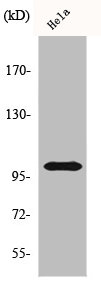
The antibody against HSPH1 was raised in rabbit using the Synthesized peptide derived from the C-terminal region of Human HSP105. as the immunogen. This antibody exists as a non-conjugated isotype IgG. The antibody was affinity-purified from rabbit antiserum by affinity-chromatography using epitope-specific immunogen. This antibody has been validated on WB, IHC, IF, ELISA.

ADC-38444A

The antibody against HSPH1 was raised in rabbit using the Synthesized peptide derived from the C-terminal region of Human HSP105. as the immunogen. This antibody exists as a non-conjugated isotype IgG. The antibody was affinity-purified from rabbit antiserum by affinity-chromatography using epitope-specific immunogen. This antibody has been validated on WB, IHC, IF, ELISA.

$167.00

Number
Order Exclusive Products Now

Request a Quote
High Purity LevelsPrecision and ReliabilityCustomization Options

Specifications


Cat.No ADC-38444A ClonalityPolyclonal
Host SpeciesRabbitTarget NameHSPH1
FormLiquidSpecies ReactivityHuman, Mouse
IsotypeIgGStorage Buffer0.5% BSA and 0.02% sodium azide., Liquid in PBS containing 50% glycerol
Purification MethodThe antibody was affinity-purified from rabbit antiserum by affinity-chromatography using epitope-specific immunogen.ConjugateNon-conjugated
ApplicationELISA, IF, IHC, WBStorageUpon receipt

Immunogen Information


Immunogen DescriptionSynthesized peptide derived from the C-terminal region of Human HSP105.Target SpeciesHuman
Immunogen SequenceComplete sequences for the immunogen, target protein, and peptides are available upon request.Uniprot IDQ92598
Background Information
  • Uniprot Id

    Q92598

  • Target Species

    Human

  • Target Name

    HSPH1

  • Target Full Name

    Heat shock protein 105 kDa

  • Target Function

    Acts as a nucleotide-exchange factor (NEF) for chaperone proteins HSPA1A and HSPA1B, promoting the release of ADP from HSPA1A/B thereby triggering client/substrate protein release. Prevents the aggregation of denatured proteins in cells under severe stress, on which the ATP levels decrease markedly. Inhibits HSPA8/HSC70 ATPase and chaperone activities.

  • Target Subcellular Location

    Cytoplasm.

  • Target Protein Families

    Heat shock protein 70 family

  • Target Tissue Specificity

    Highly expressed in testis. Present at lower levels in most brain regions, except cerebellum. Overexpressed in cancer cells.

  • Target Synonyms

    Antigen NY CO 25; Antigen NY-CO-25; DKFZp686M05240; Heat shock 105kD alpha; Heat shock 105kD; Heat shock 105kD beta; Heat shock 105kDa protein 1; Heat shock 105kDa protein; Heat shock 105kDa/110kDa protein 1 ; Heat shock 110 kDa protein; Heat shock 110kDa protein; Heat shock protein 105 kDa; HS105_HUMAN; HSP105; HSP105A; HSP105B; HSP110; HSPH 1; Hsph1; KIAA0201; NY CO 25

  • Target Background

    This gene encodes a member of the heat shock protein 70 family of proteins. The encoded protein functions as a nucleotide exchange factor for the molecular chaperone heat shock cognate 71 kDa protein (Hsc70). In addition, this protein plays a distinct but related role as a holdase that inhibits the aggregation of misfolded proteins, including the cystic fibrosis transmembrane conductance regulator (CFTR) protein. Elevated expression of this protein has been observed in numerous human cancers.

Inquire Rabbit anti-Human HSPH1 Polyclonal Antibody Now


AbTriva respects your privacy and protects your personal data in accordance with AbTriva. For more information, please see our data protection statement. *

Notification