-
Chinese (Simplified)
-
English
-
German
-
Korean
-
Spanish
Chinese (Simplified)
English
German
Korean
Spanish
Sign up for an account to enjoy easy online shopping and instant order tracking.
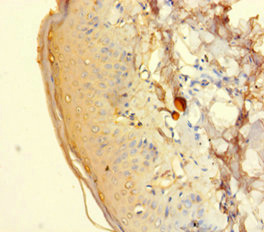
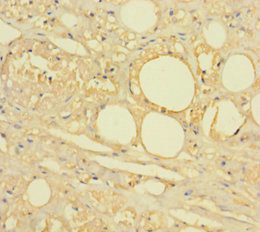
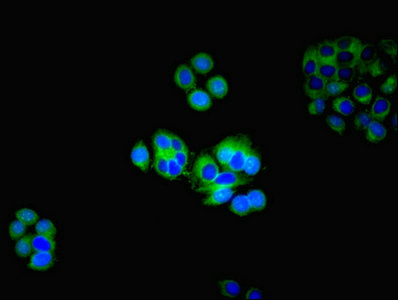
The antibody against HTR2A was raised in rabbit using the Recombinant Human 5-hydroxytryptamine receptor 2A protein (385-471AA) as the immunogen. This antibody exists as a non-conjugated isotype IgG, purified by protein G with a purity greater than 95%. This antibody has been validated on ELISA, IHC, IF.
$299.00
| Cat.No | ADC-32622A | Clonality | Polyclonal |
|---|---|---|---|
| Host Species | Rabbit | Target Name | HTR2A |
| Target Synonyms | HTR2A; HTR2; 5-hydroxytryptamine receptor 2A; 5-HT-2; 5-HT-2A; Serotonin receptor 2A | Form | Liquid |
| Species Reactivity | Human | Isotype | IgG |
| Storage Buffer | 0.01M PBS, 0.03% Proclin 300; Constituents: 50% Glycerol, PH 7.4 | Purification Method | >95%, Protein G purified |
| Conjugate | Non-conjugated | Application | ELISA, IF, IHC |
| Storage | Upon receipt |
| Immunogen Description | Recombinant Human 5-hydroxytryptamine receptor 2A protein (385-471AA) | Target Species | Human |
|---|---|---|---|
| Immunogen Sequence | Complete sequences for the immunogen, target protein, and peptides are available upon request. | Uniprot ID | P28223 |
Uniprot Id
P28223
Target Species
Human
Target Name
HTR2A
Target Full Name
5-hydroxytryptamine receptor 2A
Target Function
G-protein coupled receptor for 5-hydroxytryptamine (serotonin). Also functions as a receptor for various drugs and psychoactive substances, including mescaline, psilocybin, 1-(2,5-dimethoxy-4-iodophenyl)-2-aminopropane (DOI) and lysergic acid diethylamide (LSD). Ligand binding causes a conformation change that triggers signaling via guanine nucleotide-binding proteins (G proteins) and modulates the activity of down-stream effectors. Beta-arrestin family members inhibit signaling via G proteins and mediate activation of alternative signaling pathways. Signaling activates phospholipase C and a phosphatidylinositol-calcium second messenger system that modulates the activity of phosphatidylinositol 3-kinase and promotes the release of Ca(2+) ions from intracellular stores. Affects neural activity, perception, cognition and mood. Plays a role in the regulation of behavior, including responses to anxiogenic situations and psychoactive substances. Plays a role in intestinal smooth muscle contraction, and may play a role in arterial vasoconstriction.; (Microbial infection) Acts as a receptor for human JC polyomavirus/JCPyV.
Target Subcellular Location
Cell membrane; Multi-pass membrane protein. Cell projection, dendrite. Cell projection, axon. Cytoplasmic vesicle. Membrane, caveola. Cell junction, synapse, presynapse.
Target Protein Families
G-protein coupled receptor 1 family
Target Tissue Specificity
Detected in brain cortex (at protein level). Detected in blood platelets.
Target Synonyms
HTR2A; HTR2; 5-hydroxytryptamine receptor 2A; 5-HT-2; 5-HT-2A; Serotonin receptor 2A
Target Background
This gene encodes one of the receptors for serotonin, a neurotransmitter with many roles. Mutations in this gene are associated with susceptibility to schizophrenia and obsessive-compulsive disorder, and are also associated with response to the antidepressant citalopram in patients with major depressive disorder (MDD). MDD patients who also have a mutation in intron 2 of this gene show a significantly reduced response to citalopram as this antidepressant downregulates expression of this gene. Multiple transcript variants encoding different isoforms have been found for this gene.
Notification