• Contact info@abtriva.com for inquiries and orders.
  • Chinese (Simplified)

  • English

  • German

  • Korean

  • Spanish

United States (English / $ USD)

Rabbit anti-Human KIR3DL2 Polyclonal Antibody

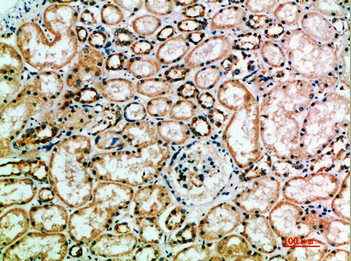
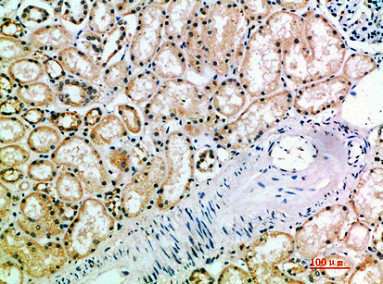
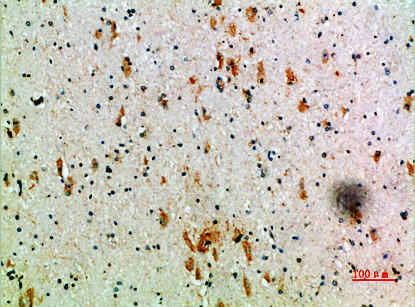
The antibody against KIR3DL2 was raised in rabbit using the Synthetic peptide from Human protein at AA range: 221-270 as the immunogen. This antibody exists as a non-conjugated antibody. The antibody was affinity-purified from rabbit serum by affinity-chromatography using specific immunogen. This antibody has been validated on IHC, ELISA.

ADC-13002A

The antibody against KIR3DL2 was raised in rabbit using the Synthetic peptide from Human protein at AA range: 221-270 as the immunogen. This antibody exists as a non-conjugated antibody. The antibody was affinity-purified from rabbit serum by affinity-chromatography using specific immunogen. This antibody has been validated on IHC, ELISA.

$167.00

Number
Order Exclusive Products Now

Request a Quote
High Purity LevelsPrecision and ReliabilityCustomization Options

Specifications


Cat.No ADC-13002A ClonalityPolyclonal
Host SpeciesRabbitTarget NameKIR3DL2
FormLiquidSpecies ReactivityHuman
Storage BufferPH 7.4, containing 0.02% sodium azide as Preservative and 50% Glycerol., PBSPurification MethodThe antibody was affinity-purified from rabbit serum by affinity-chromatography using specific immunogen.
ConjugateNon-conjugatedApplicationELISA, IHC
StorageUpon receipt

Immunogen Information


Immunogen DescriptionSynthetic peptide from Human protein at AA range: 221-270Target SpeciesHuman
Immunogen SequenceComplete sequences for the immunogen, target protein, and peptides are available upon request.Uniprot IDP43630
Background Information
  • Uniprot Id

    P43630

  • Target Species

    Human

  • Target Name

    KIR3DL2

  • Target Full Name

    Killer cell immunoglobulin-like receptor 3DL2

  • Target Function

    Receptor on natural killer (NK) cells and T cells for MHC class I molecules. Upon binding of peptide-free HLA-F open conformer, negatively regulates NK and T cell effector functions. Acts as a receptor on astrocytes for HLA-F. Through interaction with HLA-F, may protect motor neurons from astrocyte-induced toxicity.

  • Target Subcellular Location

    Cell membrane; Single-pass type I membrane protein.

  • Target Protein Families

    Immunoglobulin superfamily

  • Target Tissue Specificity

    Expressed in astrocytes.

  • Target Synonyms

    KIR3DL2; CD158K; NKAT4; Killer cell immunoglobulin-like receptor 3DL2; CD158 antigen-like family member K; MHC class I NK cell receptor; Natural killer-associated transcript 4; NKAT-4; p70 natural killer cell receptor clone CL-5; p70 NK receptor CL-5; CD antigen CD158k

  • Target Background

    Killer cell immunoglobulin-like receptors (KIRs) are transmembrane glycoproteins expressed by natural killer cells and subsets of T cells. The KIR genes are polymorphic and highly homologous and they are found in a cluster on chromosome 19q13.4 within the 1 Mb leukocyte receptor complex (LRC). The gene content of the KIR gene cluster varies among haplotypes, although several "framework" genes are found in all haplotypes (KIR3DL3, KIR3DP1, KIR3DL4, KIR3DL2). The KIR proteins are classified by the number of extracellular immunoglobulin domains (2D or 3D) and by whether they have a long (L) or short (S) cytoplasmic domain. KIR proteins with the long cytoplasmic domain transduce inhibitory signals upon ligand binding via an immune tyrosine-based inhibitory motif (ITIM), while KIR proteins with the short cytoplasmic domain lack the ITIM motif and instead associate with the TYRO protein tyrosine kinase binding protein to transduce activating signals. The ligands for several KIR proteins are subsets of HLA class I molecules; thus, KIR proteins are thought to play an important role in regulation of the immune response. This gene is one of the "framework" loci that is present on all haplotypes. Alternatively spliced transcript variants encoding multiple isoforms have been observed for this gene.

Inquire Rabbit anti-Human KIR3DL2 Polyclonal Antibody Now


AbTriva respects your privacy and protects your personal data in accordance with AbTriva. For more information, please see our data protection statement. *

Notification