• Contact info@abtriva.com for inquiries and orders.
  • Chinese (Simplified)

  • English

  • German

  • Korean

  • Spanish

United States (English / $ USD)

Rabbit anti-Human KLK6 Polyclonal Antibody

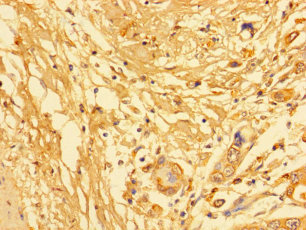
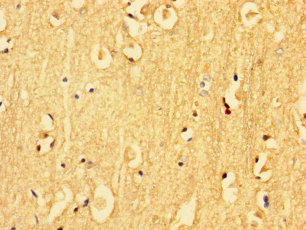
The antibody against KLK6 was raised in rabbit using the Recombinant Human Kallikrein-6 protein (22-244AA) as the immunogen. This antibody exists as a non-conjugated isotype IgG, purified by protein G with a purity greater than 95%. This antibody has been validated on ELISA, WB, IHC, IF.

ADC-18862A

The antibody against KLK6 was raised in rabbit using the Recombinant Human Kallikrein-6 protein (22-244AA) as the immunogen. This antibody exists as a non-conjugated isotype IgG, purified by protein G with a purity greater than 95%. This antibody has been validated on ELISA, WB, IHC, IF.

$299.00

Number
Order Exclusive Products Now

Request a Quote
High Purity LevelsPrecision and ReliabilityCustomization Options

Specifications


Cat.No ADC-18862A ClonalityPolyclonal
Host SpeciesRabbitTarget NameKLK6
FormLiquidSpecies ReactivityHuman, Mouse
IsotypeIgGStorage Buffer0.01M PBS, 0.03% Proclin 300; Constituents: 50% Glycerol, PH 7.4
Purification Method>95%, Protein G purifiedConjugateNon-conjugated
ApplicationELISA, IF, IHC, WBStorageUpon receipt

Immunogen Information


Immunogen DescriptionRecombinant Human Kallikrein-6 protein (22-244AA)Target SpeciesHuman
Immunogen SequenceComplete sequences for the immunogen, target protein, and peptides are available upon request.Uniprot IDQ92876
Background Information
  • Uniprot Id

    Q92876

  • Target Species

    Human

  • Target Name

    KLK6

  • Target Full Name

    Kallikrein-6

  • Target Function

    Serine protease which exhibits a preference for Arg over Lys in the substrate P1 position and for Ser or Pro in the P2 position. Shows activity against amyloid precursor protein, myelin basic protein, gelatin, casein and extracellular matrix proteins such as fibronectin, laminin, vitronectin and collagen. Degrades alpha-synuclein and prevents its polymerization, indicating that it may be involved in the pathogenesis of Parkinson disease and other synucleinopathies. May be involved in regulation of axon outgrowth following spinal cord injury. Tumor cells treated with a neutralizing KLK6 antibody migrate less than control cells, suggesting a role in invasion and metastasis.

  • Target Subcellular Location

    Secreted. Nucleus, nucleolus. Cytoplasm. Mitochondrion. Microsome. Note=In brain, detected in the nucleus of glial cells and in the nucleus and cytoplasm of neurons. Detected in the mitochondrial and microsomal fractions of HEK-293 cells and released into the cytoplasm following cell stress.

  • Target Protein Families

    Peptidase S1 family, Kallikrein subfamily

  • Target Tissue Specificity

    In fluids, highest levels found in milk of lactating women followed by cerebrospinal fluid, nipple aspirate fluid and breast cyst fluid. Also found in serum, seminal plasma and some amniotic fluids and breast tumor cytosolic extracts. Not detected in urin

  • Target Synonyms

    Bssp; hK 6; hK6; Kallikrein 6 precursor; Kallikrein related peptidase 6; Kallikrein-6; Kallikrein6; KLK 6; Klk 7; KLK 9; Klk29; Klk6; KLK6_HUMAN; Klk7; KLK9; MGC9355; mGK 1; mGK1; MSP; Neurosin; Protease M; Protease serine 18; Protease serine 9; PRSS 18; PRSS 9; PRSS18; PRSS9; Serine protease 18; Serine protease 9; SP 59; SP59; Tissue kallikrein; TK; Zyme

  • Target Background

    This gene encodes a member of the kallikrein subfamily of the peptidase S1 family of serine proteases. Growing evidence suggests that many kallikreins are implicated in carcinogenesis and some have potential as novel cancer and other disease biomarkers. The encoded preproprotein is proteolytically processed to generate the mature protease. Expression of this protease is regulated by steroid hormones and may be elevated in multiple human cancers and in serum from psoriasis patients. The encoded protease may participate in the cleavage of amyloid precursor protein and alpha-synuclein, thus implicating this protease in Alzheimer's and Parkinson's disease, respectively. This gene is located in a gene cluster on chromosome 19. Alternative splicing results in multiple transcript variants, at least one of which encodes an isoform that is proteolytically processed.

Inquire Rabbit anti-Human KLK6 Polyclonal Antibody Now


AbTriva respects your privacy and protects your personal data in accordance with AbTriva. For more information, please see our data protection statement. *

Notification