-
Chinese (Simplified)
-
English
-
German
-
Korean
-
Spanish
Chinese (Simplified)
English
German
Korean
Spanish
Sign up for an account to enjoy easy online shopping and instant order tracking.
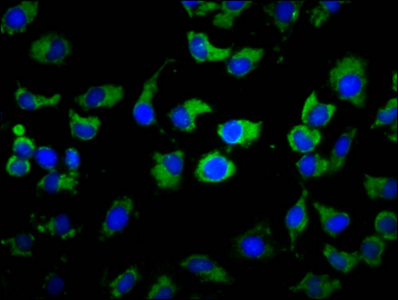
The antibody against MS4A2 was raised in rabbit using the Recombinant Human High affinity immunoglobulin epsilon receptor subunit beta protein (1-59AA) as the immunogen. This antibody exists as a non-conjugated isotype IgG, purified by protein G with a purity greater than 95%. This antibody has been validated on ELISA, IHC, IF.
$299.00
| Cat.No | ADC-04311A | Clonality | Polyclonal |
|---|---|---|---|
| Host Species | Rabbit | Target Name | MS4A2 |
| Form | Liquid | Species Reactivity | Human |
| Isotype | IgG | Storage Buffer | 0.01M PBS, 0.03% Proclin 300; Constituents: 50% Glycerol, PH 7.4 |
| Purification Method | >95%, Protein G purified | Conjugate | Non-conjugated |
| Application | ELISA, IF, IHC | Storage | Upon receipt |
| Immunogen Description | Recombinant Human High affinity immunoglobulin epsilon receptor subunit beta protein (1-59AA) | Target Species | Human |
|---|---|---|---|
| Immunogen Sequence | Complete sequences for the immunogen, target protein, and peptides are available upon request. | Uniprot ID | Q01362 |
Uniprot Id
Q01362
Target Species
Human
Target Name
MS4A2
Target Full Name
High affinity immunoglobulin epsilon receptor subunit beta
Target Function
High affinity receptor that binds to the Fc region of immunoglobulins epsilon. Aggregation of FCER1 by multivalent antigens is required for the full mast cell response, including the release of preformed mediators (such as histamine) by degranulation and de novo production of lipid mediators and cytokines. Also mediates the secretion of important lymphokines. Binding of allergen to receptor-bound IgE leads to cell activation and the release of mediators responsible for the manifestations of allergy.
Target Subcellular Location
Membrane; Multi-pass membrane protein.
Target Protein Families
MS4A family
Target Tissue Specificity
Found on the surface of mast cells and basophils.
Target Synonyms
APY; IGEL; IGER; ATOPY; FCERI; IGHER; FCER1B; MS4A2
Target Background
The allergic response involves the binding of allergen to receptor-bound IgE followed by cell activation and the release of mediators responsible for the manifestations of allergy. The IgE-receptor, a tetramer composed of an alpha, beta, and 2 disulfide-linked gamma chains, is found on the surface of mast cells and basophils. This gene encodes the beta subunit of the high affinity IgE receptor which is a member of the membrane-spanning 4A gene family. Members of this nascent protein family are characterized by common structural features and similar intron/exon splice boundaries and display unique expression patterns among hematopoietic cells and nonlymphoid tissues. This family member is localized to 11q12, among a cluster of membrane-spanning 4A gene family members. Alternative splicing results in multiple transcript variants encoding distinct proteins. Additional transcript variants have been described but require experimental validation.
Notification