• Contact info@abtriva.com for inquiries and orders.
  • Chinese (Simplified)

  • English

  • German

  • Korean

  • Spanish

United States (English / $ USD)

Rabbit anti-Human NCAPH Polyclonal Antibody

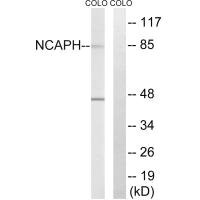
The antibody against NCAPH was raised in rabbit using the Synthesized peptide derived from internal of Human NCAPH. as the immunogen. The antibody was affinity-purified from rabbit antiserum by affinity-chromatography using epitope-specific immunogen. This antibody has been validated on ELISA, WB.

ADC-41299A

The antibody against NCAPH was raised in rabbit using the Synthesized peptide derived from internal of Human NCAPH. as the immunogen. The antibody was affinity-purified from rabbit antiserum by affinity-chromatography using epitope-specific immunogen. This antibody has been validated on ELISA, WB.

$297.00

Number
Order Exclusive Products Now

Request a Quote
High Purity LevelsPrecision and ReliabilityCustomization Options

Specifications


Cat.No ADC-41299A ClonalityPolyclonal
Host SpeciesRabbitTarget NameNCAPH
FormLiquidSpecies ReactivityHuman
Storage BufferPH 7.4, 0.02% sodium azide and 50% glycerol., 150mM NaCl, Rabbit IgG in phosphate buffered saline (without Mg2+ and Ca2+)Purification MethodThe antibody was affinity-purified from rabbit antiserum by affinity-chromatography using epitope-specific immunogen.
ApplicationELISA, WBStorageUpon receipt

Immunogen Information


Immunogen DescriptionSynthesized peptide derived from internal of Human NCAPH.Target SpeciesHuman
Immunogen SequenceComplete sequences for the immunogen, target protein, and peptides are available upon request.Uniprot IDQ15003
Background Information
  • Uniprot Id

    Q15003

  • Target Species

    Human

  • Target Name

    NCAPH

  • Target Full Name

    Condensin complex subunit 2

  • Target Function

    Regulatory subunit of the condensin complex, a complex required for conversion of interphase chromatin into mitotic-like condense chromosomes. The condensin complex probably introduces positive supercoils into relaxed DNA in the presence of type I topoisomerases and converts nicked DNA into positive knotted forms in the presence of type II topoisomerases. Early in neurogenesis, may play an essential role to ensure accurate mitotic chromosome condensation in neuron stem cells, ultimately affecting neuron pool and cortex size.

  • Target Subcellular Location

    Nucleus. Cytoplasm. Chromosome. Note=In interphase cells, the majority of the condensin complex is found in the cytoplasm, while a minority of the complex is associated with chromatin. A subpopulation of the complex however remains associated with chromosome foci in interphase cells. During mitosis, most of the condensin complex is associated with the chromatin. At the onset of prophase, the regulatory subunits of the complex are phosphorylated by CDK1, leading to condensin's association with chromosome arms and to chromosome condensation. Dissociation from chromosomes is observed in late telophase.

  • Target Protein Families

    CND2 (condensin subunit 2) family

  • Target Tissue Specificity

    Widely expressed at low level. Expressed in proliferating cells.

  • Target Synonyms

    Barren Drosophila Homolog of 1; Barren homolog protein 1; BRRN; BRRN1; CAP H; CAPH; Chromosome associated protein H; Chromosome-associated protein H; CND2_HUMAN; Condensin complex subunit 2; Condensin subunit 2; Condensin-2 complex subunit H2; Condesin; HCAP H; hCAP-H; KIAA0074; mCAP H; MGC4616; Ncaph; Non SMC condensin I complex subunit H; Non-SMC condensin I complex subunit H; XCAP H homolog; XCAP-H homolog

  • Target Background

    This gene encodes a member of the barr gene family and a regulatory subunit of the condensin complex. This complex is required for the conversion of interphase chromatin into condensed chromosomes. The protein encoded by this gene is associated with mitotic chromosomes, except during the early phase of chromosome condensation. During interphase, the protein has a distinct punctate nucleolar localization. Alternatively spliced transcript variants encoding different proteins have been described.

Inquire Rabbit anti-Human NCAPH Polyclonal Antibody Now


AbTriva respects your privacy and protects your personal data in accordance with AbTriva. For more information, please see our data protection statement. *

Notification