• Contact info@abtriva.com for inquiries and orders.
  • Chinese (Simplified)

  • English

  • German

  • Korean

  • Spanish

United States (English / $ USD)

Rabbit anti-Human OPN5 Polyclonal Antibody

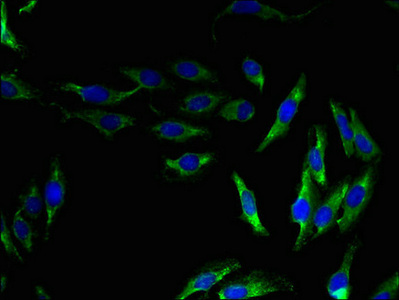
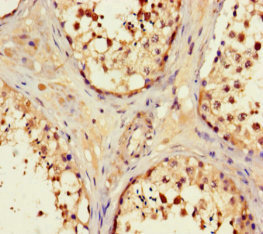
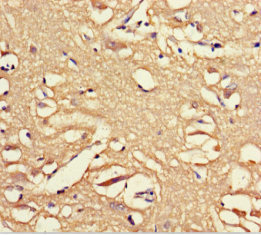
The antibody against OPN5 was raised in rabbit using the Recombinant Human Opsin-5 protein (310-353AA) as the immunogen. This antibody exists as a non-conjugated isotype IgG, purified by protein G with a purity greater than 95%. This antibody has been validated on ELISA, IHC, IF.

ADC-19803A

The antibody against OPN5 was raised in rabbit using the Recombinant Human Opsin-5 protein (310-353AA) as the immunogen. This antibody exists as a non-conjugated isotype IgG, purified by protein G with a purity greater than 95%. This antibody has been validated on ELISA, IHC, IF.

$299.00

Number
Order Exclusive Products Now

Request a Quote
High Purity LevelsPrecision and ReliabilityCustomization Options

Specifications


Cat.No ADC-19803A ClonalityPolyclonal
Host SpeciesRabbitTarget NameOPN5
Target SynonymsOPN5; GPR136; PGR12; TMEM13; Opsin-5; G-protein coupled receptor 136; G-protein coupled receptor PGR12; Neuropsin; Transmembrane protein 13FormLiquid
Species ReactivityHumanIsotypeIgG
Storage Buffer0.01M PBS, 0.03% Proclin 300; Constituents: 50% Glycerol, PH 7.4Purification Method>95%, Protein G purified
ConjugateNon-conjugatedApplicationELISA, IF, IHC
StorageUpon receipt

Immunogen Information


Immunogen DescriptionRecombinant Human Opsin-5 protein (310-353AA)Target SpeciesHuman
Immunogen SequenceComplete sequences for the immunogen, target protein, and peptides are available upon request.Uniprot IDQ6U736
Background Information
  • Uniprot Id

    Q6U736

  • Target Species

    Human

  • Target Name

    OPN5

  • Target Full Name

    Opsin-5

  • Target Function

    G-protein coupled receptor which selectively activates G(i) type G proteins via ultraviolet A (UVA) light-mediated activation in the retina. Preferentially binds the chromophore 11-cis retinal and is a bistable protein that displays emission peaks at 380 nm (UVA light) and 470 nm (blue light). Required for the light-response in the inner plexiform layer, and contributes to the regulation of the light-response in the nerve fiber layer, via phosphorylated DAT/SLC6A3 dopamine uptake. Involved in local corneal and retinal circadian rhythm photoentrainment via modulation of the UVA light-induced phase-shift of the retina clock. Acts as a circadian photoreceptor in the outer ear, via modulation of circadian clock-gene expression in response to violet light during the light-to-dark transition phase and night phase of the circadian cycle. Required in the retina to negatively regulate hyaloid vessel regression during postnatal development via light-dependent OPN5-SLC32A1-DRD2-VEGFR2 signaling. Involved in the light-dependent regulation of retina and vitreous compartment dopamine levels.

  • Target Subcellular Location

    Cell membrane; Multi-pass membrane protein.

  • Target Protein Families

    G-protein coupled receptor 1 family, Opsin subfamily

  • Target Tissue Specificity

    Detected in brain and retina and cell lines derived from neural retina.

  • Target Synonyms

    OPN5; GPR136; PGR12; TMEM13; Opsin-5; G-protein coupled receptor 136; G-protein coupled receptor PGR12; Neuropsin; Transmembrane protein 13

  • Target Background

    Opsins are members of the guanine nucleotide-binding protein (G protein)-coupled receptor superfamily. This opsin gene is expressed in the eye, brain, testes, and spinal cord. This gene belongs to the seven-exon subfamily of mammalian opsin genes that includes peropsin (RRH) and retinal G protein coupled receptor (RGR). Like these other seven-exon opsin genes, this family member may encode a protein with photoisomerase activity. Alternative splicing results in multiple transcript variants.

Inquire Rabbit anti-Human OPN5 Polyclonal Antibody Now


AbTriva respects your privacy and protects your personal data in accordance with AbTriva. For more information, please see our data protection statement. *

Notification