• Contact info@abtriva.com for inquiries and orders.
  • Chinese (Simplified)

  • English

  • German

  • Korean

  • Spanish

United States (English / $ USD)

Rabbit anti-Human PLA2G16 Polyclonal Antibody

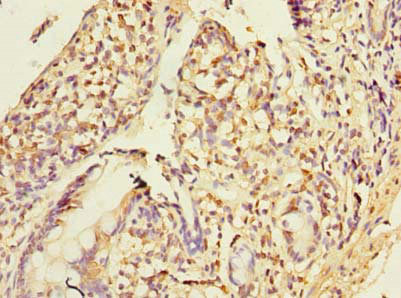
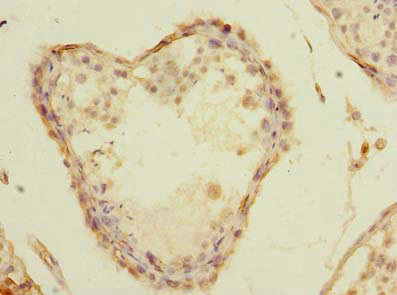
The antibody against PLA2G16 was raised in rabbit using the Recombinant Human HRAS-like suppressor 3 protein (1-132AA) as the immunogen. This antibody exists as a non-conjugated isotype IgG, purified by protein G with a purity greater than 95%. This antibody has been validated on ELISA, IHC.

ADC-24067A

The antibody against PLA2G16 was raised in rabbit using the Recombinant Human HRAS-like suppressor 3 protein (1-132AA) as the immunogen. This antibody exists as a non-conjugated isotype IgG, purified by protein G with a purity greater than 95%. This antibody has been validated on ELISA, IHC.

$299.00

Number
Order Exclusive Products Now

Request a Quote
High Purity LevelsPrecision and ReliabilityCustomization Options

Specifications


Cat.No ADC-24067A ClonalityPolyclonal
Host SpeciesRabbitTarget NamePLA2G16
FormLiquidSpecies ReactivityHuman
IsotypeIgGStorage Buffer0.01M PBS, 0.03% Proclin 300; Constituents: 50% Glycerol, PH 7.4
Purification Method>95%, Protein G purifiedConjugateNon-conjugated
ApplicationELISA, IHCStorageUpon receipt

Immunogen Information


Immunogen DescriptionRecombinant Human HRAS-like suppressor 3 protein (1-132AA)Target SpeciesHuman
Immunogen SequenceComplete sequences for the immunogen, target protein, and peptides are available upon request.Uniprot IDP53816
Background Information
  • Uniprot Id

    P53816

  • Target Species

    Human

  • Target Name

    PLAAT3

  • Target Full Name

    Phospholipase A and acyltransferase 3

  • Target Function

    Exhibits both phospholipase A1/2 and acyltransferase activities. Shows phospholipase A1 (PLA1) and A2 (PLA2) activity, catalyzing the calcium-independent release of fatty acids from the sn-1 or sn-2 position of glycerophospholipids. For most substrates, PLA1 activity is much higher than PLA2 activity. Shows O-acyltransferase activity,catalyzing the transfer of a fatty acyl group from glycerophospholipid to the hydroxyl group of lysophospholipid. Shows N-acyltransferase activity, catalyzing the calcium-independent transfer of a fatty acyl group at the sn-1 position of phosphatidylcholine (PC) and other glycerophospholipids to the primary amine of phosphatidylethanolamine (PE), forming N-acylphosphatidylethanolamine (NAPE), which serves as precursor for N-acylethanolamines (NAEs). Exhibits high N-acyltransferase activity and low phospholipase A1/2 activity. Required for complete organelle rupture and degradation that occur during eye lens terminal differentiation, when fiber cells that compose the lens degrade all membrane-bound organelles in order to provide lens with transparency to allow the passage of light. Organelle membrane degradation is probably catalyzed by the phospholipase activity.; (Microbial infection) Acts as a host factor for picornaviruses: required during early infection to promote viral genome release into the cytoplasm. May act as a cellular sensor of membrane damage at sites of virus entry, which relocalizes to sites of membrane rupture upon virus unfection. Facilitates safe passage of the RNA away from LGALS8, enabling viral genome translation by host ribosome. May also be involved in initiating pore formation, increasing pore size or in maintaining pores for genome delivery. The lipid-modifying enzyme activity is required for this process.

  • Target Subcellular Location

    Cell membrane; Single-pass membrane protein. Cytoplasm. Cytoplasm, cytosol. Cytoplasm, perinuclear region. Peroxisome membrane; Single-pass membrane protein. Mitochondrion membrane; Single-pass membrane protein. Nucleus envelope. Lysosome membrane; Single-pass membrane protein. Endoplasmic reticulum membrane; Single-pass membrane protein.

  • Target Protein Families

    H-rev107 family

  • Target Tissue Specificity

    Widely expressed. low expression, if any, in hematopoietic cells and thymus. In testis, confined to round spermatids. Expressed in normal ovarian epithelial cells. Down-regulated in some ovarian carcinomas and testicular germ cell tumors. Highly expressed

  • Target Synonyms

    PLAAT3; HRASLS3; HREV107; PLA2G16; Phospholipase A and acyltransferase 3; Adipose-specific phospholipase A2; AdPLA; Group XVI phospholipase A1/A2; H-rev 107 protein homolog; H-REV107; HREV107-1; HRAS-like suppressor 1; HRAS-like suppressor 3; HRSL3; HREV107-3; Renal carcinoma antigen NY-REN-65

  • Target Background

    Enables N-acyltransferase activity; phospholipase A1 activity; and phospholipase A2 activity. Involved in N-acylphosphatidylethanolamine metabolic process. Predicted to be located in several cellular components, including lysosome; nuclear envelope; and peroxisome. Predicted to be active in cytoplasm. Biomarker of seminoma.

Inquire Rabbit anti-Human PLA2G16 Polyclonal Antibody Now


AbTriva respects your privacy and protects your personal data in accordance with AbTriva. For more information, please see our data protection statement. *

Notification