-
Chinese (Simplified)
-
English
-
German
-
Korean
-
Spanish

Chinese (Simplified)
English
German
Korean
Spanish
Sign up for an account to enjoy easy online shopping and instant order tracking.
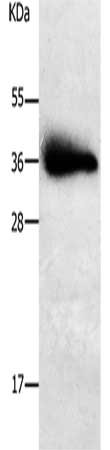
The antibody against PLPP1 was raised in rabbit using the Synthetic peptide of Human PPAP2A as the immunogen. This antibody exists as a non-conjugated isotype IgG, Antigen affinity purified. This antibody has been validated on ELISA, WB, IHC.
$299.00
| Cat.No | ADC-28050A | Clonality | Polyclonal |
|---|---|---|---|
| Host Species | Rabbit | Target Name | PLPP1 |
| Target Synonyms | PLPP1; LPP1; PPAP2A; Phospholipid phosphatase 1; Lipid phosphate phosphohydrolase 1; PAP2-alpha; Phosphatidate phosphohydrolase type 2a; Phosphatidic acid phosphatase 2a; PAP-2a; PAP2a | Form | Liquid |
| Species Reactivity | Human, Mouse, Rat | Isotype | IgG |
| Storage Buffer | 0.05% NaN3, 40% Glycerol., pH7.4 PBS | Purification Method | Antigen affinity purified |
| Conjugate | Non-conjugated | Application | ELISA, IHC, WB |
| Storage | Upon receipt |
| Immunogen Description | Synthetic peptide of Human PPAP2A | Target Species | Human |
|---|---|---|---|
| Immunogen Sequence | Complete sequences for the immunogen, target protein, and peptides are available upon request. | Uniprot ID | O14494 |
Uniprot Id
O14494
Target Species
Human
Target Name
PLPP1
Target Full Name
Phospholipid phosphatase 1
Target Function
Magnesium-independent phospholipid phosphatase of the plasma membrane that catalyzes the dephosphorylation of a variety of glycerolipid and sphingolipid phosphate esters including phosphatidate/PA, lysophosphatidate/LPA, diacylglycerol pyrophosphate/DGPP, sphingosine 1-phosphate/S1P and ceramide 1-phosphate/C1P. Also acts on N-oleoyl ethanolamine phosphate/N-(9Z-octadecenoyl)-ethanolamine phosphate, a potential physiological compound. Through its extracellular phosphatase activity allows both the hydrolysis and the cellular uptake of these bioactive lipid mediators from the milieu, regulating signal transduction in different cellular processes. It is for instance essential for the extracellular hydrolysis of S1P and subsequent conversion into intracellular S1P. Involved in the regulation of inflammation, platelets activation, cell proliferation and migration among other processes. May also have an intracellular activity to regulate phospholipid-mediated signaling pathways.
Target Subcellular Location
Cell membrane; Multi-pass membrane protein. Apical cell membrane; Multi-pass membrane protein. Membrane raft; Multi-pass membrane protein. Membrane, caveola; Multi-pass membrane protein.
Target Protein Families
PA-phosphatase related phosphoesterase family
Target Tissue Specificity
Widely expressed with highest expression found in prostate. Found to be down-regulated in colon adenocarcinomas.; [Isoform 1]: Predominant in kidney, lung, placenta and liver.; [Isoform 2]: Predominant in heart and pancreas.
Target Synonyms
PLPP1; LPP1; PPAP2A; Phospholipid phosphatase 1; Lipid phosphate phosphohydrolase 1; PAP2-alpha; Phosphatidate phosphohydrolase type 2a; Phosphatidic acid phosphatase 2a; PAP-2a; PAP2a
Target Background
The protein encoded by this gene is a member of the phosphatidic acid phosphatase (PAP) family. PAPs convert phosphatidic acid to diacylglycerol, and function in synthesis of glycerolipids and in phospholipase D-mediated signal transduction. This enzyme is an integral membrane glycoprotein that plays a role in the hydrolysis and uptake of lipids from extracellular space. Alternate splicing results in multiple transcript variants of this gene.
Notification