-
Chinese (Simplified)
-
English
-
German
-
Korean
-
Spanish
Chinese (Simplified)
English
German
Korean
Spanish
Sign up for an account to enjoy easy online shopping and instant order tracking.
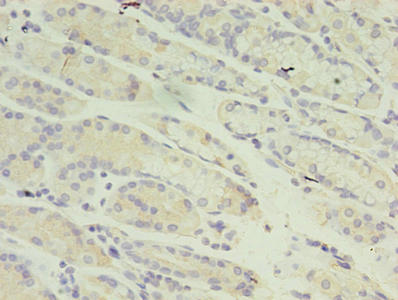
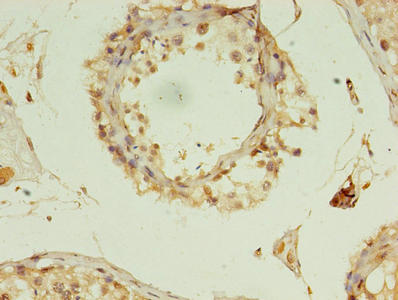
The antibody against RANBP2 was raised in rabbit using the Recombinant Human E3 SUMO-protein ligase RanBP2 protein (2601-2802AA) as the immunogen. This antibody exists as a non-conjugated isotype IgG, purified by protein G with a purity greater than 95%. This antibody has been validated on ELISA, IHC.
$299.00
| Cat.No | ADC-21566A | Clonality | Polyclonal |
|---|---|---|---|
| Host Species | Rabbit | Target Name | RANBP2 |
| Form | Liquid | Species Reactivity | Human |
| Isotype | IgG | Storage Buffer | 0.01M PBS, 0.03% Proclin 300; Constituents: 50% Glycerol, PH 7.4 |
| Purification Method | >95%, Protein G purified | Conjugate | Non-conjugated |
| Application | ELISA, IHC | Storage | Upon receipt |
| Immunogen Description | Recombinant Human E3 SUMO-protein ligase RanBP2 protein (2601-2802AA) | Target Species | Human |
|---|---|---|---|
| Immunogen Sequence | Complete sequences for the immunogen, target protein, and peptides are available upon request. | Uniprot ID | P49792 |
Uniprot Id
P49792
Target Species
Human
Target Name
RANBP2
Target Full Name
E3 SUMO-protein ligase RanBP2
Target Function
E3 SUMO-protein ligase which facilitates SUMO1 and SUMO2 conjugation by UBE2I. Involved in transport factor (Ran-GTP, karyopherin)-mediated protein import via the F-G repeat-containing domain which acts as a docking site for substrates. Binds single-stranded RNA (in vitro). May bind DNA. Component of the nuclear export pathway. Specific docking site for the nuclear export factor exportin-1. Sumoylates PML at 'Lys-490' which is essential for the proper assembly of PML-NB. Recruits BICD2 to the nuclear envelope and cytoplasmic stacks of nuclear pore complex known as annulate lamellae during G2 phase of cell cycle. Probable inactive PPIase with no peptidyl-prolyl cis-trans isomerase activity.
Target Involvement
Encephalopathy, acute, infection-induced, 3 (IIAE3)
Target Subcellular Location
Nucleus. Nucleus membrane. Nucleus, nuclear pore complex. Nucleus envelope.
Target Protein Families
RanBP2 E3 ligase family
Target Research Area
others
Target Synonyms
358 kDa nucleoporin; ANE1; E3 SUMO-protein ligase RanBP2; IIAE3; Nuclear pore complex protein Nup358; Nucleoporin 358; Nucleoporin Nup358; NUP358; p270; RAN binding protein 2; Ran-binding protein 2; RANBP2; RBP2_HUMAN; Transformation related protein 2; TRP 1; TRP 2; TRP1; TRP2
Target Background
RAN is a small GTP-binding protein of the RAS superfamily that is associated with the nuclear membrane and is thought to control a variety of cellular functions through its interactions with other proteins. This gene encodes a very large RAN-binding protein that immunolocalizes to the nuclear pore complex. The protein is a giant scaffold and mosaic cyclophilin-related nucleoporin implicated in the Ran-GTPase cycle. The encoded protein directly interacts with the E2 enzyme UBC9 and strongly enhances SUMO1 transfer from UBC9 to the SUMO1 target SP100. These findings place sumoylation at the cytoplasmic filaments of the nuclear pore complex and suggest that, for some substrates, modification and nuclear import are linked events. This gene is partially duplicated in a gene cluster that lies in a hot spot for recombination on chromosome 2q.
Notification