• Contact info@abtriva.com for inquiries and orders.
  • Chinese (Simplified)

  • English

  • German

  • Korean

  • Spanish

United States (English / $ USD)

Rabbit anti-Human TAF9 Polyclonal Antibody

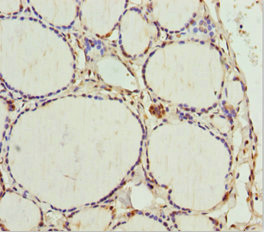
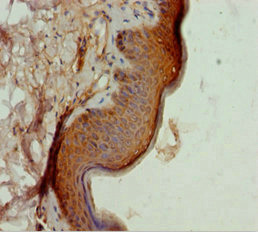
The antibody against TAF9 was raised in rabbit using the Recombinant Human Transcription initiation factor TFIID subunit 9 protein (1-264AA) as the immunogen. This antibody exists as a non-conjugated isotype IgG, Antigen affinity purified. This antibody has been validated on ELISA, WB, IHC.

ADC-16890A

The antibody against TAF9 was raised in rabbit using the Recombinant Human Transcription initiation factor TFIID subunit 9 protein (1-264AA) as the immunogen. This antibody exists as a non-conjugated isotype IgG, Antigen affinity purified. This antibody has been validated on ELISA, WB, IHC.

$299.00

Number
Order Exclusive Products Now

Request a Quote
High Purity LevelsPrecision and ReliabilityCustomization Options

Specifications


Cat.No ADC-16890A ClonalityPolyclonal
Host SpeciesRabbitTarget NameTAF9
FormLiquidSpecies ReactivityHuman
IsotypeIgGStorage Buffer50% Glycerol, PBS with 0.02% sodium azide, pH7.3.
Purification MethodAntigen affinity purifiedConjugateNon-conjugated
ApplicationELISA, IHC, WBStorageUpon receipt

Immunogen Information


Immunogen DescriptionRecombinant Human Transcription initiation factor TFIID subunit 9 protein (1-264AA)Target SpeciesHuman
Immunogen SequenceComplete sequences for the immunogen, target protein, and peptides are available upon request.Uniprot IDQ16594
Background Information
  • Uniprot Id

    Q16594

  • Target Species

    Human

  • Target Name

    TAF9

  • Target Full Name

    Transcription initiation factor TFIID subunit 9

  • Target Function

    Essential for cell viability. TAF9 and TAF9B are involved in transcriptional activation as well as repression of distinct but overlapping sets of genes. May have a role in gene regulation associated with apoptosis. TAFs are components of the transcription factor IID (TFIID) complex, the TBP-free TAFII complex (TFTC), the PCAF histone acetylase complex and the STAGA transcription coactivator-HAT complex. TFIID or TFTC are essential for the regulation of RNA polymerase II-mediated transcription.

  • Target Subcellular Location

    Nucleus.

  • Target Protein Families

    TAF9 family

  • Target Research Area

    Epigenetics and Nuclear Signaling

  • Target Synonyms

    TAF9; TAF2G; TAFII31; Transcription initiation factor TFIID subunit 9; RNA polymerase II TBP-associated factor subunit G; STAF31/32; Transcription initiation factor TFIID 31 kDa subunit; TAFII-31; TAFII31; Transcription initiation factor TFIID 32 kDa subunit; TAFII-32; TAFII32

  • Target Background

    Initiation of transcription by RNA polymerase II requires the activities of more than 70 polypeptides. The protein that coordinates these activities is transcription factor IID (TFIID), which binds to the core promoter to position the polymerase properly, serves as the scaffold for assembly of the remainder of the transcription complex, and acts as a channel for regulatory signals. TFIID is composed of the TATA-binding protein (TBP) and a group of evolutionarily conserved proteins known as TBP-associated factors or TAFs. TAFs may participate in basal transcription, serve as coactivators, function in promoter recognition or modify general transcription factors (GTFs) to facilitate complex assembly and transcription initiation. This gene encodes one of the smaller subunits of TFIID that binds to the basal transcription factor GTF2B as well as to several transcriptional activators such as p53 and VP16. In human, TAF9 and AK6 (GeneID: 102157402) are two distinct genes that share 5' exons. A similar but distinct gene (TAF9L) has been found on the X chromosome and a pseudogene has been identified on chromosome 19. Alternative splicing results in multiple transcript variants.

Inquire Rabbit anti-Human TAF9 Polyclonal Antibody Now


AbTriva respects your privacy and protects your personal data in accordance with AbTriva. For more information, please see our data protection statement. *

Notification