-
Chinese (Simplified)
-
English
-
German
-
Korean
-
Spanish
Chinese (Simplified)
English
German
Korean
Spanish
Sign up for an account to enjoy easy online shopping and instant order tracking.
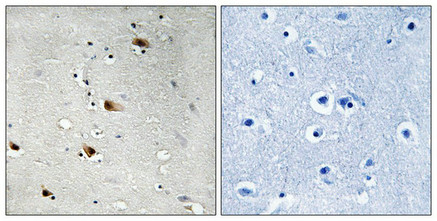
The antibody against TCF3 was raised in rabbit using the Peptide sequence around phosphorylation site of threonine 355 (P-S-T(p)-P-V) derived from Human E2A . as the immunogen. Antibodies were produced by immunizing rabbits with synthetic phosphopeptide and KLH conjugates. Antibodies were purified by affinity-chromatography using epitope-specific phosphopeptide. Non-phospho specific antibodies were removed by chromatogramphy usi This antibody has been validated on ELISA, IHC.
$360.00
| Cat.No | ADC-42688A | Clonality | Polyclonal |
|---|---|---|---|
| Host Species | Rabbit | Target Name | TCF3 |
| Form | Liquid | Species Reactivity | Human, Mouse, Rat |
| Storage Buffer | PH 7.4, 0.02% sodium azide and 50% glycerol., 150mM NaCl, Rabbit IgG in phosphate buffered saline (without Mg2+ and Ca2+) | Application | ELISA, IHC |
| Storage | Upon receipt |
| Immunogen Description | Peptide sequence around phosphorylation site of threonine 355 (P-S-T(p)-P-V) derived from Human E2A . | Target Species | Human |
|---|---|---|---|
| Immunogen Sequence | Complete sequences for the immunogen, target protein, and peptides are available upon request. | Uniprot ID | P15923 |
Uniprot Id
P15923
Target Species
Human
Target Name
TCF3
Target Full Name
Transcription factor E2-alpha
Target Function
Transcriptional regulator involved in the initiation of neuronal differentiation and mesenchymal to epithelial transition. Heterodimers between TCF3 and tissue-specific basic helix-loop-helix (bHLH) proteins play major roles in determining tissue-specific cell fate during embryogenesis, like muscle or early B-cell differentiation. Together with TCF15, required for the mesenchymal to epithelial transition. Dimers bind DNA on E-box motifs: 5'-CANNTG-3'. Binds to the kappa-E2 site in the kappa immunoglobulin gene enhancer. Binds to IEB1 and IEB2, which are short DNA sequences in the insulin gene transcription control region.
Target Involvement
Agammaglobulinemia 8, autosomal dominant (AGM8)
Target Subcellular Location
Nucleus.
Target Synonyms
AGM8; bHLHb21; Class B basic helix-loop-helix protein 21; E12; E2A; E2A immunoglobulin enhancer binding factors E12/E47; E47; Helix loop helix protein HE47; Immunoglobulin enhancer-binding factor E12/E47; Immunoglobulin transcription factor 1; ITF1; Kappa-E2-binding factor; MGC129647; MGC129648; Negative vitamin D response element binding protein; NOL1-TCF3 fusion; TCF-3; Tcf3; TFE2_HUMAN; transcription factor 3 (E2A immunoglobulin enhancer binding factors E12/E47); Transcription factor 3; transcription factor 3 variant 3; Transcription factor E2-alpha; Transcription factor ITF-1; VDIR; VDR interacting repressor; vitamin D receptor-interacting repressor
Target Background
This gene encodes a member of the E protein (class I) family of helix-loop-helix transcription factors. E proteins activate transcription by binding to regulatory E-box sequences on target genes as heterodimers or homodimers, and are inhibited by heterodimerization with inhibitor of DNA-binding (class IV) helix-loop-helix proteins. E proteins play a critical role in lymphopoiesis, and the encoded protein is required for B and T lymphocyte development. Deletion of this gene or diminished activity of the encoded protein may play a role in lymphoid malignancies. This gene is also involved in several chromosomal translocations that are associated with lymphoid malignancies including pre-B-cell acute lymphoblastic leukemia (t(1;19), with PBX1), childhood leukemia (t(19;19), with TFPT) and acute leukemia (t(12;19), with ZNF384). Alternatively spliced transcript variants encoding multiple isoforms have been observed for this gene, and a pseudogene of this gene is located on the short arm of chromosome 9.
Notification