-
Chinese (Simplified)
-
English
-
German
-
Korean
-
Spanish
Chinese (Simplified)
English
German
Korean
Spanish
Sign up for an account to enjoy easy online shopping and instant order tracking.
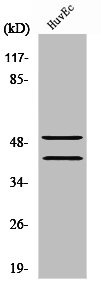
The antibody against TCF7 was raised in rabbit using the Synthesized peptide derived from the N-terminal region of Human TCF-1. as the immunogen. This antibody exists as a non-conjugated isotype IgG. The antibody was affinity-purified from rabbit antiserum by affinity-chromatography using epitope-specific immunogen. This antibody has been validated on WB, IHC, ELISA.
$167.00
| Cat.No | ADC-37500A | Clonality | Polyclonal |
|---|---|---|---|
| Host Species | Rabbit | Target Name | TCF7 |
| Target Synonyms | 1 antibody, T-cell specific, T-cell specific antibody; Transcription factor-7 | Form | Liquid |
| Species Reactivity | Human, Mouse | Isotype | IgG |
| Storage Buffer | 0.5% BSA and 0.02% sodium azide., Liquid in PBS containing 50% glycerol | Purification Method | The antibody was affinity-purified from rabbit antiserum by affinity-chromatography using epitope-specific immunogen. |
| Conjugate | Non-conjugated | Application | ELISA, IHC, WB |
| Storage | Upon receipt |
| Immunogen Description | Synthesized peptide derived from the N-terminal region of Human TCF-1. | Target Species | Human |
|---|---|---|---|
| Immunogen Sequence | Complete sequences for the immunogen, target protein, and peptides are available upon request. | Uniprot ID | P36402 |
Uniprot Id
P36402
Target Species
Human
Target Name
TCF7
Target Full Name
Transcription factor 7
Target Function
Transcriptional activator involved in T-cell lymphocyte differentiation. Necessary for the survival of CD4(+) CD8(+) immature thymocytes. Isoforms lacking the N-terminal CTNNB1 binding domain cannot fulfill this role. Binds to the T-lymphocyte-specific enhancer element (5'-WWCAAAG-3') found in the promoter of the CD3E gene. Represses expression of the T-cell receptor gamma gene in alpha-beta T-cell lineages. Required for the development of natural killer receptor-positive lymphoid tissue inducer T-cells. TLE1, TLE2, TLE3 and TLE4 repress transactivation mediated by TCF7 and CTNNB1.May also act as feedback transcriptional repressor of CTNNB1 and TCF7L2 target genes.
Target Subcellular Location
Nucleus.
Target Protein Families
TCF/LEF family
Target Tissue Specificity
Predominantly expressed in T-cells. Also detected in proliferating intestinal epithelial cells and in the basal epithelial cells of mammary gland epithelium.
Target Research Area
Epigenetics and Nuclear Signaling
Target Synonyms
FLJ36364; MGC47735; OTTHUMP00000159391; T cell factor 1; T cell specific transcription factor 1; T-cell factor 1; T-cell-specific transcription factor 1; TCF-1; TCF-7; TCF1; Tcf7; TCF7 transcription factor 7; TCF7_HUMAN; Transcription factor 7 (T cell specific HMG box); Transcription factor 7; Transcription factor-7, T-cell specific; Transcription factor-7, T-cell specific, 1
Target Background
This gene encodes a member of the T-cell factor/lymphoid enhancer-binding factor family of high mobility group (HMG) box transcriptional activators. This gene is expressed predominantly in T-cells and plays a critical role in natural killer cell and innate lymphoid cell development. The encoded protein forms a complex with beta-catenin and activates transcription through a Wnt/beta-catenin signaling pathway. Mice with a knockout of this gene are viable and fertile, but display a block in T-lymphocyte differentiation. Alternative splicing results in multiple transcript variants. Naturally-occurring isoforms lacking the N-terminal beta-catenin interaction domain may act as dominant negative regulators of Wnt signaling.
Notification